
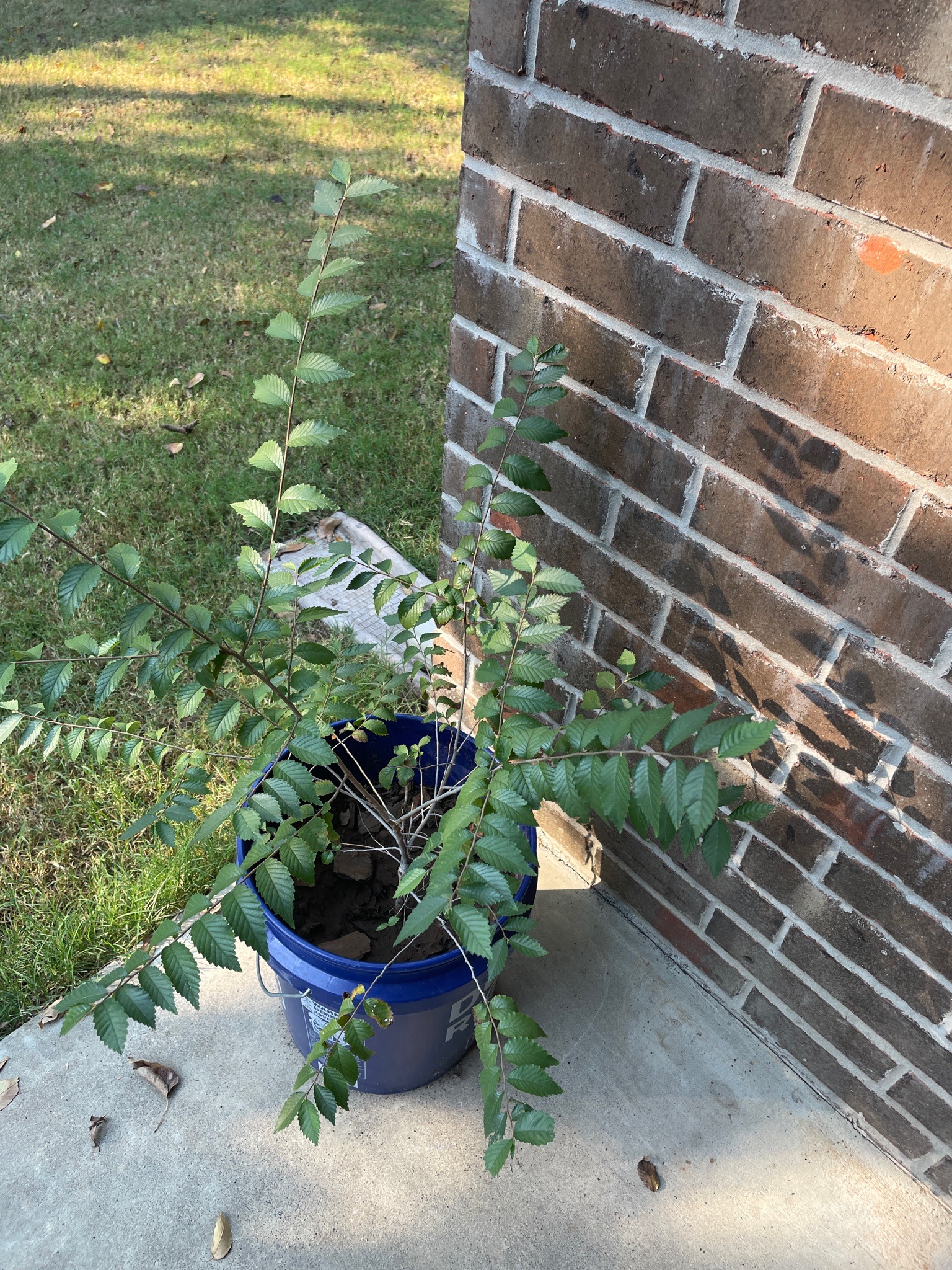
Cedar Elm
Ulmus crassifolia
A deciduous tree featuring small, rough, dark green leaves with doubly serrated margins, asymmetrical leaf bases, and an upright to rounded growth form.
- Light
- Full sun to partial shade, requiring at least six hours of direct sunlight daily.
- Water
- Water deeply and regularly when young to establish a strong root system. Once established, it tolerates dry spells well, needing irrigation only during extended periods without rain.
- Growth
- Perennial tree with a moderate to slow growth rate, ultimately reaching mature heights of 50 to 70 feet with a spreading canopy.
Care instructions
Provide full sun to partial shade with regular watering during establishment, transitioning to moderate drought tolerance once mature. Plant in well-draining soil and apply a balanced, slow-release fertilizer in early spring.
Growing details
Sunlight
Full sun to partial shade, requiring at least six hours of direct sunlight daily.
Watering
Water deeply and regularly when young to establish a strong root system. Once established, it tolerates dry spells well, needing irrigation only during extended periods without rain.
Soil
Adaptable to various soil types including clay, loam, and sand, provided they have good drainage. Prefers a neutral to slightly alkaline pH range between 6.5 and 7.5.
Hardiness zone
USDA Hardiness Zones 6 through 9.
Growth habit
Perennial tree with a moderate to slow growth rate, ultimately reaching mature heights of 50 to 70 feet with a spreading canopy.
Bloom season
Non-showy greenish flowers appear in late summer or autumn, followed by small, winged seeds.
Propagation
Propagated primarily through seeds sown in autumn or by softwood cuttings taken in late spring.
Common pests & issues
Susceptible to Dutch elm disease, elm leaf beetles, and mistletoe infestations, which can be managed with proper sanitation, monitoring, and appropriate horticultural treatments.
Similar species
Winged Elm (Ulmus alata), which can be distinguished by the corky wings typically found on its twigs.