
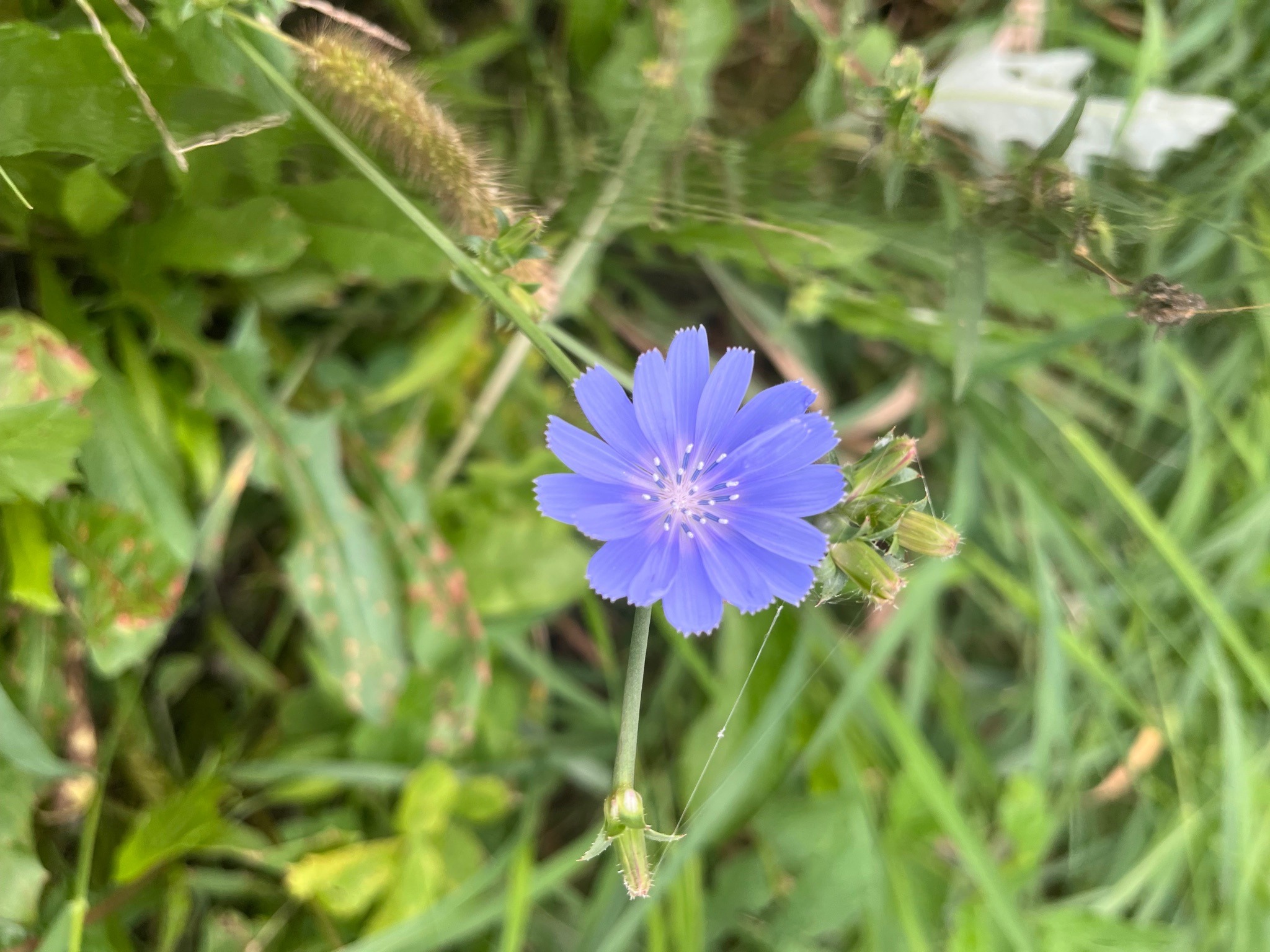
Chicory
Cichorium intybus
Chicory is a somewhat woody, perennial herbaceous plant featuring bright blue, dandelion-like flower heads and stiff, grooved, branching stems with sparse leaves.
- Light
- Full sun, requiring at least 6 hours of direct sunlight daily
- Water
- Low watering needs once established. Allow the soil to dry out between waterings; highly drought-tolerant due to its deep taproot system.
- Growth
- Herbaceous perennial with an upright, branching growth habit, reaching heights of 2 to 5 feet and a spread of 1 to 2 feet with a moderate growth rate.
Care instructions
Provide full sun and well-draining soil. Water sparingly once established, as it has a deep taproot that confers good drought resistance. Fertilization is generally unnecessary and can lead to excessive foliage growth.
Growing details
Sunlight
Full sun, requiring at least 6 hours of direct sunlight daily
Watering
Low watering needs once established. Allow the soil to dry out between waterings; highly drought-tolerant due to its deep taproot system.
Soil
Thrives in well-draining sandy, loamy, or clay soils with a neutral to slightly alkaline pH range between 6.0 and 7.5.
Hardiness zone
USDA Hardiness Zones 3 through 9
Growth habit
Herbaceous perennial with an upright, branching growth habit, reaching heights of 2 to 5 feet and a spread of 1 to 2 feet with a moderate growth rate.
Bloom season
Blooms from mid-summer through early autumn with bright blue, sometimes pink or white, daisy-like flower heads composed entirely of ray florets.
Propagation
Propagated easily from seeds sown directly in the ground in spring or autumn, or through root cuttings.
Common pests & issues
Generally pest and disease resistant, though occasionally susceptible to root rot in poorly draining soils and rust fungi during humid weather.
Similar species
Can be confused with other Asteraceae family members like dandelion (Taraxacum officinale) or cornflower (Centaurea cyanus), but is distinguished by its stiff, branching, hollow-grooved stems and bright blue flower heads.