
Chile Pepper
Capsicum annuum
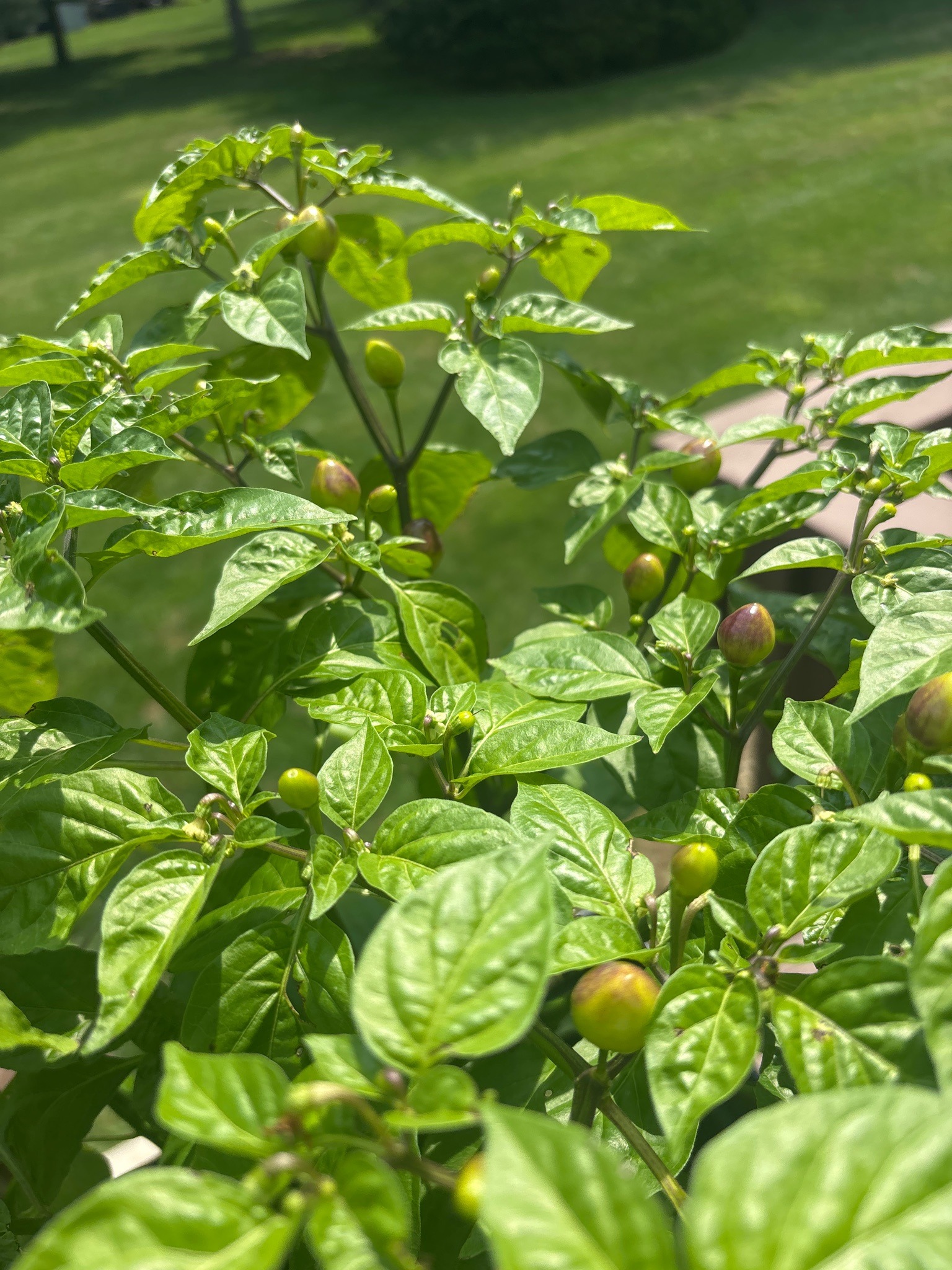
An upright, branching herbaceous plant featuring glossy green lanceolate leaves, small star-shaped white flowers, and developing globular to conical fruits that typically transition in coloration from green to shades of purple and red as they mature.
- Light
- Full sun, requiring 6 to 8 hours of direct sunlight per day.
- Water
- Water regularly when the top soil dries out. Avoid waterlogged conditions or prolonged drought, both of which can cause blossom drop.
- Growth
- Stout, bushy annual or short-lived perennial growing up to 1 to 3 feet tall with a similar spread, characterized by a moderately fast growth rate.
Care instructions
Provide full sun exposure with at least six to eight hours of direct light daily. Maintain consistently moist, well-draining soil and water deeply when the top inch of soil becomes dry. Apply a balanced, slow-release fertilizer during the active growing season to support continuous development.
Growing details
Sunlight
Full sun, requiring 6 to 8 hours of direct sunlight per day.
Watering
Water regularly when the top soil dries out. Avoid waterlogged conditions or prolonged drought, both of which can cause blossom drop.
Soil
Rich, well-draining loamy soil with a slightly acidic to neutral pH ranging from 6.0 to 6.8.
Hardiness zone
USDA Hardiness Zones 9 through 11 as a perennial, frequently cultivated as an annual in cooler temperate regions.
Growth habit
Stout, bushy annual or short-lived perennial growing up to 1 to 3 feet tall with a similar spread, characterized by a moderately fast growth rate.
Bloom season
Blooms during summer with small, solitary, white to purplish flowers featuring five petals.
Propagation
Propagated primarily from seeds started indoors 8 to 10 weeks before the last spring frost, or via stem cuttings rooted in a warm, humid environment.
Common pests & issues
Susceptible to aphids, spider mites, whiteflies, and fungal wilt diseases if overwatered or kept in poorly draining soil. Promote good air circulation to prevent fungal issues.
Similar species
Other members of the Solanaceae family such as tomatoes (Solanum lycopersicum) or bell peppers (Capsicum annuum var. grossum), distinguished primarily by fruit shape, foliage texture, and flower structure.