
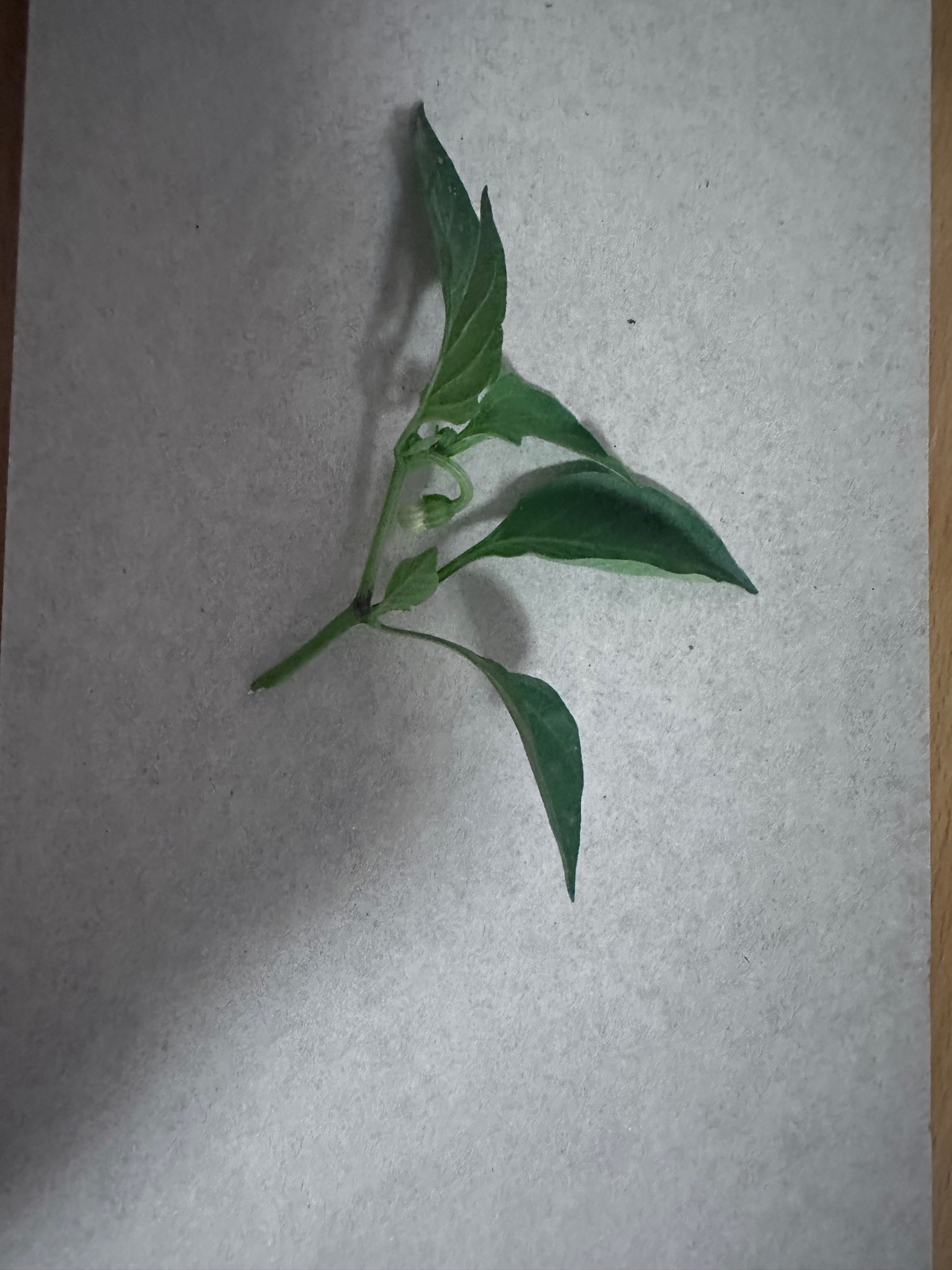
Chili Pepper
Capsicum annuum
A tender perennial shrub often grown as an annual, featuring simple, alternate lanceolate green leaves, branching stems, and small star-shaped flowers.
- Light
- Full sun, requiring six to eight hours of direct sunlight per day.
- Water
- Moderate and regular watering needs. Keep the soil consistently moist but never waterlogged. Drought tolerance is low to moderate once established. Over-watering can lead to root problems, while under-watering causes wilting.
- Growth
- Stiffly branching herbaceous to woody perennial grown as an annual, reaching heights of 1 to 3 feet with a spread of 1 to 2 feet, exhibiting moderate growth rate.
Care instructions
Provide full sun exposure for at least six to eight hours daily. Maintain evenly moist soil with good drainage, allowing the top inch to dry out between watering sessions. Apply a balanced, slow-release fertilizer during the active growing phase.
Growing details
Sunlight
Full sun, requiring six to eight hours of direct sunlight per day.
Watering
Moderate and regular watering needs. Keep the soil consistently moist but never waterlogged. Drought tolerance is low to moderate once established. Over-watering can lead to root problems, while under-watering causes wilting.
Soil
Well-draining, fertile loamy or sandy loam soil with an optimal pH range between 6.0 and 6.8.
Hardiness zone
USDA zones 9 through 11 when grown as a perennial; widely cultivated as an annual in cooler zones.
Growth habit
Stiffly branching herbaceous to woody perennial grown as an annual, reaching heights of 1 to 3 feet with a spread of 1 to 2 feet, exhibiting moderate growth rate.
Bloom season
Blooms from mid-summer to autumn, producing small, solitary, white to grayish-white star-shaped flowers.
Propagation
Propagated primarily from seeds sown indoors 6 to 8 weeks before the last spring frost, or through stem cuttings.
Common pests & issues
Susceptible to aphids, spider mites, whiteflies, and fungal issues such as powdery mildew and root rot, typically managed through proper air circulation and moisture control.
Similar species
Look-alikes include other members of the Solanaceae family like tomatoes and eggplants in their early vegetative stages, but can be distinguished by specific leaf shape, stem branching patterns, and floral structure.