
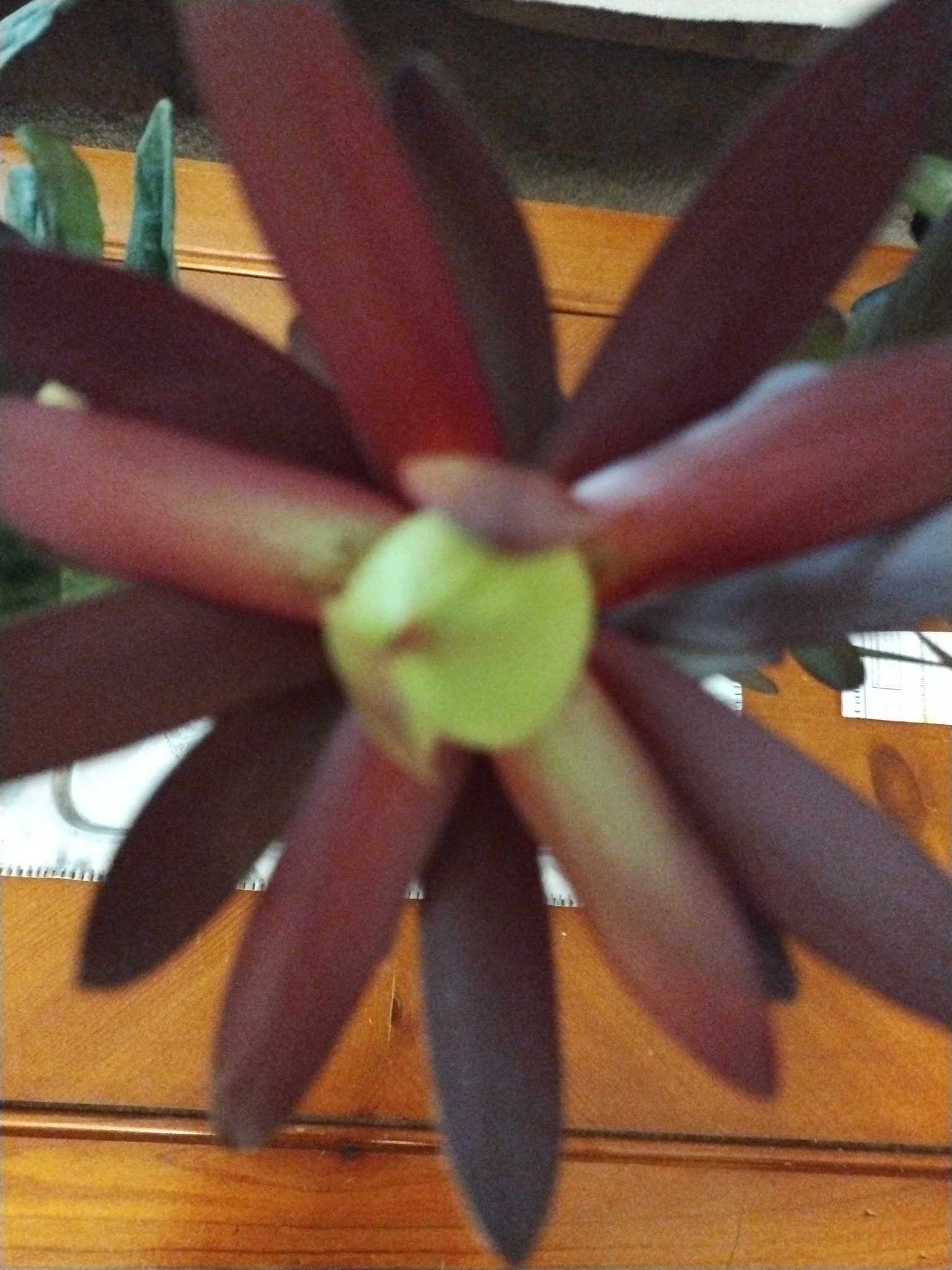
Chinese Dunce Cap
Orostachys boehmeri
A miniature succulent forming tight, geometric rosettes of fleshy, spoon-shaped leaves that often feature striking purplish-red or dark burgundy coloration.
- Light
- Full sun to bright indirect light, requiring at least 6 hours of sunlight daily.
- Water
- Water deeply but infrequently using the soak-and-dry method. Allow soil to dry completely between waterings. Highly drought-tolerant; sensitive to overwatering which causes root rot.
- Growth
- Perennial succulent with a rosette-forming growth habit. Typically grows 2 to 4 inches tall and spreads up to 6 inches wide through offsets, with a slow growth rate.
Care instructions
Provide bright, direct light for several hours a day. Water thoroughly only when the soil has completely dried out. Plant in a fast-draining gritty cactus and succulent mix, and feed sparingly with a diluted balanced fertilizer during the spring and summer active growth phase.
Growing details
Sunlight
Full sun to bright indirect light, requiring at least 6 hours of sunlight daily.
Watering
Water deeply but infrequently using the soak-and-dry method. Allow soil to dry completely between waterings. Highly drought-tolerant; sensitive to overwatering which causes root rot.
Soil
Fast-draining, highly porous soil mix composed of potting soil, perlite, and coarse sand. Prefers neutral to slightly alkaline pH levels ranging from 6.0 to 7.5.
Hardiness zone
USDA Hardiness Zones 5 through 9. Tolerates moderate frost if kept completely dry during winter months.
Growth habit
Perennial succulent with a rosette-forming growth habit. Typically grows 2 to 4 inches tall and spreads up to 6 inches wide through offsets, with a slow growth rate.
Bloom season
Blooms in late summer to autumn, producing a tall, dense cone-shaped inflorescence of small whitish or pale yellow flowers, after which the main flowering rosette dies back while offsets continue the plant.
Propagation
Propagated easily by removing and replanting offsets (pups) that form around the base of the parent rosette, or through leaf cuttings taken during the spring active growing season.
Common pests & issues
Prone to mealybugs and root rot. Prevent root rot by using extremely well-draining soil and a pot with drainage holes. Treat pests with targeted horticultural soaps or isopropyl alcohol applications.
Similar species
Sempervivum species (Hen and Chicks), which share a similar rosette growth habit but generally have broader, more persistent leaf shapes and different native distributions.