
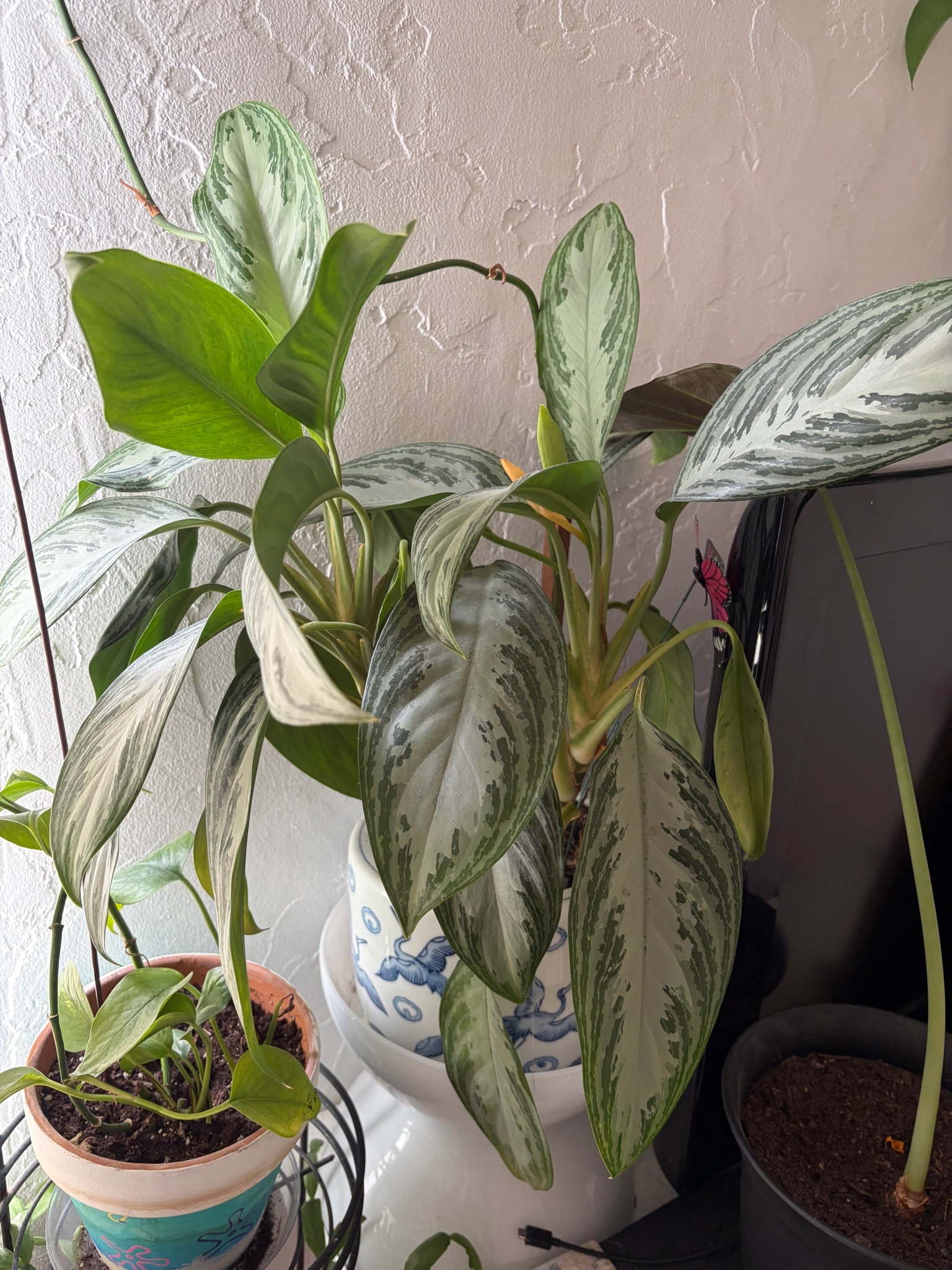
Chinese Evergreen
Aglaonema modestum
An evergreen perennial houseplant featuring lance-shaped to elliptical leaves with striking patterns of silvery-gray and deep green markings, growing upright from clustered stems.
- Light
- Low to medium indirect light, about 4 to 6 hours daily. Avoid direct sunlight which can scorch the leaves.
- Water
- Water thoroughly when the top 1 to 2 inches of soil feel dry. Reduce watering slightly during the winter months. Avoid letting the pot sit in standing water to prevent root rot.
- Growth
- Clumping herbaceous perennial with an upright to slightly spreading habit, reaching a mature height and spread of 1 to 3 feet with a moderate growth rate.
Care instructions
Provide bright, indirect sunlight and maintain consistently moist but well-draining soil. Allow the top inch of soil to dry out between watering sessions. Feed with a balanced, water-soluble fertilizer diluted to half strength monthly during the active growing season.
Growing details
Sunlight
Low to medium indirect light, about 4 to 6 hours daily. Avoid direct sunlight which can scorch the leaves.
Watering
Water thoroughly when the top 1 to 2 inches of soil feel dry. Reduce watering slightly during the winter months. Avoid letting the pot sit in standing water to prevent root rot.
Soil
Well-draining, rich potting mix containing peat moss, perlite, and bark to ensure good aeration. Optimal soil pH ranges from 5.6 to 6.5.
Hardiness zone
USDA zones 10 through 11, grown primarily indoors in cooler climates as it cannot tolerate frost or freezing temperatures.
Growth habit
Clumping herbaceous perennial with an upright to slightly spreading habit, reaching a mature height and spread of 1 to 3 feet with a moderate growth rate.
Bloom season
Spring to summer; produces small, calla-lily-like inflorescences featuring a pale green or white spathe enclosing a spadix, though rarely flowers indoors.
Propagation
Propagated easily through stem cuttings placed in water or moist potting mix, or by division of mature root clumps during repotting in spring.
Common pests & issues
Prone to mealybugs, scale insects, and spider mites. Leaf tip browning can occur from low humidity, fluoridated water, or dry soil.
Similar species
Dieffenbachia (dumb cane), which has thicker stems and different leaf variegation patterns, and Philodendron species, which often feature distinct climbing or vining growth habits.