
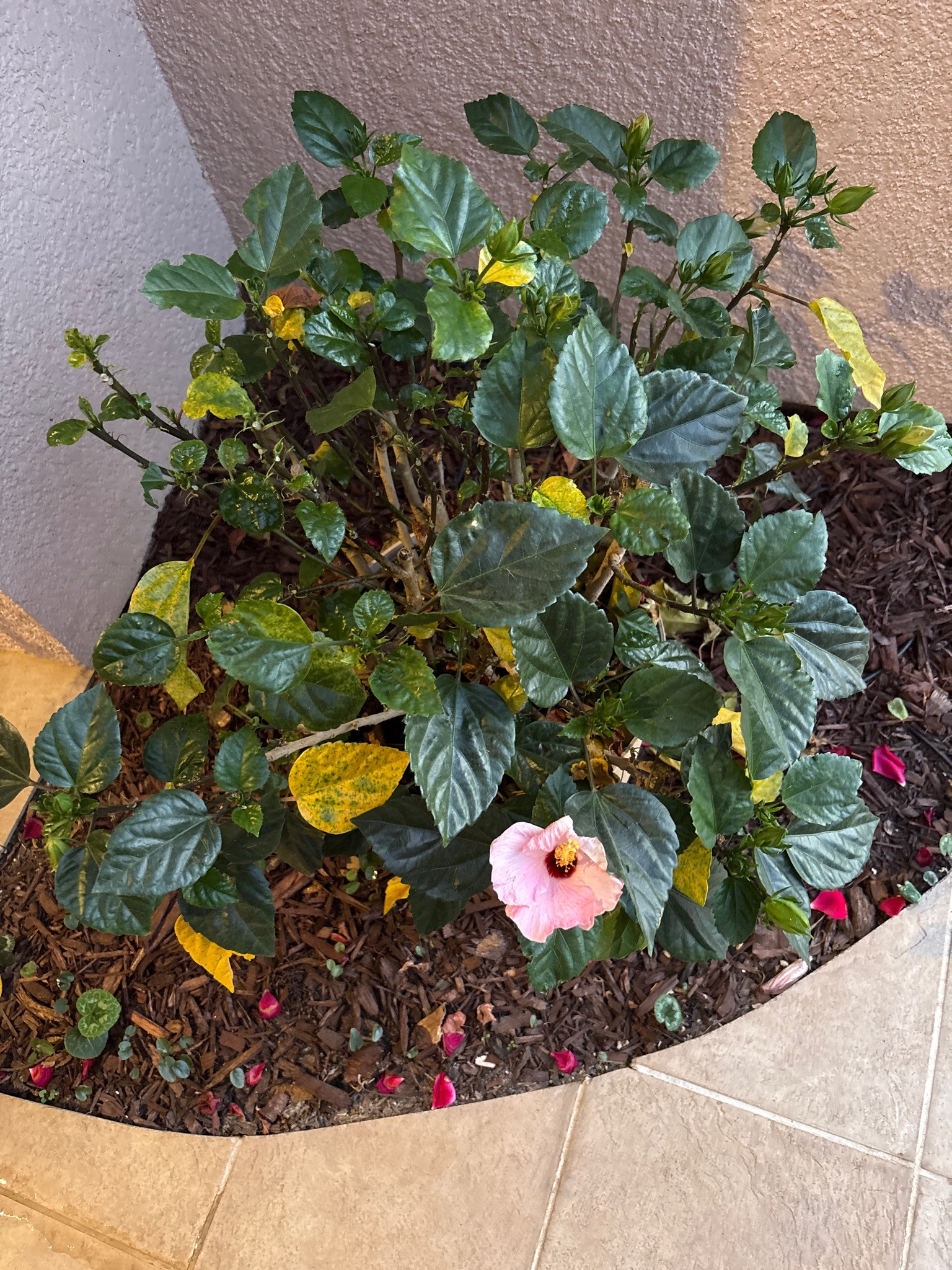
Chinese Hibiscus
Hibiscus rosa-sinensis
An evergreen shrub featuring glossy, dark green leaves with coarsely toothed margins and a prominent single pink flower displaying a central staminal column.
- Light
- Full sun to partial shade, requiring at least 6 hours of direct sunlight daily for optimal flowering.
- Water
- Water deeply and regularly, allowing the top inch of soil to dry out between waterings. Increase frequency during hot, dry periods and reduce watering in winter.
- Growth
- Perennial evergreen shrub with an upright, branching habit, reaching mature heights of 4 to 15 feet and a spread of 5 to 10 feet.
Care instructions
Provide full sun to partial shade with regular watering, ensuring the soil remains evenly moist but well-draining. Feed during the growing season with a balanced fertilizer formulated for flowering shrubs.
Growing details
Sunlight
Full sun to partial shade, requiring at least 6 hours of direct sunlight daily for optimal flowering.
Watering
Water deeply and regularly, allowing the top inch of soil to dry out between waterings. Increase frequency during hot, dry periods and reduce watering in winter.
Soil
Rich, loamy, well-draining soil with a slightly acidic to neutral pH range of 6.0 to 6.5.
Hardiness zone
USDA Hardiness Zones 9 through 11, grown as an annual or container plant in cooler climates.
Growth habit
Perennial evergreen shrub with an upright, branching habit, reaching mature heights of 4 to 15 feet and a spread of 5 to 10 feet.
Bloom season
Blooms continuously throughout the spring and summer months, producing large, showy trumpet-shaped flowers in shades of pink, red, orange, yellow, or white.
Propagation
Propagated primarily through stem tip cuttings taken in spring or summer, treated with rooting hormone and placed in a warm, humid environment.
Common pests & issues
Susceptible to aphids, whiteflies, and spider mites, particularly in dry indoor environments. Root rot can occur if soil remains waterlogged.
Similar species
Rose of Sharon (Hibiscus syriacus), which is deciduous and more cold-hardy, and Turk's Cap (Malvaviscus arboreus), which features petals that do not fully open.