
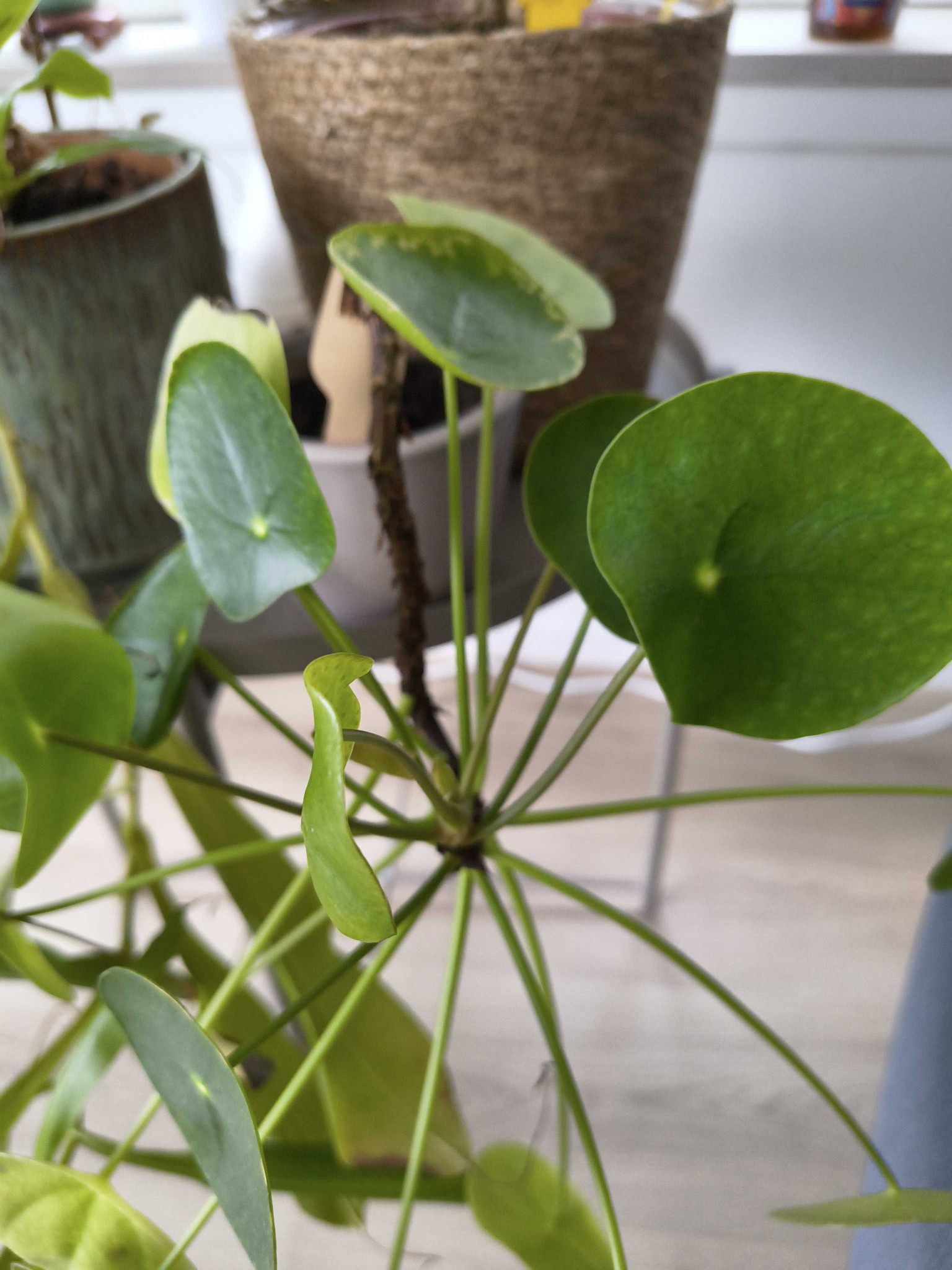
Chinese Money Plant
Pilea peperomioides
An upright, evergreen perennial featuring distinct, peltate, coin-shaped bright green leaves that attach to long petioles radiating from a central stem.
- Light
- Bright, indirect light for about 6 hours per day. Avoid direct harsh sunlight to prevent leaf scorching.
- Water
- Water thoroughly when the soil is completely dry to the touch. Drought tolerant once established, but sensitive to over-watering which can cause root issues.
- Growth
- Perennial houseplant with an upright, single-stemmed growth habit that can eventually branch or produce basal offsets, reaching heights and spreads of about 12 inches.
Care instructions
Provide bright, indirect sunlight and allow the soil to dry out completely between thorough waterings. Feed with a balanced liquid houseplant fertilizer once a month during the spring and summer growing season.
Growing details
Sunlight
Bright, indirect light for about 6 hours per day. Avoid direct harsh sunlight to prevent leaf scorching.
Watering
Water thoroughly when the soil is completely dry to the touch. Drought tolerant once established, but sensitive to over-watering which can cause root issues.
Soil
Well-draining, rich potting mix with a neutral to slightly acidic pH range of 6.0 to 7.0.
Hardiness zone
USDA Hardiness Zones 10 to 11 when grown outdoors; primarily cultivated as a houseplant in cooler regions.
Growth habit
Perennial houseplant with an upright, single-stemmed growth habit that can eventually branch or produce basal offsets, reaching heights and spreads of about 12 inches.
Bloom season
Rarely blooms indoors; when grown in optimal conditions, it may produce tiny, inconspicuous greenish-white flowers on pinkish stems during late spring or summer.
Propagation
Propagated easily by separating and removing the small pup offsets that emerge from the soil or lower stem, then potting them individually in moist potting mix.
Common pests & issues
Prone to mealybugs, scale insects, and fungus gnats if overwatered. Yellowing leaves typically indicate overwatering or insufficient light.
Similar species
Peperomia polybotrya (Raindrop Peperomia), which features somewhat teardrop-shaped succulent leaves rather than perfectly round coin-shaped leaves attached at the center.