
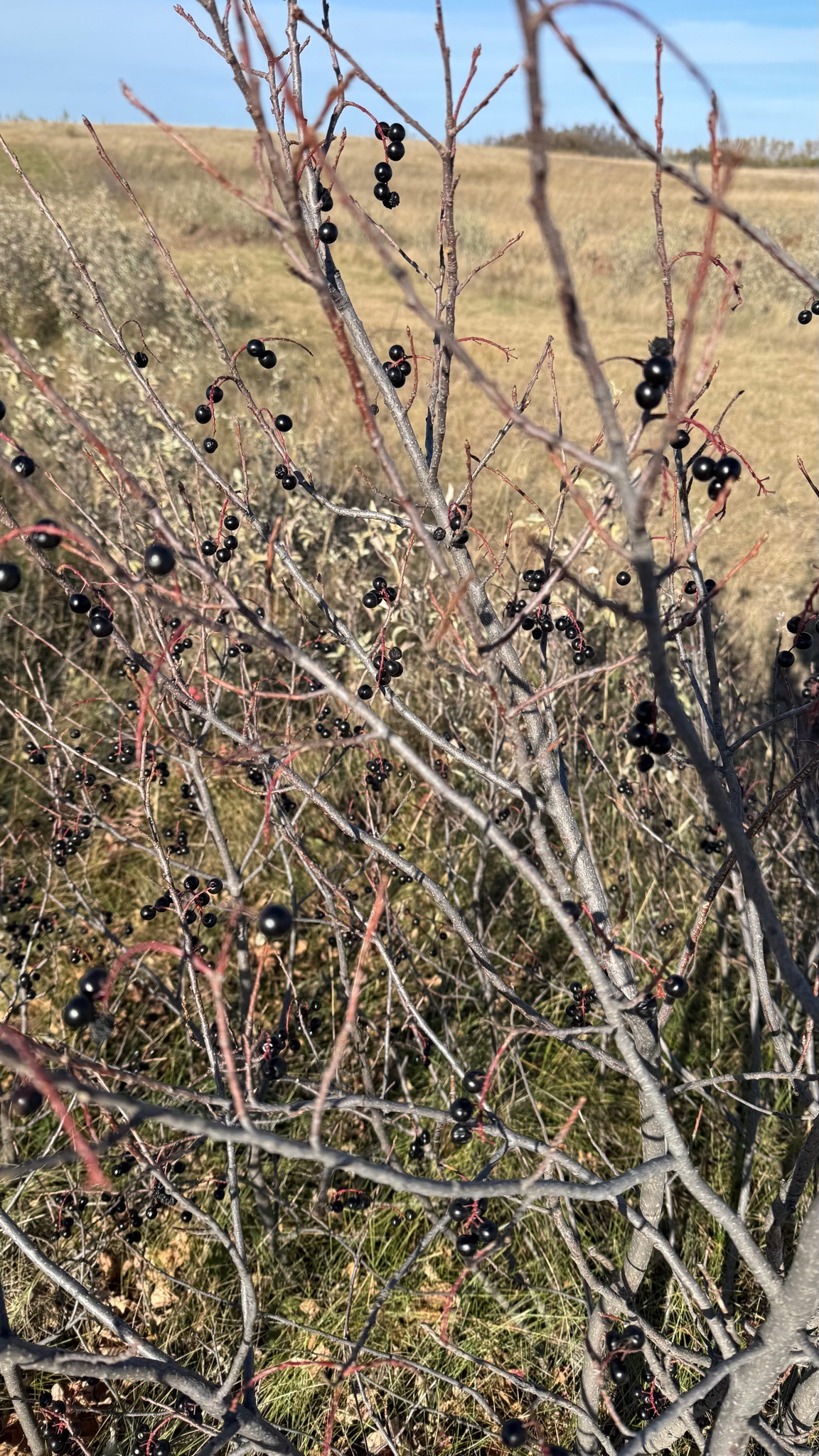
Chokecherry
Prunus virginiana
A deciduous shrub or small tree with slender branches, grayish-brown bark, finely toothed leaves, and dense clusters of dark purple to black spherical fruit persisting on the branches.
- Light
- Full sun to partial shade, requiring at least 6 hours of direct sunlight daily
- Water
- Moderate water needs; drought-tolerant once established, but prefers consistently moist, well-drained soil. Avoid prolonged waterlogged conditions.
- Growth
- Large deciduous shrub or small tree growing up to 10 to 25 feet tall with a similar spread, featuring a multi-stemmed, upright, and somewhat irregular crown with a moderate growth rate.
Care instructions
Plant in full sun to partial shade with well-draining soil. Water deeply during establishment and regularly during dry periods to maintain moisture. Apply a balanced fertilizer in early spring if growth is sluggish.
Growing details
Sunlight
Full sun to partial shade, requiring at least 6 hours of direct sunlight daily
Watering
Moderate water needs; drought-tolerant once established, but prefers consistently moist, well-drained soil. Avoid prolonged waterlogged conditions.
Soil
Adaptable to various soil types including loam, sand, and clay, provided they have good drainage. Prefers a neutral to slightly acidic pH range of 6.0 to 7.0.
Hardiness zone
USDA Zones 2 through 8, demonstrating strong cold tolerance in northern climates
Growth habit
Large deciduous shrub or small tree growing up to 10 to 25 feet tall with a similar spread, featuring a multi-stemmed, upright, and somewhat irregular crown with a moderate growth rate.
Bloom season
Spring (typically May to June); produces small, fragrant, white flowers arranged in drooping cylindrical clusters called racemes.
Propagation
Propagated easily by seeds (which require cold stratification), root suckers, or softwood and hardwood cuttings taken during the dormant season.
Common pests & issues
Susceptible to black knot fungal disease, tent caterpillars, aphids, and powdery mildew. Prevent by ensuring good air circulation and clearing away fallen debris.
Similar species
Pin Cherry (Prunus pensylvanica), which has shiny reddish-brown bark and flowers in flat-topped clusters rather than long cylindrical racemes.