
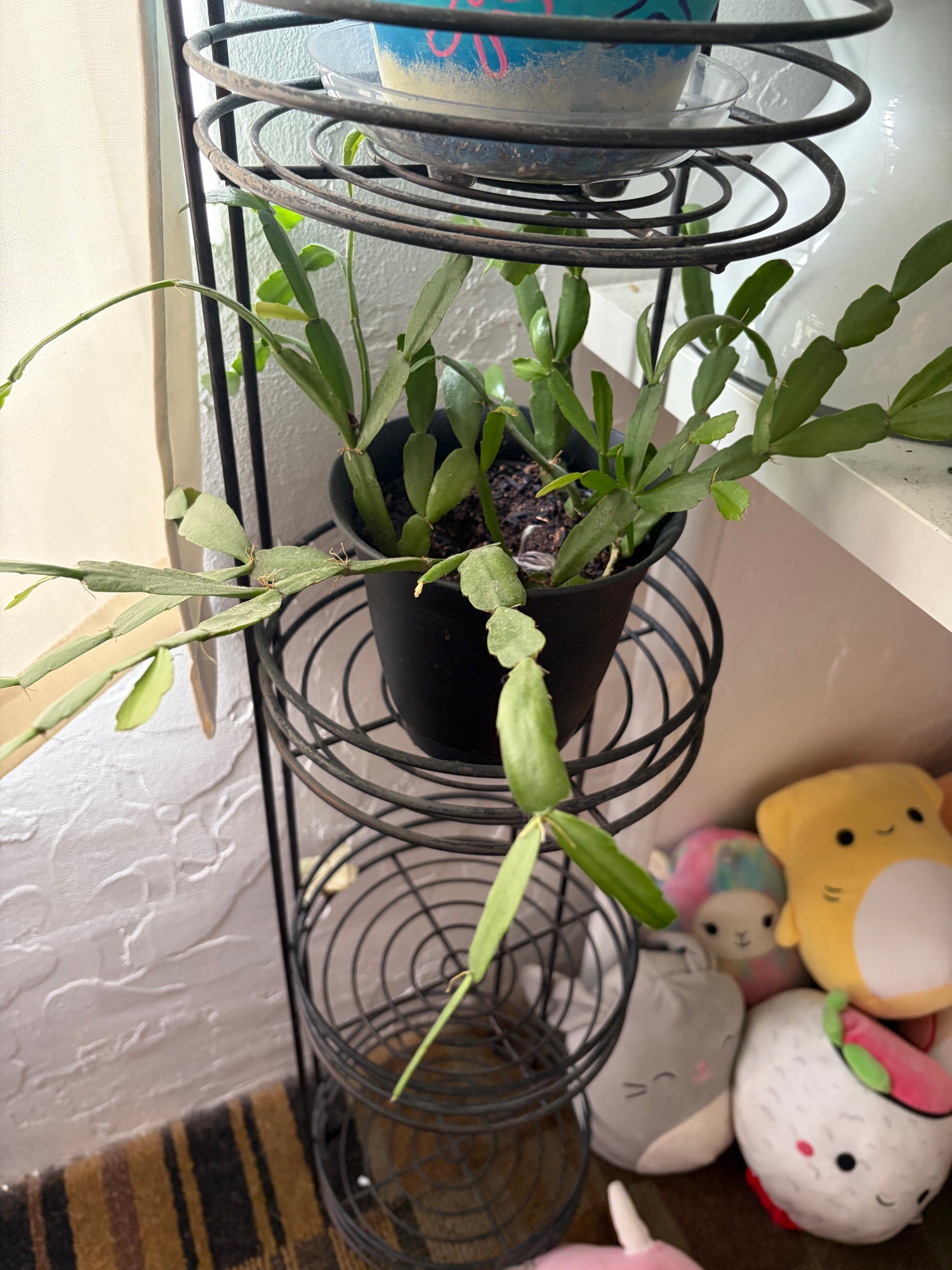
Christmas Cactus
Schlumbergera bridgesii
An epiphytic cactus with flattened, segmented green stems that arch gracefully over the edges of the pot, featuring slight scalloping or rounded edges along the stem segments.
- Light
- Bright, indirect light for 6 to 8 hours daily. Avoid direct harsh sunlight, which can scorch the stem segments.
- Water
- Water deeply when the top third of the soil is dry to the touch. Reduce watering slightly during the autumn rest period to encourage bud formation, and avoid letting the pot sit in standing water to prevent root rot.
- Growth
- Perennial epiphyte with a cascading or trailing habit, reaching a mature height of 6 to 12 inches and a spread of 1 to 2 feet with moderate growth rate.
Care instructions
Provide bright, indirect sunlight and water thoroughly when the top few inches of soil become dry. Maintain high humidity and use a well-draining, porous soil mix formulated for epiphytes or cacti. Feed with a balanced, water-soluble fertilizer during the spring and summer growing season.
Growing details
Sunlight
Bright, indirect light for 6 to 8 hours daily. Avoid direct harsh sunlight, which can scorch the stem segments.
Watering
Water deeply when the top third of the soil is dry to the touch. Reduce watering slightly during the autumn rest period to encourage bud formation, and avoid letting the pot sit in standing water to prevent root rot.
Soil
Rich, loose, and exceptionally well-draining soil mix, ideally containing peat moss, perlite, and coarse sand with a slightly acidic to neutral pH range of 5.5 to 6.5.
Hardiness zone
USDA Hardiness Zones 10 to 12 if grown outdoors; typically kept as an indoor container plant in colder regions.
Growth habit
Perennial epiphyte with a cascading or trailing habit, reaching a mature height of 6 to 12 inches and a spread of 1 to 2 feet with moderate growth rate.
Bloom season
Blooms primarily in late autumn to winter, producing tubular flowers in shades of pink, red, purple, or white from the tips of the stem segments.
Propagation
Propagated easily via stem cuttings consisting of two to three segments. Let the cut end dry for a day to callus, then insert into moist, well-draining soil until roots develop.
Common pests & issues
Susceptible to root rot from overwatering and fungal stem diseases. Pests such as mealybugs and fungus gnats can occasionally infest the plant, treatable with horticultural soaps or neem oil.
Similar species
Often confused with Thanksgiving Cactus (Schlumbergera truncata) and Easter Cactus (Schlumbergera gaertneri); Thanksgiving cacti feature pointed, claw-like projections on the edges of the segments, whereas Christmas cacti have smoother, more rounded segment margins.