
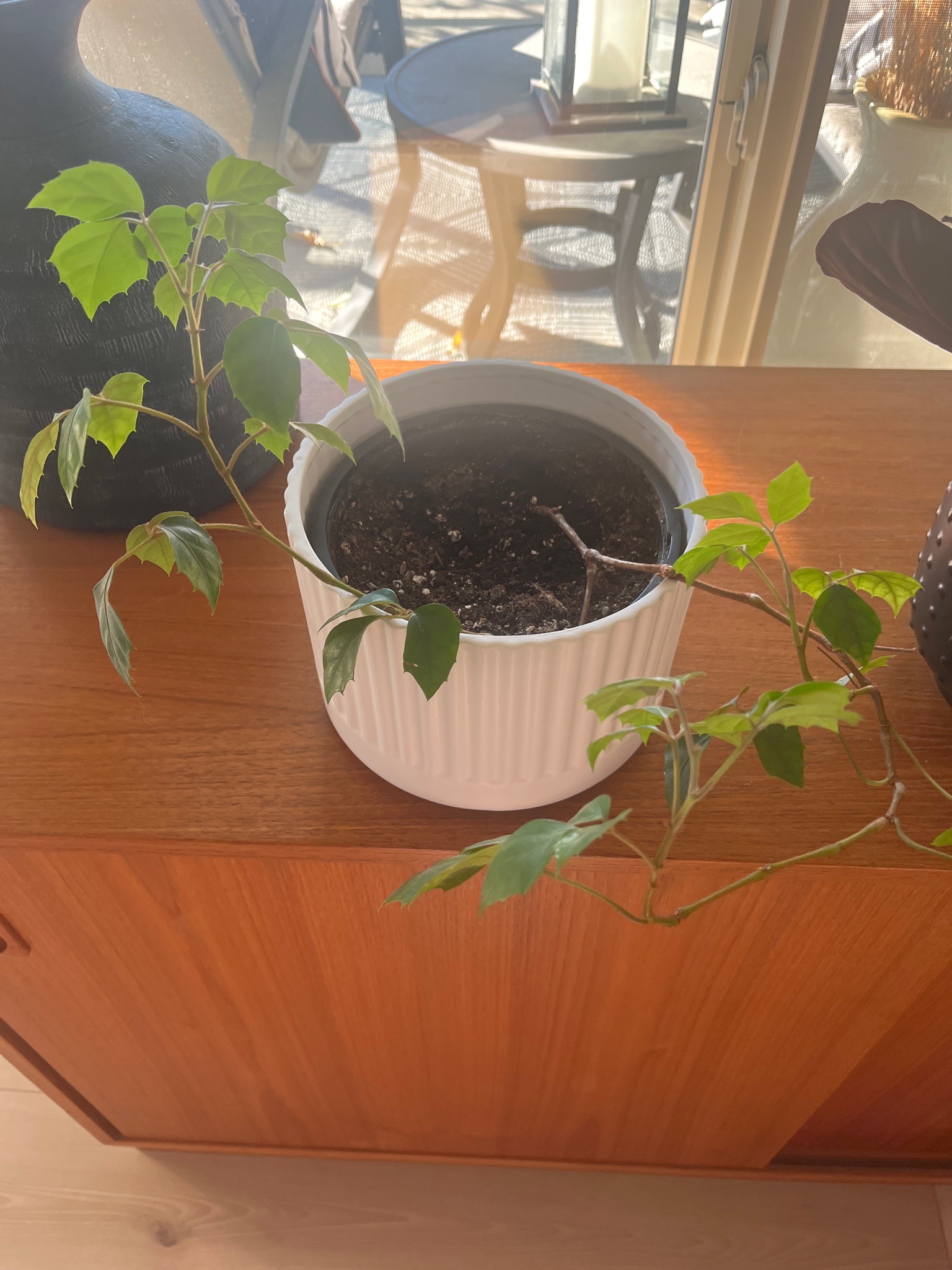
Cissus
Cissus rhombifolia
A trailing or climbing evergreen vine featuring distinct diamond-shaped leaflets arranged in groups of three, often with a glossy green appearance and soft hairs on the stems.
- Light
- Bright, indirect light for about 6 to 8 hours daily; avoid harsh, direct midday sun which can scorch the leaves.
- Water
- Water thoroughly when the top 1 to 2 inches of soil feel dry to the touch. Reduce watering frequency during the winter months.
- Growth
- Perennial trailing vine or climber that can reach lengths of 3 to 10 feet indoors, growing at a moderate rate.
Care instructions
Provide bright, indirect sunlight, allowing the top couple of inches of soil to dry out between waterings. Use a well-draining potting mix and feed lightly with a balanced liquid fertilizer during the spring and summer growing season.
Growing details
Sunlight
Bright, indirect light for about 6 to 8 hours daily; avoid harsh, direct midday sun which can scorch the leaves.
Watering
Water thoroughly when the top 1 to 2 inches of soil feel dry to the touch. Reduce watering frequency during the winter months.
Soil
Rich, loose, well-draining potting soil with a slightly acidic to neutral pH range of 6.0 to 7.0.
Hardiness zone
USDA hardiness zones 10 to 12; typically grown as an indoor houseplant in cooler temperate climates.
Growth habit
Perennial trailing vine or climber that can reach lengths of 3 to 10 feet indoors, growing at a moderate rate.
Bloom season
Non-flowering indoors; produces small, inconspicuous greenish flowers very rarely when mature under optimal outdoor conditions.
Propagation
Easily propagated through stem tip cuttings taken in spring or summer, rooted in water or a moist potting medium.
Common pests & issues
Susceptible to spider mites, mealybugs, and scale insects, which can be prevented by maintaining good humidity and treated with insecticidal soap. Root rot may occur if the soil remains excessively soggy.
Similar species
Parthenocissus tricuspidata and other grape ivy relatives, which can be distinguished by specific leaf lobe variations and stipule characteristics.