
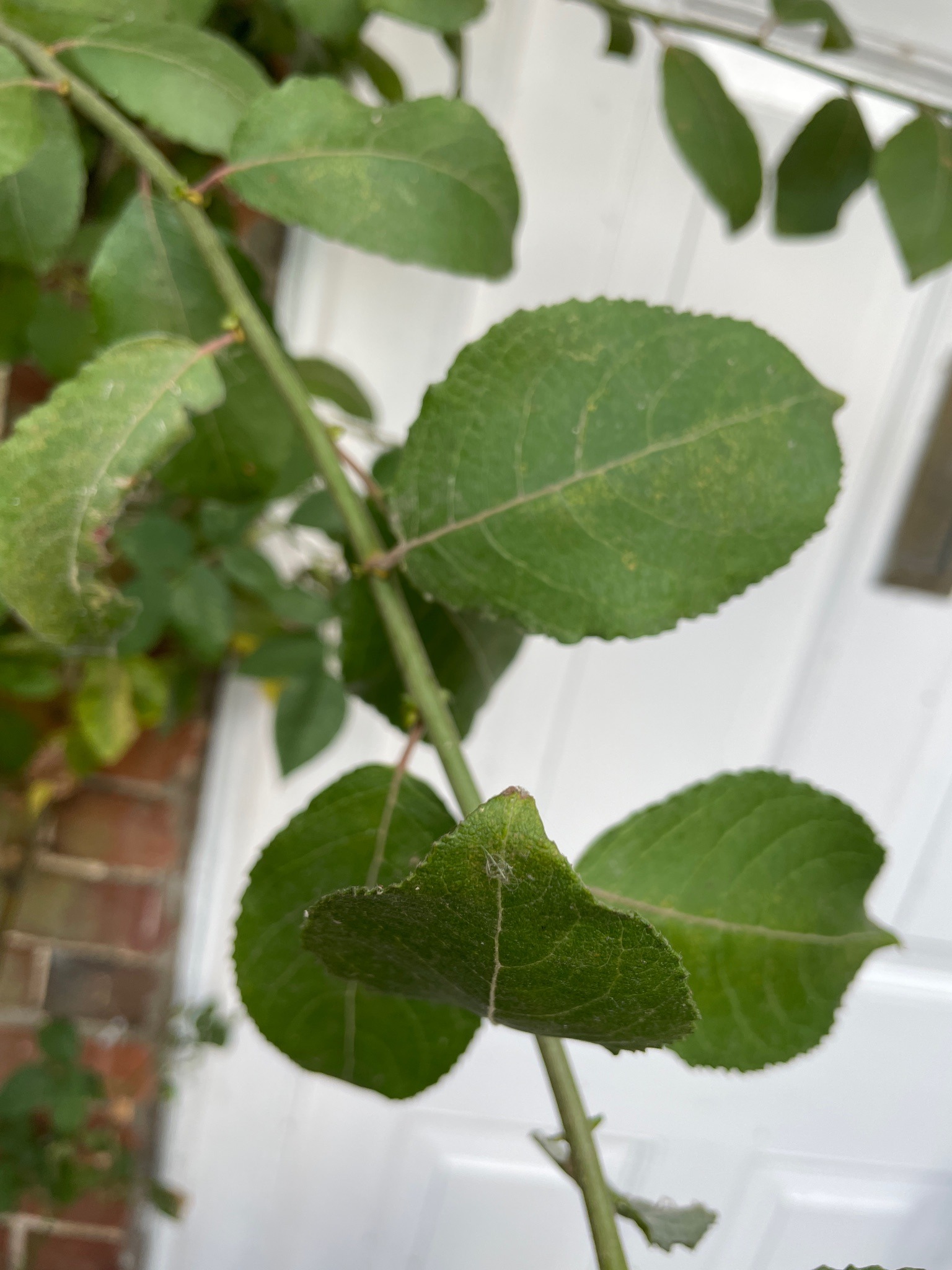
Climbing Rose
Rosa spp.
A perennial woody vine or shrub with arching stems, prickly thorns, and alternate, pinnately compound leaves with serrated margins.
- Light
- Full sun, requiring a minimum of 6 hours of direct sunlight per day.
- Water
- Water deeply once a week during dry periods, allowing the top few inches of soil to dry out between waterings to prevent root rot.
- Growth
- Perennial climbing vine or rambling shrub with long flexible canes that can reach heights of 8 to 20 feet or more when supported.
Care instructions
Provide full sun for at least six hours daily, water deeply and regularly at the base to keep soil moderately moist, plant in well-draining loamy soil enriched with organic matter, and feed with a balanced slow-release fertilizer in early spring.
Growing details
Sunlight
Full sun, requiring a minimum of 6 hours of direct sunlight per day.
Watering
Water deeply once a week during dry periods, allowing the top few inches of soil to dry out between waterings to prevent root rot.
Soil
Rich, well-draining loamy soil with a slightly acidic to neutral pH range between 6.0 and 6.5.
Hardiness zone
USDA zones 4 through 9, depending on the specific cultivar.
Growth habit
Perennial climbing vine or rambling shrub with long flexible canes that can reach heights of 8 to 20 feet or more when supported.
Bloom season
Blooms from late spring through autumn, producing flowers in various colors such as red, pink, yellow, and white, often featuring a pleasant fragrance.
Propagation
Propagated primarily through stem cuttings taken in summer, or through layering and budding onto rootstocks.
Common pests & issues
Susceptible to fungal issues like powdery mildew and black spot, as well as pests such as aphids and spider mites, manageable with proper spacing, good air circulation, and targeted horticultural treatments.
Similar species
Other rambling climbers like certain species of Clematis or Honeysuckle, which can be distinguished by their lack of thorns and differing leaf structures.