
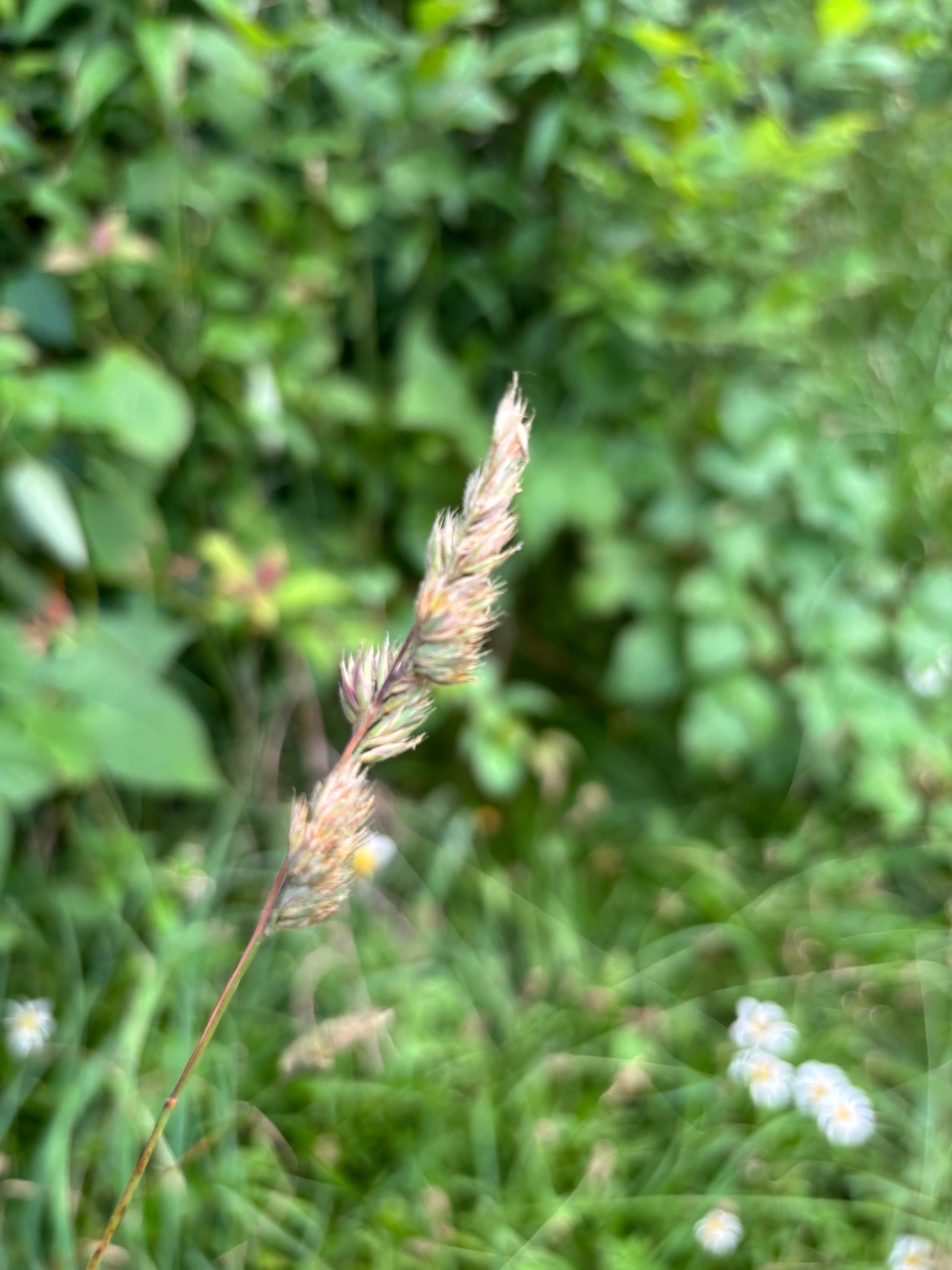
Cock's-foot grass
Dactylis glomerata
A coarse, tufted perennial bunchgrass with characteristic flattened flower heads featuring dense, one-sided clusters of spikelets resemble a rooster's foot.
- Light
- Full sun to partial shade (4 to 8 hours of direct sunlight daily).
- Water
- Requires moderate moisture; highly drought-tolerant once deep root system is established.
- Growth
- Perennial bunchgrass forming dense tussocks, growing 1.5 to 4 feet (45 to 120 cm) tall with a moderate growth rate.
Care instructions
Extremely low-maintenance. Thrives in full sun to light shade in a range of soil types. Requires standard rainfall once established and little to no fertilization.
Growing details
Sunlight
Full sun to partial shade (4 to 8 hours of direct sunlight daily).
Watering
Requires moderate moisture; highly drought-tolerant once deep root system is established.
Soil
Adaptable to many soils including clay, loam, and sandy soils, preferring well-drained conditions with pH 5.5 to 7.5.
Hardiness zone
USDA Zones 3 to 9
Growth habit
Perennial bunchgrass forming dense tussocks, growing 1.5 to 4 feet (45 to 120 cm) tall with a moderate growth rate.
Bloom season
Late spring to mid-summer, producing grayish-green to purplish dense panicle clusters.
Propagation
Propagated easily by seed sown in autumn or early spring, or by root clump division.
Common pests & issues
Susceptible to rust fungi, leaf spot, and ergot in wet conditions; generally resistant to most insect pests.
Similar species
Festuca arundinacea (Tall Fescue) and Holcus lanatus (Yorkshire Fog), but Dactylis glomerata is distinguished by its unique flattened leaf bases and distinct, one-sided spikelet clusters.