
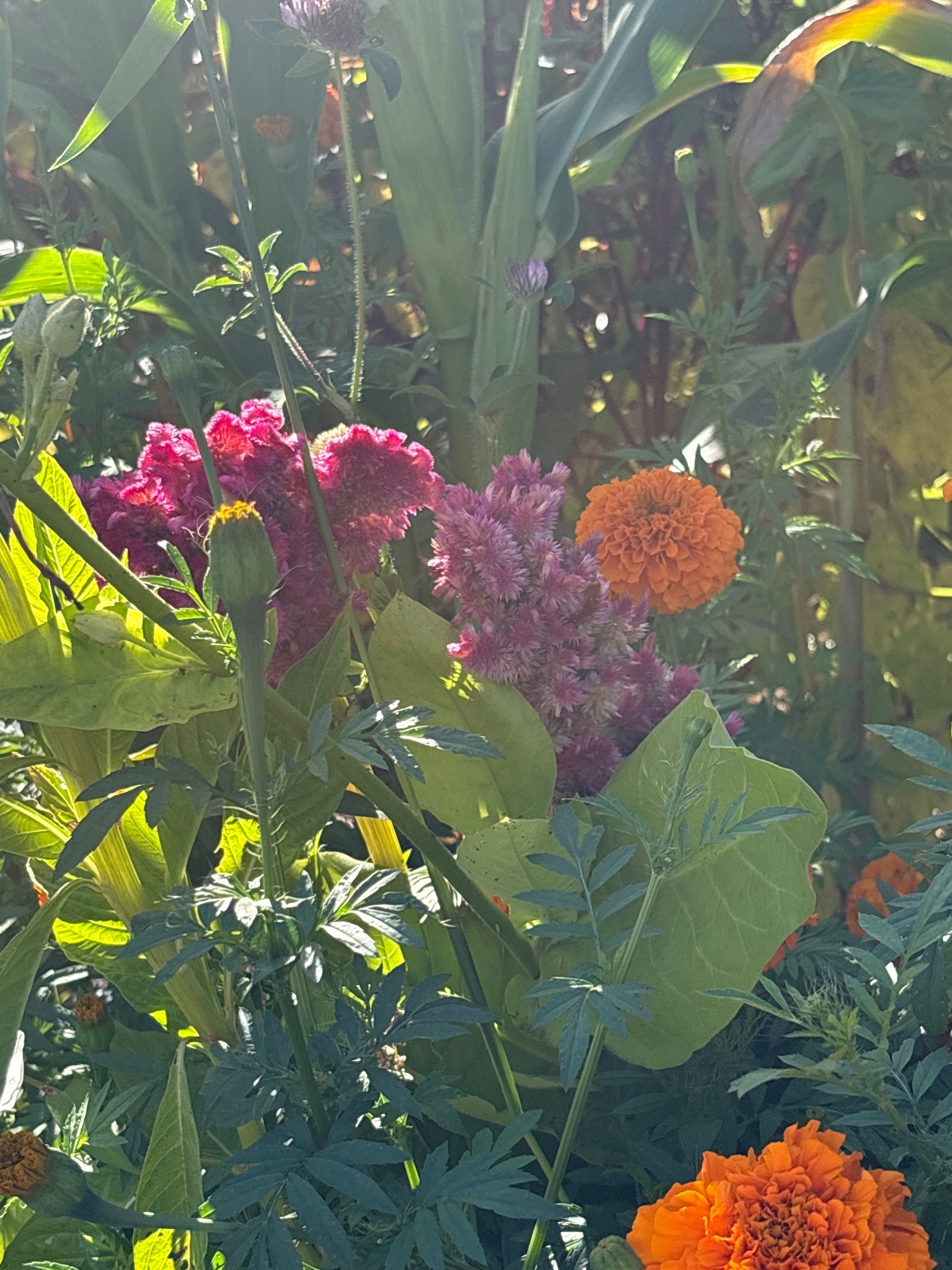
Cockscomb and Marigold
Celosia argentea & Tagetes patula
A vibrant garden grouping featuring the velvety, brain-like or feathered inflorescences of Celosia (cockscomb) alongside bright, pom-pom-like orange marigolds and lush surrounding foliage.
- Light
- Full sun, requiring at least 6 to 8 hours of direct sunlight daily.
- Water
- Moderate water needs; allow the top inch of soil to dry out between waterings. Drought tolerant once established, but avoid prolonged dry spells to prevent wilting.
- Growth
- Upright, herbaceous annuals growing between 1 to 3 feet tall with a spread of 1 to 2 feet, displaying a fast growth rate during the warm summer months.
Care instructions
Plant in full sun with well-draining soil. Water regularly at the base to keep the soil evenly moist but not waterlogged. Apply a balanced liquid fertilizer monthly during the growing season to support continuous flowering.
Growing details
Sunlight
Full sun, requiring at least 6 to 8 hours of direct sunlight daily.
Watering
Moderate water needs; allow the top inch of soil to dry out between waterings. Drought tolerant once established, but avoid prolonged dry spells to prevent wilting.
Soil
Rich, well-draining loamy or sandy soil with a slightly acidic to neutral pH range of 6.0 to 7.0.
Hardiness zone
Typically grown as warm-season annuals across USDA hardiness zones 2 through 11.
Growth habit
Upright, herbaceous annuals growing between 1 to 3 feet tall with a spread of 1 to 2 feet, displaying a fast growth rate during the warm summer months.
Bloom season
Blooms continuously from late spring through the first autumn frost, featuring striking red, pink, and orange flowers.
Propagation
Propagated easily from seeds sown directly in the garden after the last spring frost or started indoors 4 to 6 weeks prior.
Common pests & issues
Susceptible to powdery mildew, stem rot in overly damp conditions, and spider mites or aphids during hot, dry weather.
Similar species
Other members of the Amaranthaceae family like Amaranthus, or other daisy-family flowers like Zinnias, distinguished by Celosia's fused, velvety crests and Tagetes' distinctive pinnate leaves and scent.