
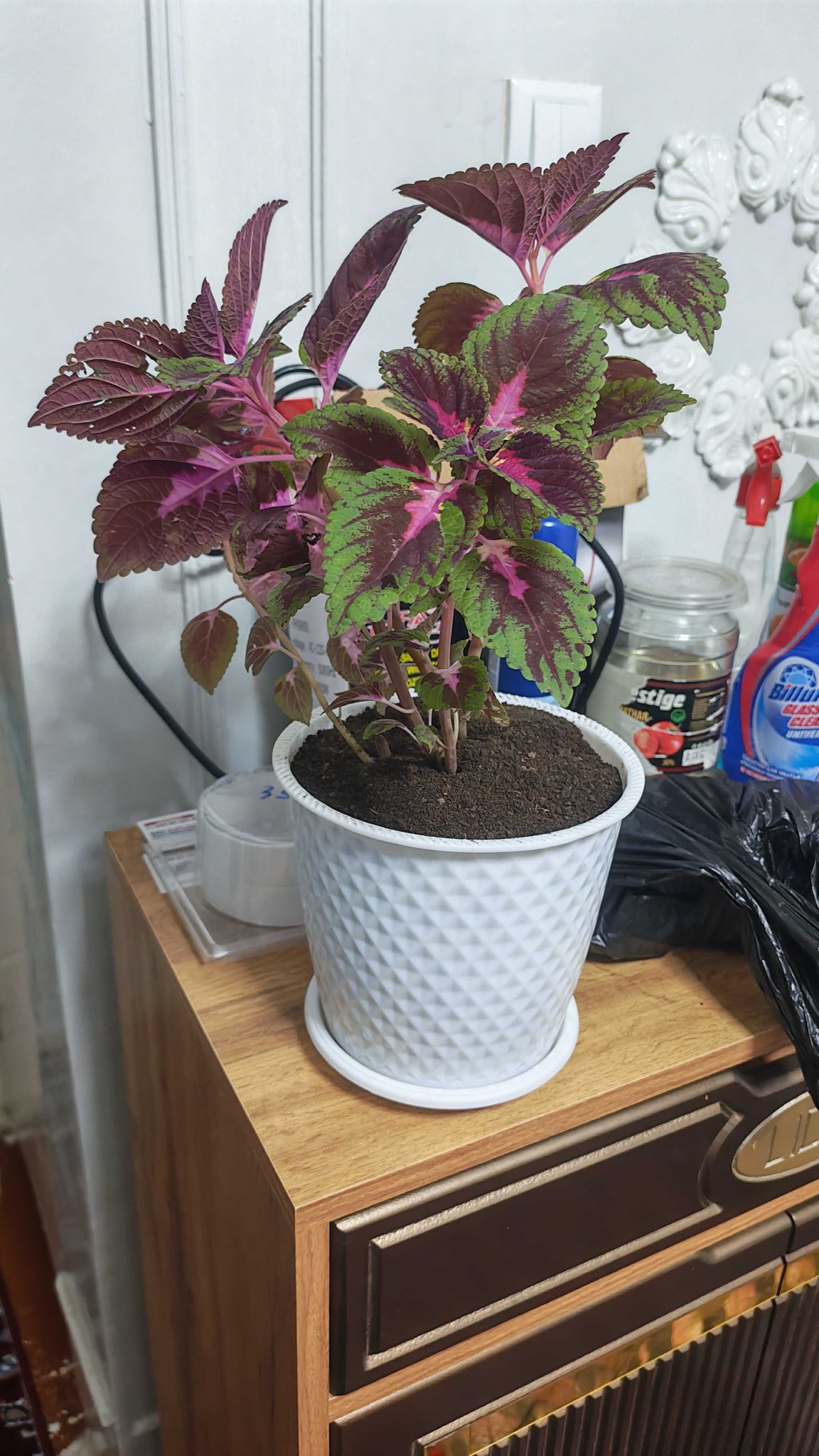
Coleus
Coleus scutellarioides
A vibrant herbaceous tender perennial grown primarily for its striking, multicolored foliage featuring contrasting shades of deep burgundy, pink, and bright green with scalloped leaf margins.
- Light
- Bright indirect light to partial shade, approximately 4 to 6 hours of filtered light daily.
- Water
- Water thoroughly whenever the top inch of soil feels dry. Avoid prolonged drought, which causes wilting, as well as standing water.
- Growth
- Upright, bushy herbaceous perennial growing to a mature height and spread of 1 to 3 feet with a moderate growth rate.
Care instructions
Provide bright, indirect sunlight to maintain vivid leaf coloration. Water regularly to keep the soil consistently moist but never waterlogged. Use rich, well-draining potting soil and apply a balanced liquid fertilizer monthly during the growing season.
Growing details
Sunlight
Bright indirect light to partial shade, approximately 4 to 6 hours of filtered light daily.
Watering
Water thoroughly whenever the top inch of soil feels dry. Avoid prolonged drought, which causes wilting, as well as standing water.
Soil
Rich, loamy potting mix with excellent drainage and a slightly acidic to neutral pH range of 6.0 to 7.0.
Hardiness zone
USDA Hardiness Zones 10 through 11, typically cultivated as an annual or indoor houseplant in cooler regions.
Growth habit
Upright, bushy herbaceous perennial growing to a mature height and spread of 1 to 3 feet with a moderate growth rate.
Bloom season
Produces small, insignificant spikes of blue or white flowers usually in late summer, though many growers pinch them off to encourage fuller foliage development.
Propagation
Easily propagated through stem cuttings placed in water or moist potting mix during the spring or summer months.
Common pests & issues
Vulnerable to aphids, whiteflies, and mealybugs. Root rot can occur if soil remains excessively wet or lacks proper drainage.
Similar species
Some varieties of Perilla or Iresine, which can be distinguished by specific leaf arrangements and distinct veining patterns.