
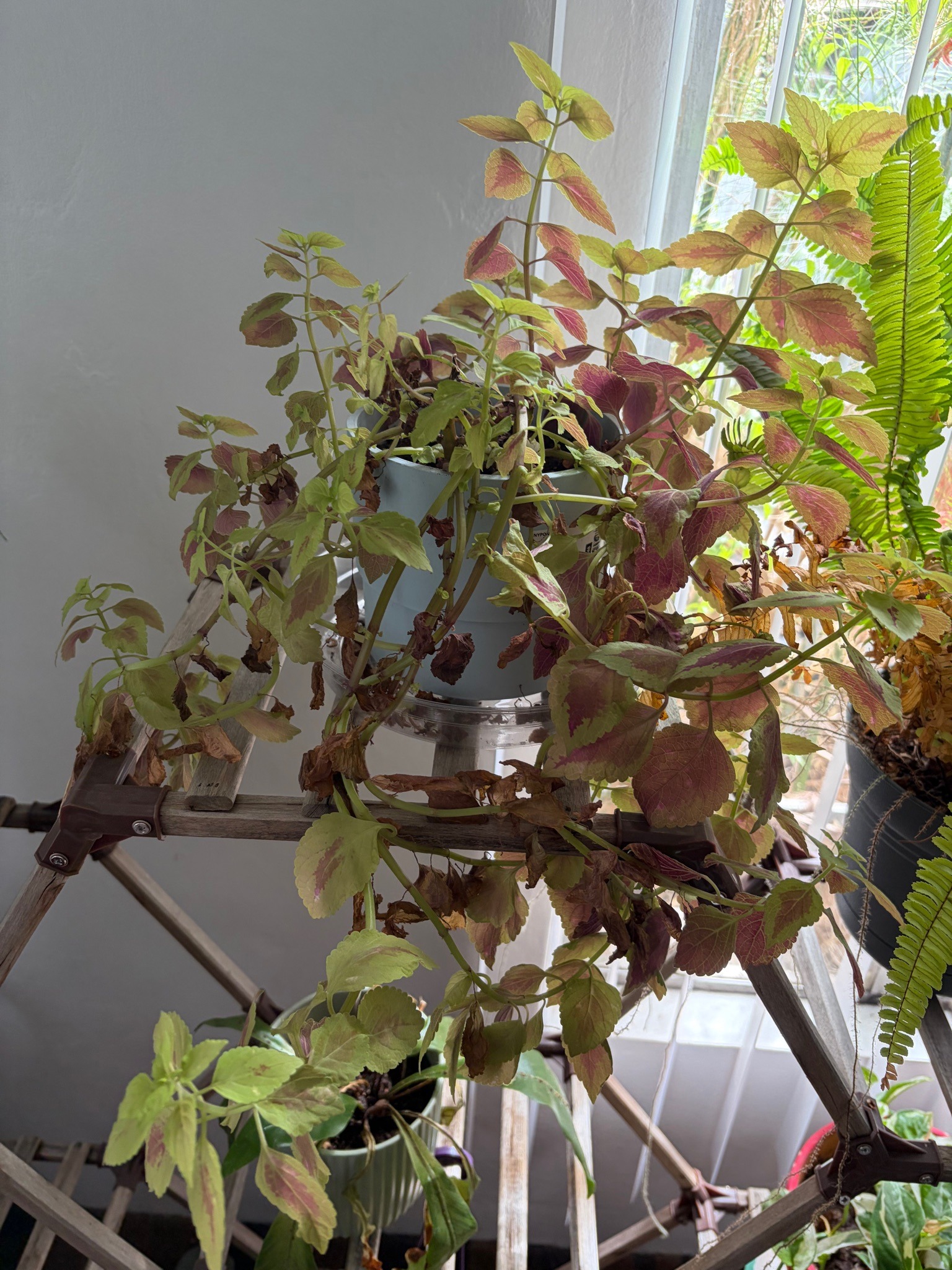
Coleus
Plectranthus scutellarioides
A popular tender perennial grown for its vibrant, multicolored foliage featuring contrasting shades of pink, red, green, and yellow on square stems.
- Light
- Bright, indirect light for 6 to 8 hours daily; some varieties tolerate morning sun while others require shade to prevent leaf scorch.
- Water
- Water thoroughly when the top inch of soil feels dry. Drought will cause drooping, while waterlogged soil leads to root issues.
- Growth
- Herbaceous perennial with an upright or trailing habit, reaching mature heights of 1 to 3 feet with a similar spread, exhibiting a fast growth rate.
Care instructions
Provide bright, indirect sunlight, keep the soil consistently moist but well-drained, and feed with a balanced liquid fertilizer every four to six weeks during the growing season.
Growing details
Sunlight
Bright, indirect light for 6 to 8 hours daily; some varieties tolerate morning sun while others require shade to prevent leaf scorch.
Watering
Water thoroughly when the top inch of soil feels dry. Drought will cause drooping, while waterlogged soil leads to root issues.
Soil
Rich, organic, well-draining potting mix with a slightly acidic to neutral pH between 6.0 and 7.0.
Hardiness zone
USDA zones 10 through 11 as a perennial, commonly cultivated as an annual or indoor houseplant in colder regions.
Growth habit
Herbaceous perennial with an upright or trailing habit, reaching mature heights of 1 to 3 feet with a similar spread, exhibiting a fast growth rate.
Bloom season
Summer; produces small, insignificant spikes of blue or white flowers that are often pinched off to encourage bushier foliage growth.
Propagation
Easily propagated through stem cuttings placed in water or moist potting mix during the spring or summer months.
Common pests & issues
Susceptible to aphids, mealybugs, and whiteflies, as well as root rot from overwatering or poorly draining soil.
Similar species
Some species of Alternanthera and Iresine feature similarly vibrant foliage but can be distinguished by differences in leaf shape, venation, and floral structures.