
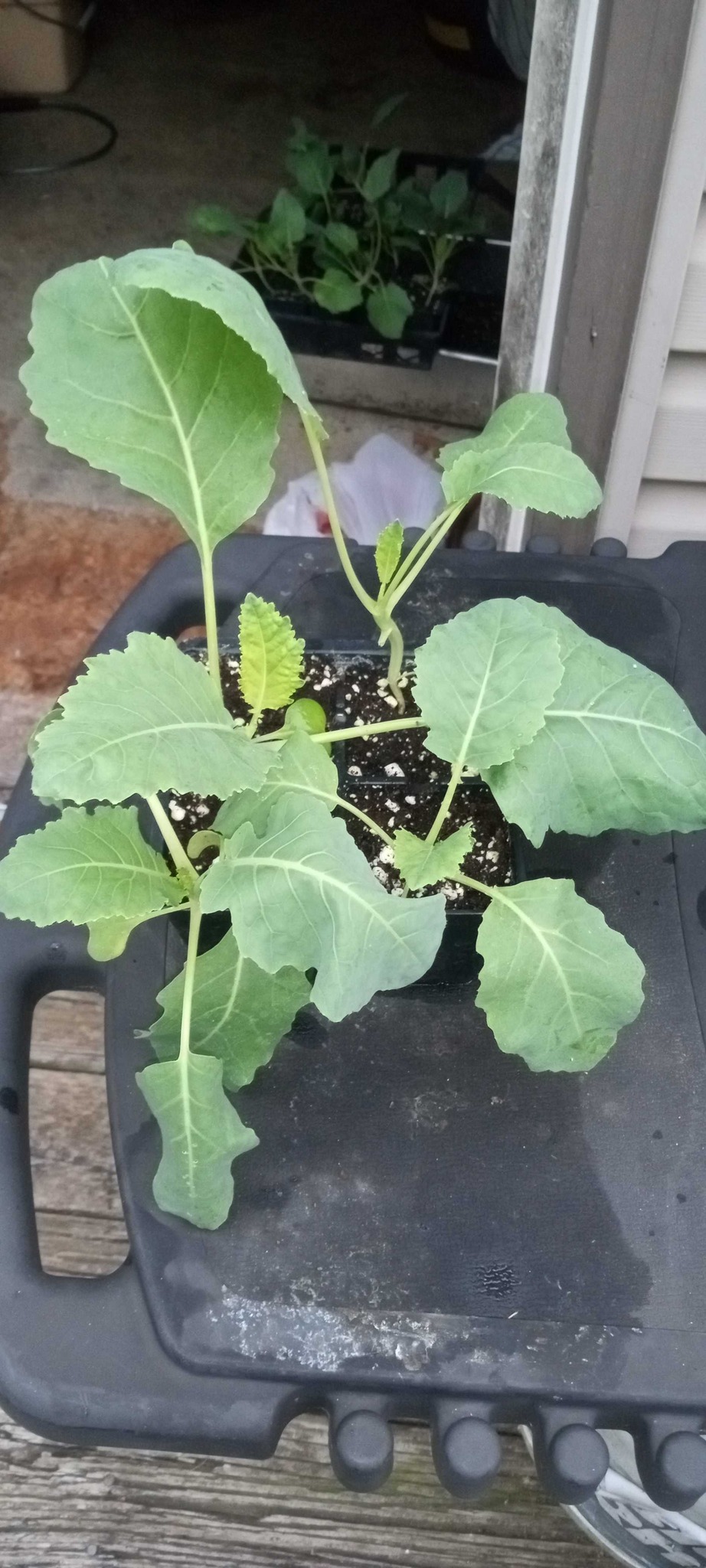
Collard Greens
Brassica oleracea var. acephala
A robust biennial herb grown as an annual, featuring large, broad, blue-green leaves with prominent white veins arranged in a loose rosette atop an upright stem.
- Light
- Full sun, requiring 6 to 8 hours of direct sunlight per day.
- Water
- Water deeply and regularly, providing about 1 inch of water per week. Allow the top inch of soil to dry out between waterings to prevent root rot.
- Growth
- Upright, loose-heading rosette herb reaching a mature height of 2 to 3 feet and a spread of 1 to 2 feet with a moderate growth rate.
Care instructions
Provide full sun exposure for at least six hours daily. Keep the soil consistently moist but well-draining, and apply a balanced, nitrogen-rich fertilizer monthly during the growing season to support lush leaf development.
Growing details
Sunlight
Full sun, requiring 6 to 8 hours of direct sunlight per day.
Watering
Water deeply and regularly, providing about 1 inch of water per week. Allow the top inch of soil to dry out between waterings to prevent root rot.
Soil
Prefers rich, loamy, and well-draining soil with an optimal pH range between 6.0 and 7.5.
Hardiness zone
USDA hardiness zones 8 through 11, though it tolerates light frost well.
Growth habit
Upright, loose-heading rosette herb reaching a mature height of 2 to 3 feet and a spread of 1 to 2 feet with a moderate growth rate.
Bloom season
Spring of the second year, producing clusters of small, four-petaled yellow flowers on tall stalks.
Propagation
Propagated primarily from seeds sown directly into the soil or started indoors 4 to 6 weeks before the final frost date.
Common pests & issues
Susceptible to aphids, cabbage loopers, flea beetles, and fungal diseases such as black rot. Prevent issues through crop rotation, row covers, and maintaining good air circulation.
Similar species
Kale (Brassica oleracea var. acephala), which has more crinkled, curled, or heavily lobed leaf margins compared to the smoother, broader leaves of collard greens.