
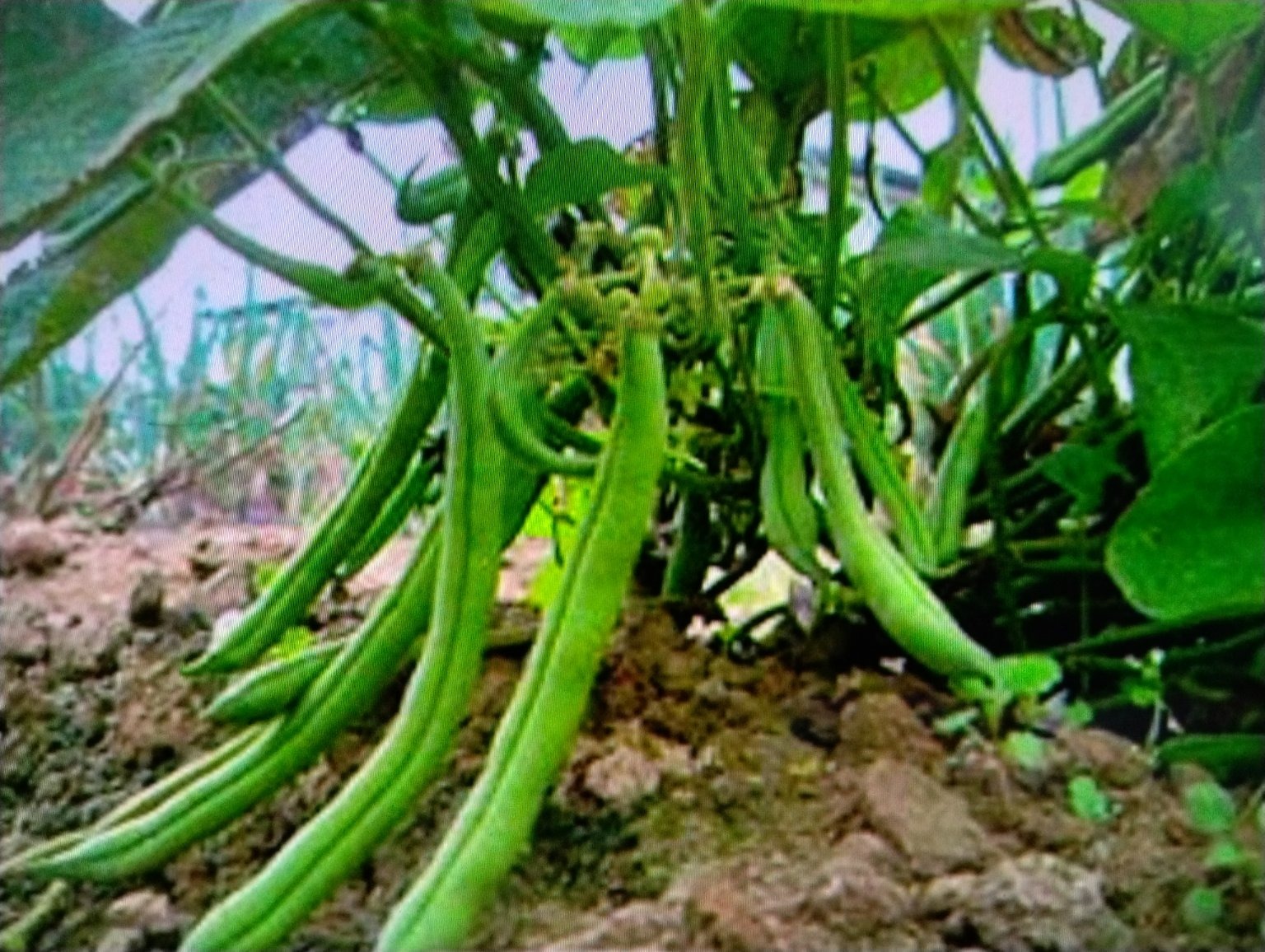
Common bean
Phaseolus vulgaris
An herbaceous annual plant featuring trifoliate green leaves and long, slender green pods hanging from the stems, containing seeds within.
- Light
- Full sun, requiring a minimum of 6 to 8 hours of direct sunlight per day.
- Water
- Moderate watering needs. Maintain consistent soil moisture, allowing the top inch of soil to dry out between waterings. Avoid overhead watering to reduce foliage moisture issues.
- Growth
- Herbaceous annual with either a bushy upright form or a climbing vine habit depending on the cultivar. Bush types reach 1 to 2 feet in height, while pole types can climb 6 to 10 feet.
Care instructions
Provide full sun exposure with at least 6 to 8 hours of direct light daily. Water consistently to keep the soil evenly moist without waterlogging. Feed with a balanced, low-nitrogen fertilizer to support healthy growth.
Growing details
Sunlight
Full sun, requiring a minimum of 6 to 8 hours of direct sunlight per day.
Watering
Moderate watering needs. Maintain consistent soil moisture, allowing the top inch of soil to dry out between waterings. Avoid overhead watering to reduce foliage moisture issues.
Soil
Well-draining loamy or sandy loam soil rich in organic matter. Optimal soil pH ranges from 6.0 to 7.0.
Hardiness zone
Cultivated globally as an annual across USDA Hardiness Zones 2 through 11.
Growth habit
Herbaceous annual with either a bushy upright form or a climbing vine habit depending on the cultivar. Bush types reach 1 to 2 feet in height, while pole types can climb 6 to 10 feet.
Bloom season
Flowers in summer, producing small white, pink, or purple papilionaceous flowers.
Propagation
Propagated strictly via seeds sown directly into warm soil after the last spring frost at a depth of about 1 inch.
Common pests & issues
Susceptible to fungal diseases such as powdery mildew and rust, as well as pests like aphids and bean beetles. Prevent by ensuring good air circulation and crop rotation.
Similar species
Runner bean (Phaseolus coccineus), which can be distinguished by brighter red flowers and larger, rougher textured seed pods.