
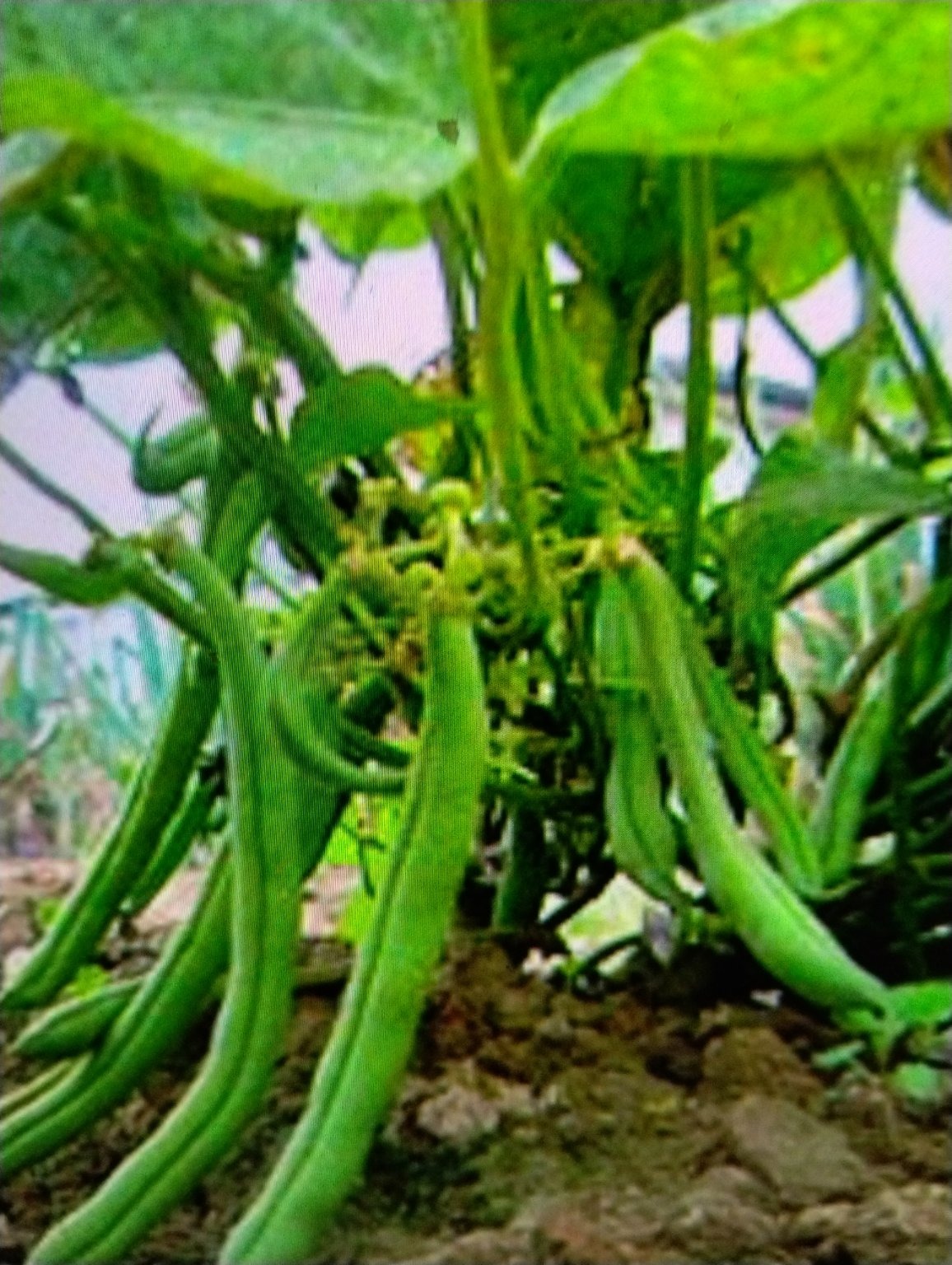
Common bean
Phaseolus vulgaris
An herbaceous annual plant with trifoliate green leaves, climbing or bush growth habits, and clusters of small white, pink, or purple flowers leading to elongated green pods.
- Light
- Full sun, requiring 6 to 8 hours of direct sunlight per day.
- Water
- Moderate and consistent watering needs, requiring about 1 inch of water per week. Drought tolerance is low, and overwatering can lead to root rot.
- Growth
- Herbaceous annual with bush or climbing vine habits, reaching mature heights of 1 to 15 feet depending on the cultivar, with a fast growth rate.
Care instructions
Provide full sun exposure for at least six to eight hours daily. Maintain consistent soil moisture, watering deeply when the top inch of soil feels dry. Use well-draining, fertile soil amended with organic matter. Apply a balanced low-nitrogen fertilizer sparingly during early growth phases.
Growing details
Sunlight
Full sun, requiring 6 to 8 hours of direct sunlight per day.
Watering
Moderate and consistent watering needs, requiring about 1 inch of water per week. Drought tolerance is low, and overwatering can lead to root rot.
Soil
Prefers loose, well-draining loam or sandy loam with a neutral pH range between 6.0 and 7.0.
Hardiness zone
Typically grown as an annual in USDA hardiness zones 2 through 11, sensitive to frost.
Growth habit
Herbaceous annual with bush or climbing vine habits, reaching mature heights of 1 to 15 feet depending on the cultivar, with a fast growth rate.
Bloom season
Blooms from mid-summer to early autumn, producing small, papilionaceous white, pink, or light purple flowers.
Propagation
Propagated easily from seeds sown directly into warm soil after the last spring frost, planted about 1 inch deep.
Common pests & issues
Susceptible to fungal issues like powdery mildew and rust, as well as bacterial blight and pests such as aphids and bean beetles. Prevent by ensuring good air circulation and avoiding overhead watering.
Similar species
Lima bean (Phaseolus lunatus), distinguished by flatter, broader pods and different leaf shapes, and runner bean (Phaseolus coccineus), which features brighter red flowers and rougher seed coats.