
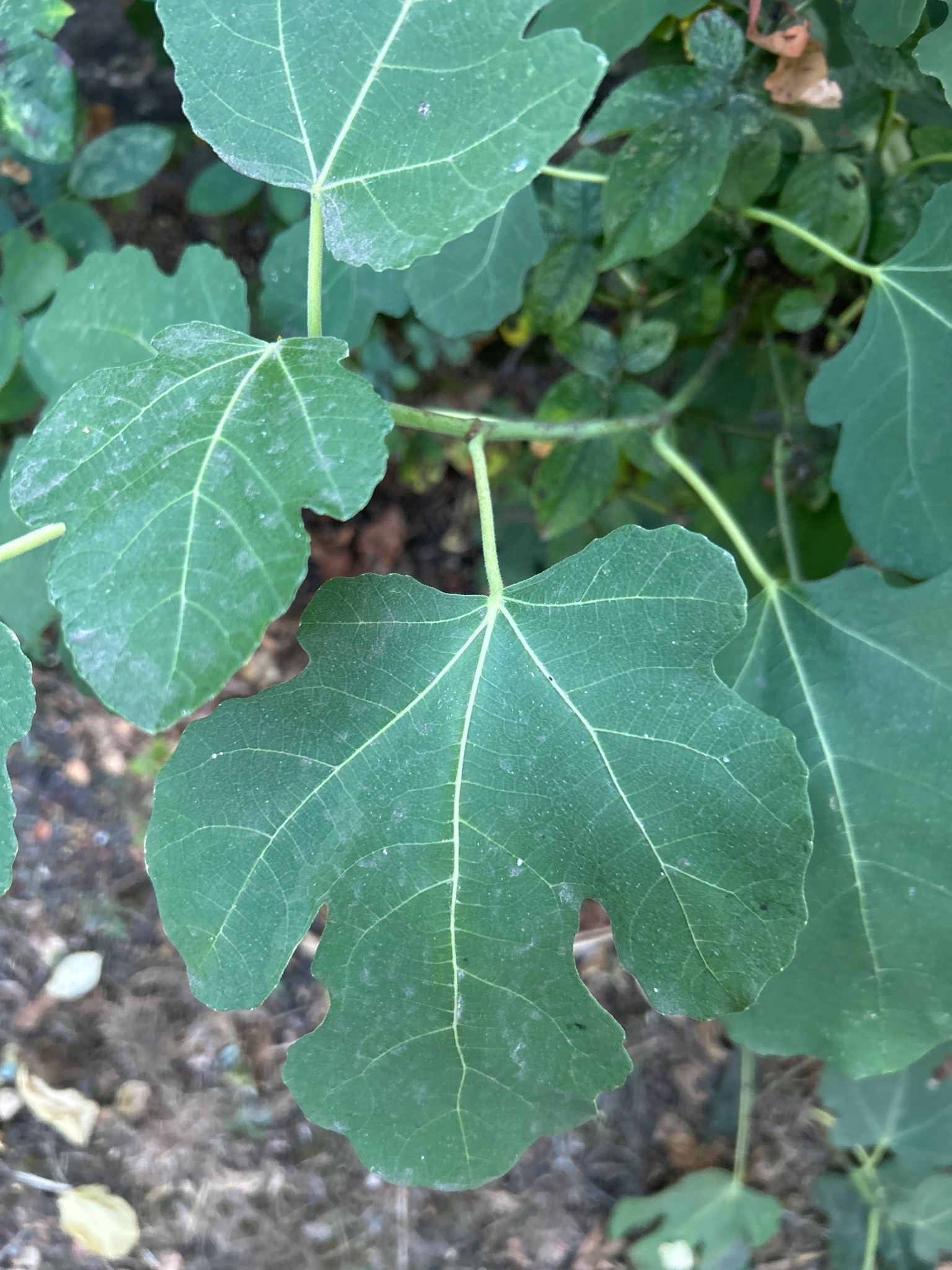
Common Fig
Ficus carica
A deciduous small tree or large shrub featuring large, deeply lobed, rough-textured green leaves with distinct light-colored veins.
- Light
- Full sun, requiring at least six to eight hours of direct sunlight per day.
- Water
- Moderate watering needs. Water deeply and regularly during the growing season, reducing frequency in winter. Mature specimens exhibit good drought tolerance.
- Growth
- Perennial woody tree or large shrub with a spreading canopy, typically reaching a mature height and spread of 10 to 30 feet with a moderate growth rate.
Care instructions
Provide full sun exposure for at least six to eight hours daily. Water deeply when the top few inches of soil become dry, allowing the ground to dry slightly between waterings. Use well-draining soil and apply a balanced fertilizer in early spring.
Growing details
Sunlight
Full sun, requiring at least six to eight hours of direct sunlight per day.
Watering
Moderate watering needs. Water deeply and regularly during the growing season, reducing frequency in winter. Mature specimens exhibit good drought tolerance.
Soil
Prefers loamy, sandy, or well-draining clay soils with a neutral to slightly alkaline pH range between 6.0 and 7.8.
Hardiness zone
USDA zones 8 through 10, though some cultivars can survive in zone 7 with winter protection.
Growth habit
Perennial woody tree or large shrub with a spreading canopy, typically reaching a mature height and spread of 10 to 30 feet with a moderate growth rate.
Bloom season
Spring and summer; flowers are specialized and enclosed within a unique receptacle, making them largely inconspicuous.
Propagation
Propagated primarily through hardwood or softwood stem cuttings, as well as by layering or root suckers during the dormant season.
Common pests & issues
Susceptible to rust, leaf spot, and root-knot nematodes. Pests include fig scale, spider mites, and beetles, managed by maintaining proper air circulation and applying appropriate horticultural oils.
Similar species
Other members of the Ficus genus such as Ficus sycomorus or certain ornamental maples due to lobed leaves, but distinguished by rough leaf texture, milky sap, and distinct venation patterns.