
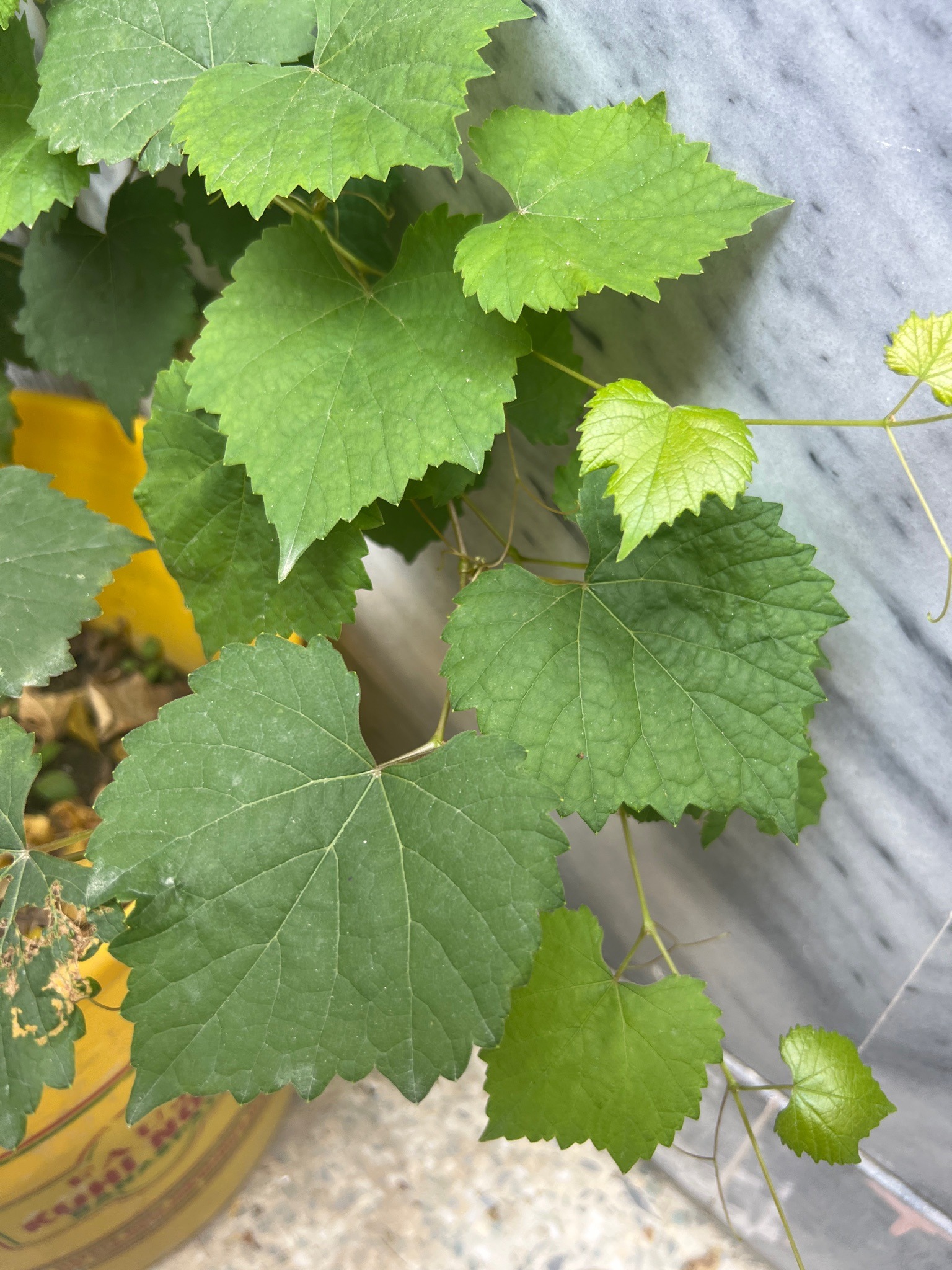
Common Grape Vine
Vitis vinifera
A woody climbing vine featuring alternate, simple, palmately lobed leaves with serrated margins and specialized tendrils used for climbing vertical structures.
- Light
- Full sun, requiring a minimum of 6 to 8 hours of direct sunlight daily for optimal development.
- Water
- Moderate water needs. Water thoroughly when the soil is dry to the touch, reducing frequency during cooler dormant periods to prevent root saturation.
- Growth
- A deciduous woody perennial vine that climbs via tendrils, capable of reaching lengths or heights of 15 to 30 feet or more with vigorous annual growth.
Care instructions
Provide full sun exposure for at least six to eight hours daily. Water deeply when the top few inches of soil become dry, ensuring well-draining conditions. Apply a balanced fertilizer during early spring to support active vegetative growth.
Growing details
Sunlight
Full sun, requiring a minimum of 6 to 8 hours of direct sunlight daily for optimal development.
Watering
Moderate water needs. Water thoroughly when the soil is dry to the touch, reducing frequency during cooler dormant periods to prevent root saturation.
Soil
Prefers loamy, sandy, or well-drained soils with good organic content and a neutral to slightly alkaline pH range between 6.0 and 7.5.
Hardiness zone
USDA Hardiness Zones 6 through 9, exhibiting varying tolerance to cold temperatures depending on the specific cultivar.
Growth habit
A deciduous woody perennial vine that climbs via tendrils, capable of reaching lengths or heights of 15 to 30 feet or more with vigorous annual growth.
Bloom season
Late spring to early summer, producing small, inconspicuous greenish flowers clustered in panicles.
Propagation
Typically propagated through hardwood or softwood cuttings taken during the dormant season or growing period, as well as by layering.
Common pests & issues
Susceptible to fungal pathogens such as powdery mildew and downy mildew, as well as pests like aphids and spider mites. Prevent through adequate air circulation and proper spacing.
Similar species
Parthenocissus tricuspidata (Boston ivy), which can be distinguished by its adhesive disc-tipped tendrils and distinctly shaped unlobed or three-lobed leaves rather than the serrated, palmately lobed leaves of Vitis vinifera.