
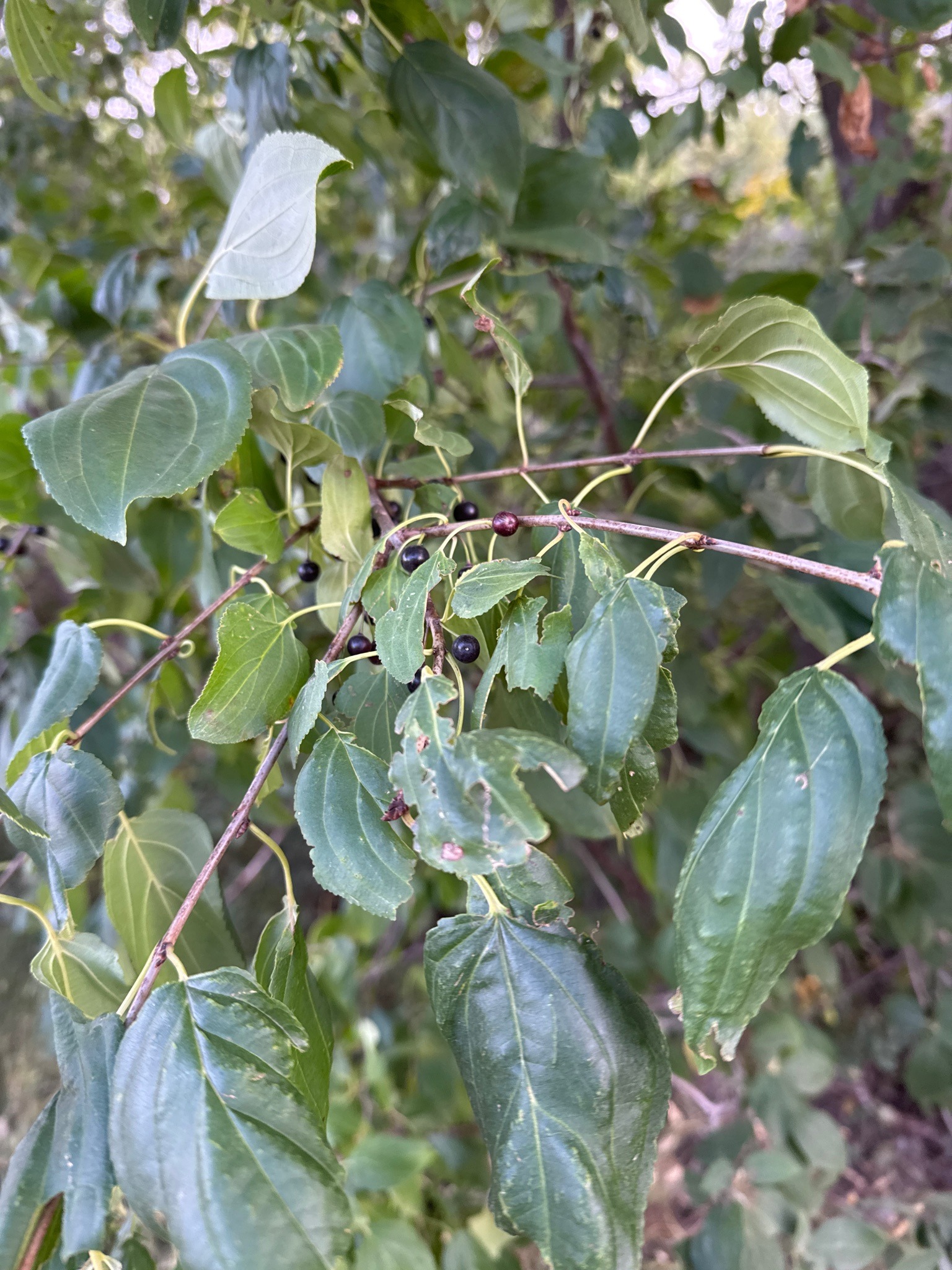
Common Hackberry
Celtis occidentalis
A deciduous tree featuring alternate, ovate to lanceolate leaves with serrate margins and distinctly asymmetric leaf bases, along with small spherical fruits that ripen from reddish to dark purple-black.
- Light
- Full sun to partial shade, requiring at least 6 hours of direct sunlight daily.
- Water
- Moderate water needs during the first year to establish a deep root system. Highly drought tolerant once mature. Avoid waterlogged soils.
- Growth
- Perennial deciduous tree growing with an upright, spreading canopy reaching mature heights of 40 to 60 feet with a similar spread and moderate growth rate.
Care instructions
Plant in full sun to partial shade in well-drained soil. Water deeply during establishment, after which it exhibits good drought tolerance. Minimal pruning is required.
Growing details
Sunlight
Full sun to partial shade, requiring at least 6 hours of direct sunlight daily.
Watering
Moderate water needs during the first year to establish a deep root system. Highly drought tolerant once mature. Avoid waterlogged soils.
Soil
Adaptable to a wide range of soil types including clay, loam, and sand, provided they have good drainage. Tolerates a neutral to slightly alkaline pH.
Hardiness zone
USDA zones 3 through 9
Growth habit
Perennial deciduous tree growing with an upright, spreading canopy reaching mature heights of 40 to 60 feet with a similar spread and moderate growth rate.
Bloom season
Spring; small, inconspicuous green flowers appearing simultaneously with new foliage.
Propagation
Propagated primarily from seeds sown in autumn or via softwood cuttings taken in late spring.
Common pests & issues
Generally resilient, but can be susceptible to witches' broom caused by mites and fungi, as well as leaf-galling insects that cause aesthetic leaf bumps without harming tree health.
Similar species
Elms (Ulmus species), which also feature asymmetric leaf bases but generally possess double-serrate leaf margins.