
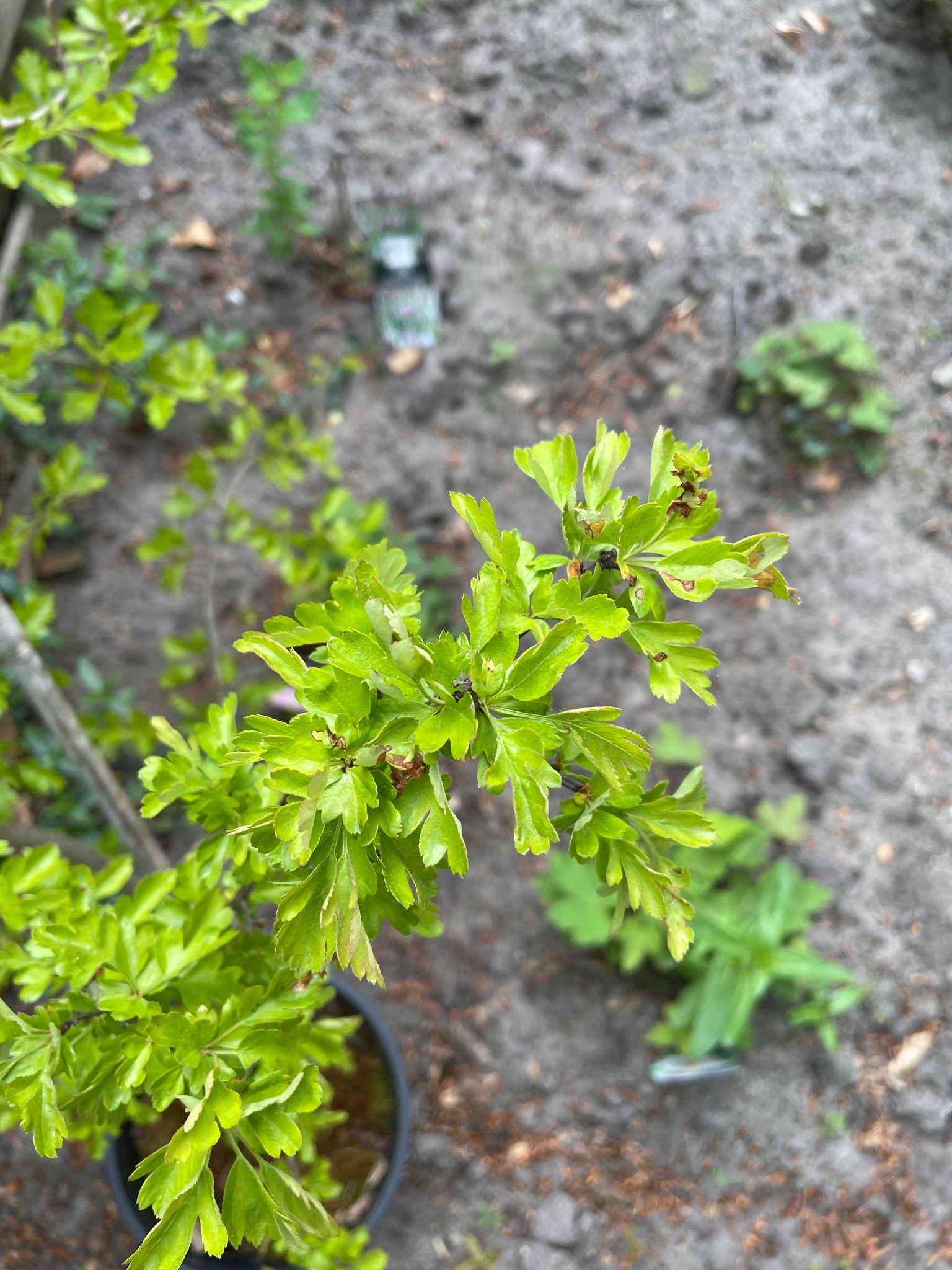
Common Hawthorn
Crataegus monogyna
A deciduous shrub or small tree with thorny branches and deeply lobed, small, shiny green leaves. It produces dense clusters of white, fragrant flowers followed by small red berries (haws).
- Light
- Full sun to partial shade (at least 4-6 hours of direct sunlight per day).
- Water
- Moderate watering needs. Keep soil moist but not waterlogged for young plants; established plants are quite drought-tolerant. Yellowing leaves may indicate over-watering.
- Growth
- Perennial deciduous shrub or small tree. Can grow 15 to 30 feet tall and wide at a moderate growth rate.
Care instructions
Thrives in well-drained soil and full sun but is highly adaptable to various conditions. Regular pruning helps maintain a hedge shape if desired. Water regularly during establishment; mature plants are drought tolerant.
Growing details
Sunlight
Full sun to partial shade (at least 4-6 hours of direct sunlight per day).
Watering
Moderate watering needs. Keep soil moist but not waterlogged for young plants; established plants are quite drought-tolerant. Yellowing leaves may indicate over-watering.
Soil
Adaptable to most soil types, including clay, loam, and sand. Prefers neutral to slightly alkaline pH but tolerates acidic soils.
Hardiness zone
4 to 8
Growth habit
Perennial deciduous shrub or small tree. Can grow 15 to 30 feet tall and wide at a moderate growth rate.
Bloom season
Flowers in late spring (May). Flowers are white or creamy with five petals and a distinct sweet-musky scent.
Propagation
Commonly propagated by seed (requires stratification), hardwood cuttings in autumn, or by grafting specific cultivars.
Common pests & issues
Leaf spot, fireblight, and powdery mildew. Pests include aphids, caterpillars, and scale insects. Good air circulation helps prevent fungal issues.
Similar species
Midland Hawthorn (Crataegus laevigata) which has less deeply lobed leaves and two or three styles/seeds per fruit instead of one.