
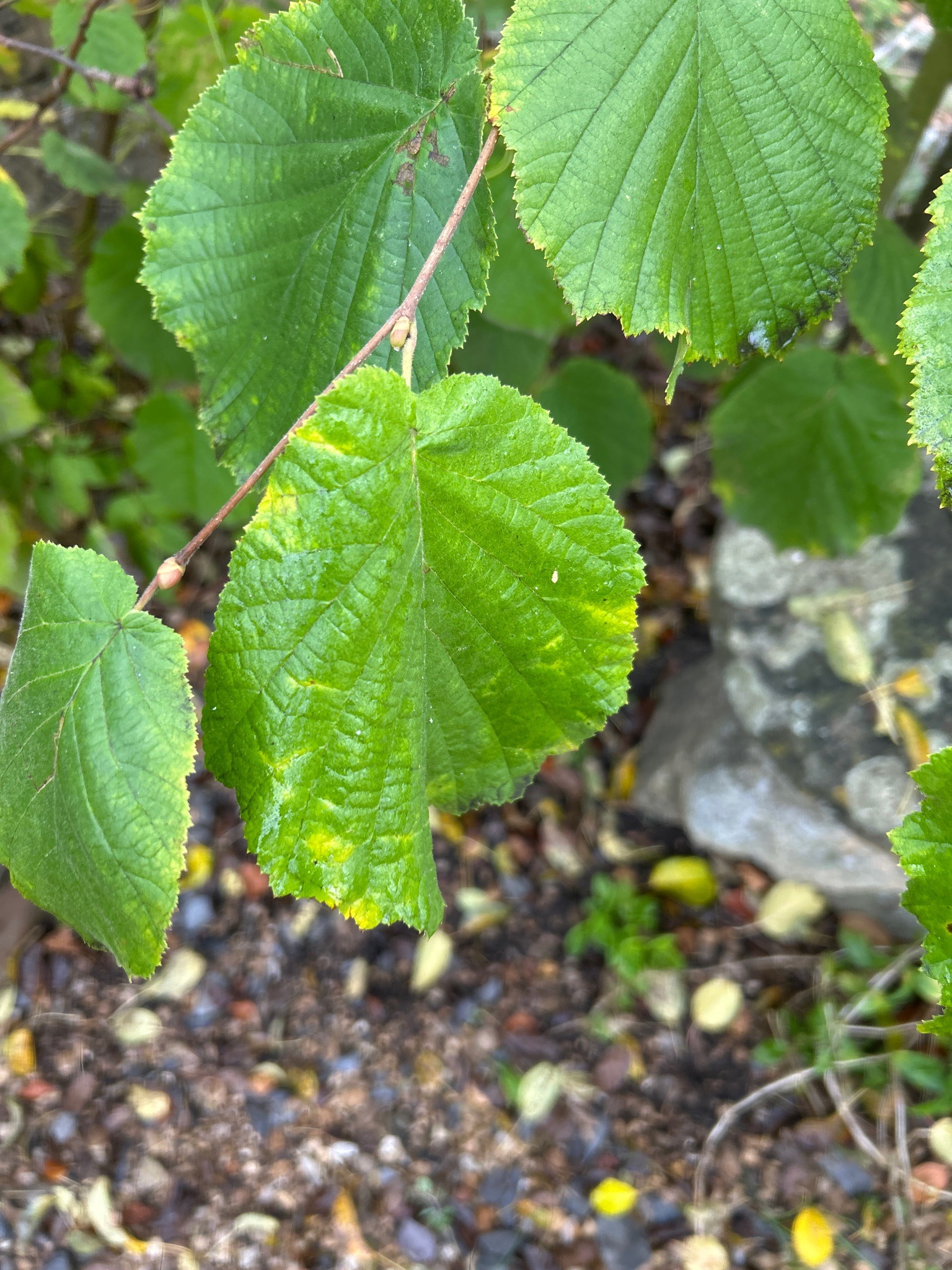
Common Hazel
Corylus avellana
A deciduous shrub or small tree characterized by rounded to oval, doubly serrate green leaves with soft hairs on the veins, and slender twigs.
- Light
- Full sun to partial shade, requiring at least 4 to 6 hours of direct sunlight per day.
- Water
- Moderate water needs. Water deeply when the top few inches of soil become dry. Prefers evenly moist soil and benefits from mulching to retain moisture.
- Growth
- Perennial multi-stemmed deciduous shrub or small tree growing to a mature height of 10 to 20 feet with a similar spread, featuring a moderate growth rate.
Care instructions
Provide full sun to partial shade in well-draining soil. Water regularly during establishment and maintain consistent moisture. Fertilize in early spring with a balanced, slow-release fertilizer.
Growing details
Sunlight
Full sun to partial shade, requiring at least 4 to 6 hours of direct sunlight per day.
Watering
Moderate water needs. Water deeply when the top few inches of soil become dry. Prefers evenly moist soil and benefits from mulching to retain moisture.
Soil
Prefers fertile, loamy to sandy soils with good drainage and a neutral to slightly alkaline pH range between 6.0 and 7.5.
Hardiness zone
USDA zones 4 through 8
Growth habit
Perennial multi-stemmed deciduous shrub or small tree growing to a mature height of 10 to 20 feet with a similar spread, featuring a moderate growth rate.
Bloom season
Early spring before the leaves emerge, producing long yellow-brown male catkins and inconspicuous tiny red female flowers.
Propagation
Propagated easily by hardwood cuttings taken in winter, layering in spring, or by sowing seeds in autumn.
Common pests & issues
Susceptible to powdery mildew, leaf spots, and hazelnut aphids. Pruning out dead or crossing branches helps maintain good air circulation and prevent fungal issues.
Similar species
Wych elm (Ulmus glabra), which can be distinguished by its distinctly asymmetric leaf bases and coarser overall bark texture.