
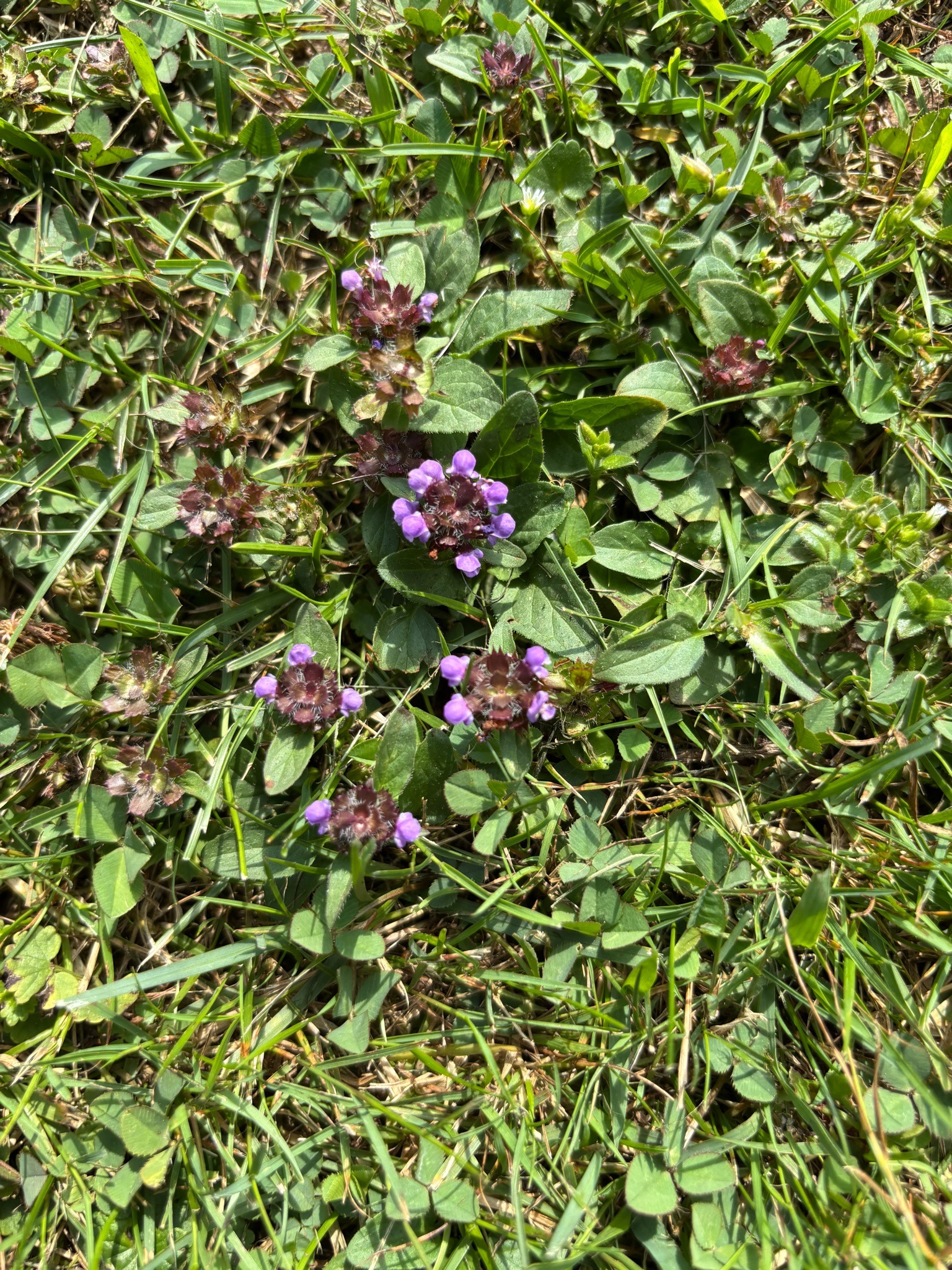
Common Heal-All
Prunella vulgaris
A low-growing, creeping perennial herb with square stems, opposite lance-shaped to oval leaves, and dense terminal spikes of small violet-purple two-lipped flowers.
- Light
- Full sun to partial shade; prefers around 4 to 6 hours of sunlight daily.
- Water
- Prefers moderate to moist moisture conditions. Water regularly until established; relatively drought tolerant once mature.
- Growth
- Herbaceous perennial groundcover, creeping via stolons and rooting at nodes, typically growing 2 to 12 inches tall and spreading up to 18 inches.
Care instructions
Thrives in full sun to partial shade with consistently moist, well-draining soil. Highly adaptable and low-maintenance, requiring minimal fertilization and occasional deep watering during drought.
Growing details
Sunlight
Full sun to partial shade; prefers around 4 to 6 hours of sunlight daily.
Watering
Prefers moderate to moist moisture conditions. Water regularly until established; relatively drought tolerant once mature.
Soil
Adaptable to a wide range of soil types including clay, loam, and sand; prefers moist, well-drained soil with neutral to slightly acidic pH (6.0-7.0).
Hardiness zone
USDA Zones 3 to 9
Growth habit
Herbaceous perennial groundcover, creeping via stolons and rooting at nodes, typically growing 2 to 12 inches tall and spreading up to 18 inches.
Bloom season
Late spring through early autumn, producing dense cylindrical spikes of hooded, two-lipped purple-violet flowers with reddish-brown bracts.
Propagation
Propagates easily by seed, root division, or stems rooting along nodes.
Common pests & issues
Generally trouble-free, though prone to powdery mildew in overcrowded or overly shaded conditions with high humidity.
Similar species
Glechoma hederacea (Ground Ivy) has kidney-shaped serrated leaves and scattered flowers along nodes rather than dense terminal flowering spikes. Ajuga reptans (Bugleweed) has broader leaves and taller, more blue flower spikes.