
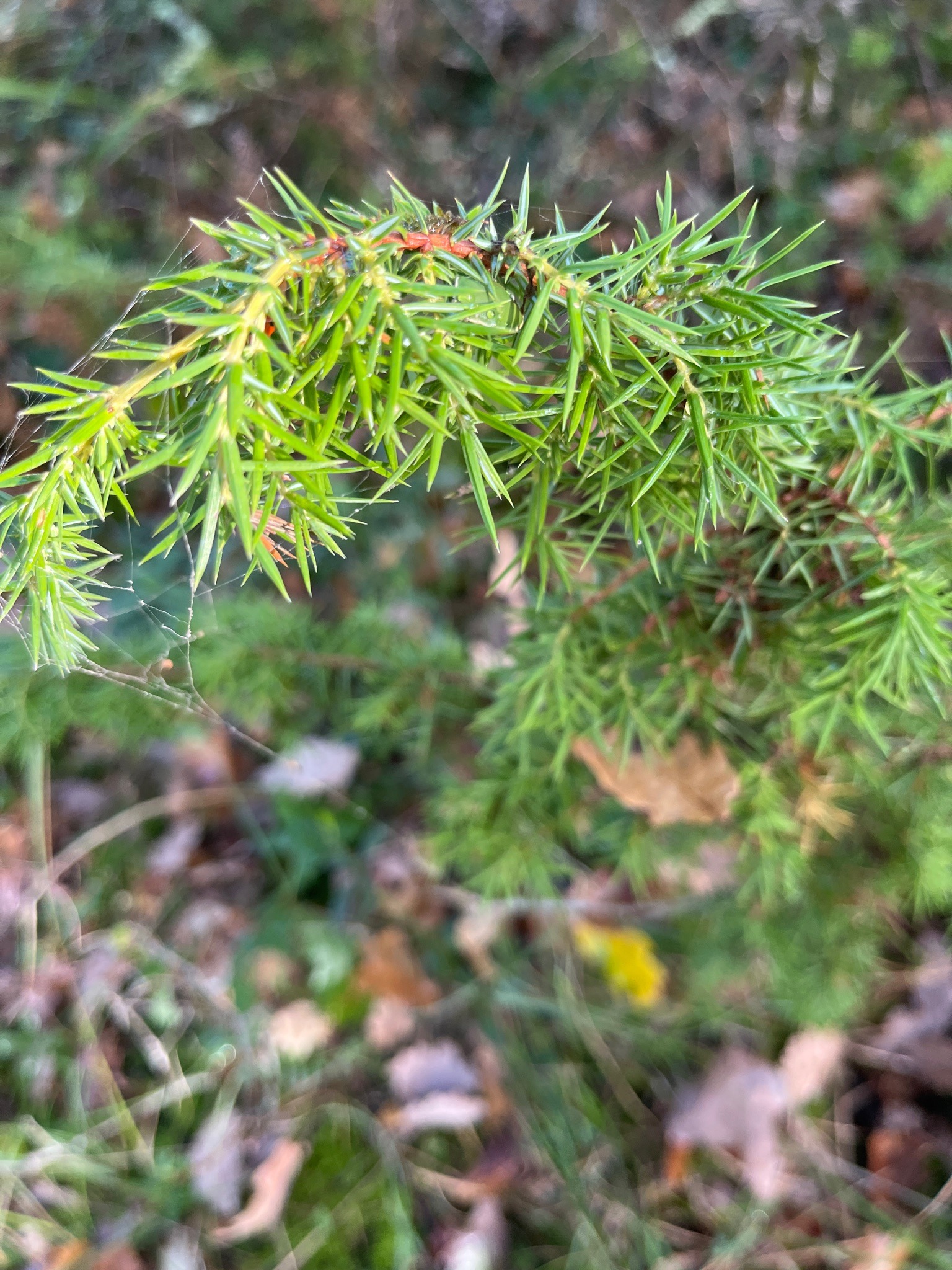
Common Juniper
Juniperus communis
An evergreen conifer featuring needle-like leaves arranged in whorls of three, displaying a vibrant green upper surface with a prominent white stomatal band and a dull green underside.
- Light
- Full sun, requiring at least six hours of direct sunlight daily
- Water
- Low watering needs once established; water moderately during prolonged dry spells and ensure excellent drainage to prevent root rot
- Growth
- Evergreen woody shrub or small tree with a slow to moderate growth rate, typically maturing to heights of 5 to 15 feet and spreads of 6 to 10 feet
Care instructions
Provide full sun and well-draining soil. Water deeply when newly planted, then allow the soil to dry completely between watering sessions as established plants have high drought tolerance.
Growing details
Sunlight
Full sun, requiring at least six hours of direct sunlight daily
Watering
Low watering needs once established; water moderately during prolonged dry spells and ensure excellent drainage to prevent root rot
Soil
Adaptable to sandy, chalky, or loamy soils with good drainage, preferring a neutral to slightly acidic pH range between 5.0 and 7.5
Hardiness zone
USDA zones 2 through 7
Growth habit
Evergreen woody shrub or small tree with a slow to moderate growth rate, typically maturing to heights of 5 to 15 feet and spreads of 6 to 10 feet
Bloom season
Spring, producing inconspicuous small yellow or green cones rather than showy flowers
Propagation
Propagated primarily through semi-hardwood cuttings taken in late summer or by sowing stratified seeds
Common pests & issues
Susceptible to twig blight, rust diseases, and aphid infestations, which can be prevented by ensuring proper air circulation and avoiding overhead watering
Similar species
Other juniper species such as Juniperus horizontalis, distinguished by its trailing, low-growing mat habit rather than upright or spreading shrub forms