
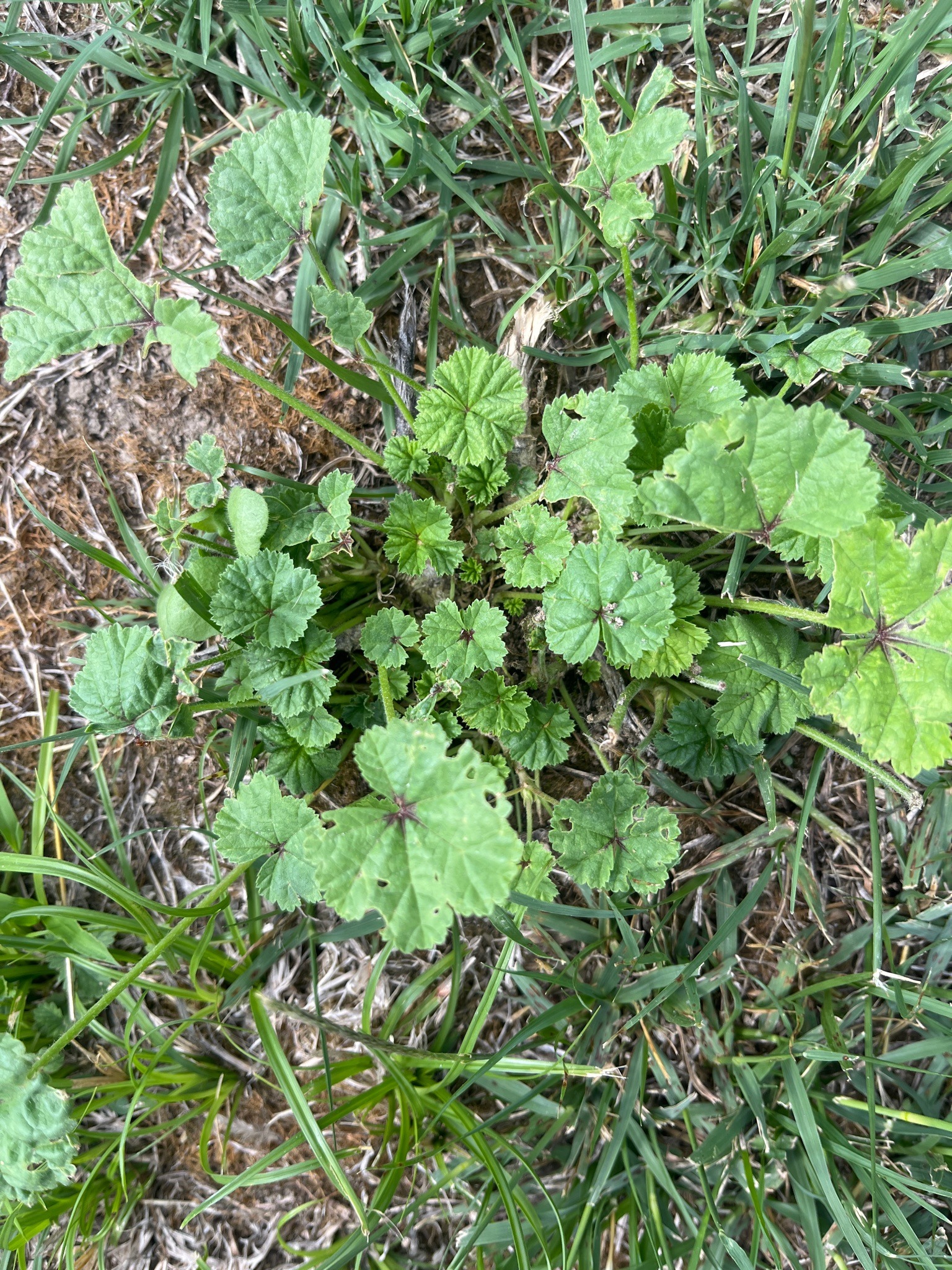
Common Mallow
Malva neglecta
A low-growing herbaceous plant with distinctive rounded to kidney-shaped, lobed, and scalloped leaves featuring prominent radiating veins. It often forms a low rosette or spreads along the ground with branching stems.
- Light
- Full sun to partial shade, requiring at least 6 hours of direct sunlight daily for optimal growth.
- Water
- Water moderately when the top inch of soil becomes dry. Established plants exhibit good drought tolerance and require less frequent watering.
- Growth
- Low-growing annual or biennial herb forming a basal rosette with prostrate or semi-erect stems spreading up to 30 to 60 centimeters wide.
Care instructions
Thrives in open, disturbed soils with full sun exposure. Requires moderate watering once established, preferring well-draining soil conditions, though it is quite resilient and adaptable.
Growing details
Sunlight
Full sun to partial shade, requiring at least 6 hours of direct sunlight daily for optimal growth.
Watering
Water moderately when the top inch of soil becomes dry. Established plants exhibit good drought tolerance and require less frequent watering.
Soil
Prefers loose, well-draining soils with a neutral to slightly alkaline pH range of 6.0 to 7.5, but adapts well to various soil types including clay and loam.
Hardiness zone
USDA hardiness zones 4 through 9, showing strong resilience to variable winter temperatures.
Growth habit
Low-growing annual or biennial herb forming a basal rosette with prostrate or semi-erect stems spreading up to 30 to 60 centimeters wide.
Bloom season
Flowers from late spring through late summer, producing small, pale lilac to white flowers with five notched petals.
Propagation
Propagated easily from seed sown directly in soil during spring or autumn. Seeds often germinate readily in disturbed environments.
Common pests & issues
Generally resilient, but susceptible to fungal rust diseases in damp conditions and minor feeding damage from garden caterpillars or beetles.
Similar species
Dwarf mallow (Malva rotundifolia), which shares similar rounded foliage but typically features smaller flowers and slightly different petal-to-calyx proportions.