
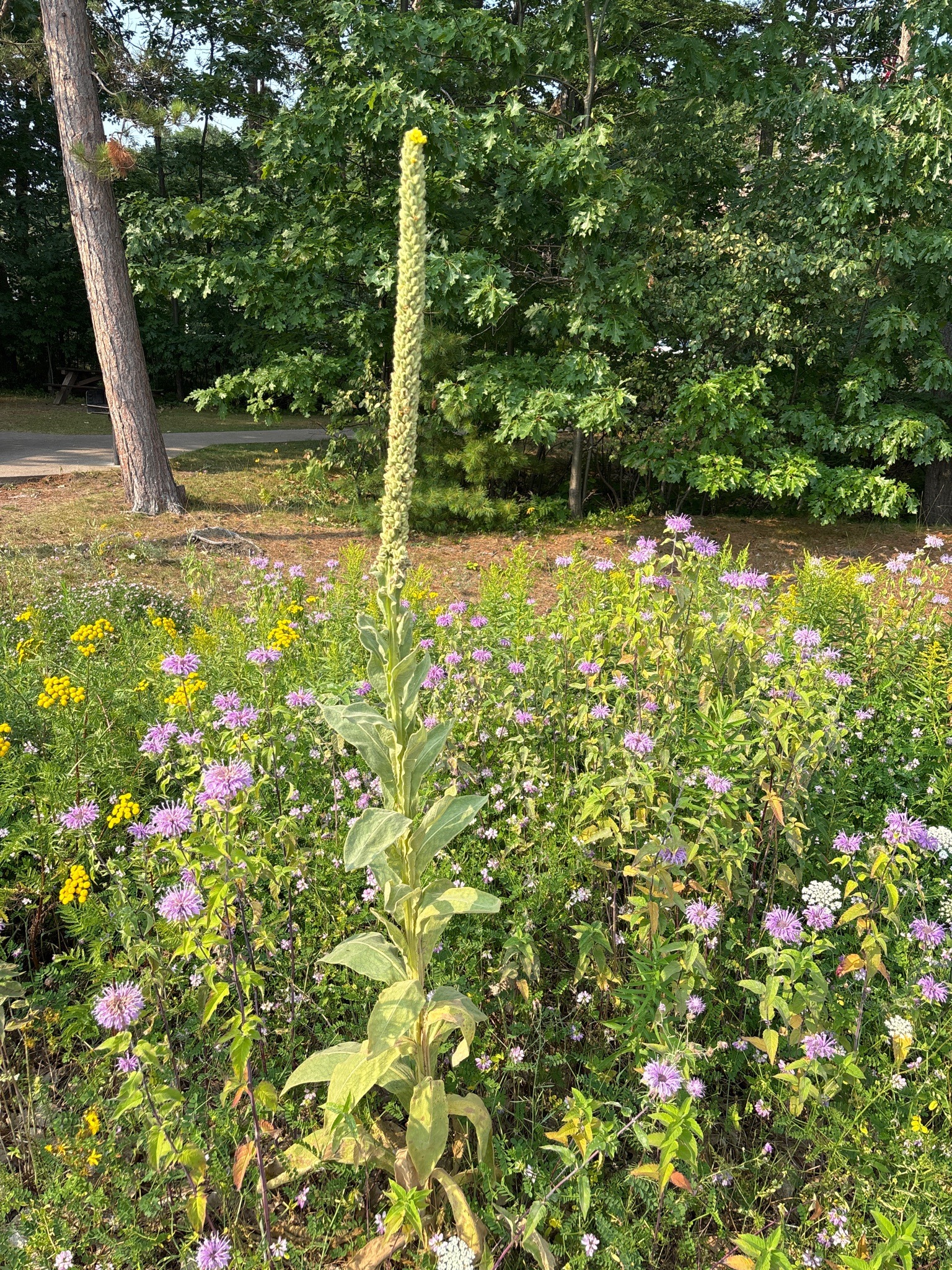
Common Mullein
Verbascum thapsus
A biennial herb characterized by a dense rosette of large, velvety, grey-green leaves in its first year, followed by a tall, unbranched flowering stem producing dense spikes of small yellow flowers in its second year.
- Light
- Full sun, requiring at least 6 hours of direct sunlight per day.
- Water
- Low watering needs. Water deeply during prolonged dry spells, allowing the soil to dry out completely between watering sessions. Highly drought tolerant.
- Growth
- Biennial herbaceous plant forming a basal rosette in the first year and a single upright flowering stalk reaching 2 to 7 feet tall in the second year, with a moderate growth rate.
Care instructions
Provide full sun and well-drained, dry to medium moisture soil. Water sparingly once established, as it has high drought tolerance. Avoid heavy, waterlogged soils and fertilizing is generally unnecessary.
Growing details
Sunlight
Full sun, requiring at least 6 hours of direct sunlight per day.
Watering
Low watering needs. Water deeply during prolonged dry spells, allowing the soil to dry out completely between watering sessions. Highly drought tolerant.
Soil
Prefers poor, sandy, gravelly, or chalky soils with excellent drainage. Tolerates a wide pH range from acidic to alkaline, though neutral to slightly alkaline is ideal.
Hardiness zone
USDA Hardiness Zones 3 through 9
Growth habit
Biennial herbaceous plant forming a basal rosette in the first year and a single upright flowering stalk reaching 2 to 7 feet tall in the second year, with a moderate growth rate.
Bloom season
Blooms from mid-summer to early autumn, featuring dense terminal spikes of small, five-petaled, bright yellow flowers.
Propagation
Propagated primarily by seeds. Seeds can remain viable in the soil for decades and germinate readily when disturbed.
Common pests & issues
Generally resilient against major pests and diseases, though occasionally susceptible to root rot in poorly draining soils and leaf spot fungi in humid conditions.
Similar species
Moth Mullein (Verbascum blattaria), which has more delicate stems and flowers with prominent purple hairs on the stamens, and Woadwaxen (Genista tinctoria), which features shrubby growth and pea-like yellow flowers.