
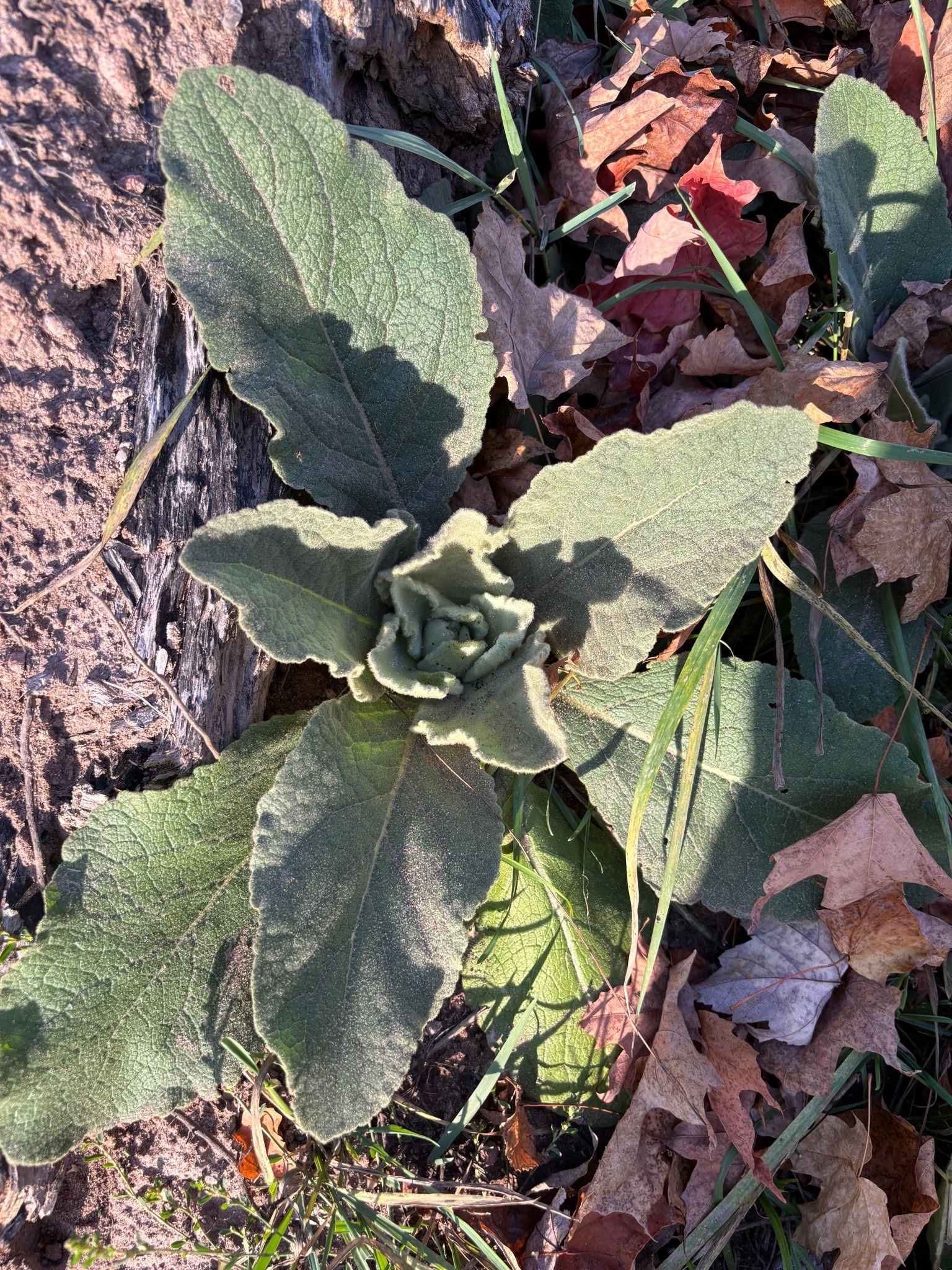
Common Mullein
Verbascum thapsus
Forms a dense rosette of large, thick, velvety, grayish-green leaves during its first year of growth, followed by a tall flowering stalk in the second year.
- Light
- Full sun, requiring at least 6 to 8 hours of direct sunlight daily
- Water
- Low watering needs once established; highly drought tolerant. Water when the top few inches of soil become dry.
- Growth
- Biennial herb forming a low basal rosette in the first year and a single upright flowering stem reaching 2 to 7 feet tall in the second year, with a moderate growth rate.
Care instructions
Grow in full sun with well-draining, dry to medium moisture soil. Water deeply but infrequently once established, allowing the soil to dry out between waterings. Very low maintenance and generally does not require fertilizer.
Growing details
Sunlight
Full sun, requiring at least 6 to 8 hours of direct sunlight daily
Watering
Low watering needs once established; highly drought tolerant. Water when the top few inches of soil become dry.
Soil
Prefers sandy, gravelly, or poor, well-draining soils with a neutral to slightly alkaline pH, though it tolerates various soil types.
Hardiness zone
USDA zones 3 through 9
Growth habit
Biennial herb forming a low basal rosette in the first year and a single upright flowering stem reaching 2 to 7 feet tall in the second year, with a moderate growth rate.
Bloom season
Summer of the second year, producing dense spikes of small, bright yellow flowers.
Propagation
Propagates easily from seeds sown directly on the soil surface in spring or autumn, as light is required for germination.
Common pests & issues
Generally resistant to major pests and diseases, though root rot can occur in poorly draining, excessively wet soils.
Similar species
Moth Mullein (Verbascum blattaria), which has smaller, smoother leaves and more open flower spikes.