
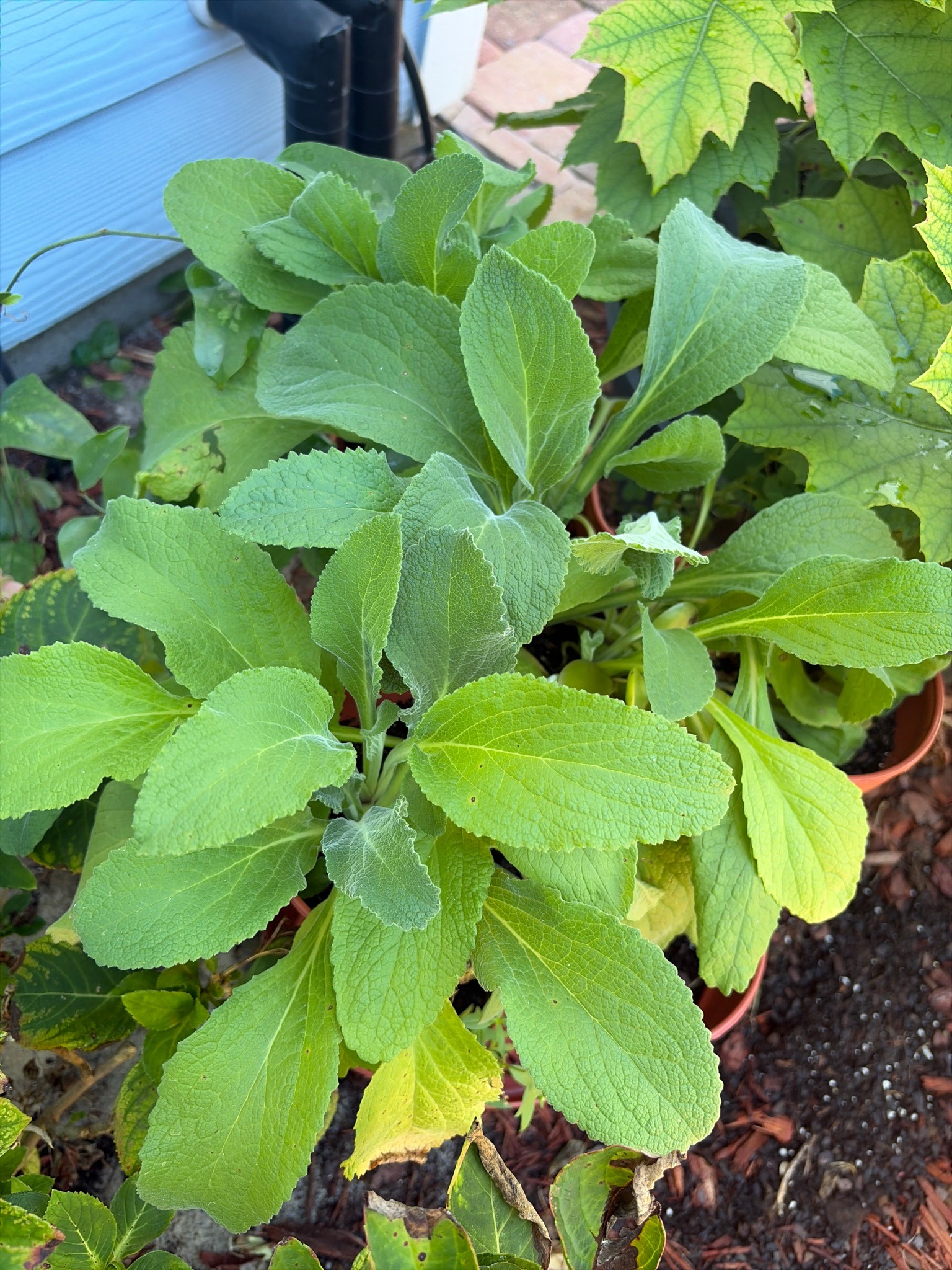
Common Sage
Salvia officinalis
An evergreen subshrub featuring woody stems, grayish-green rugose (wrinkled) leaves with a velvety texture, and whorls of tubular purple-blue flowers.
- Light
- Full sun, requiring at least 6 to 8 hours of direct sunlight per day.
- Water
- Low to moderate water needs. Highly drought-tolerant once established. Water when the top few inches of soil are completely dry. Avoid overwatering to prevent root rot.
- Growth
- Perennial subshrub with an upright, bushy growth habit, reaching a mature height and spread of 1 to 2 feet with a moderate growth rate.
Care instructions
Provide full sun and well-draining soil. Water deeply but infrequently, allowing the soil to dry out completely between watering sessions. Apply a balanced, slow-release fertilizer in spring.
Growing details
Sunlight
Full sun, requiring at least 6 to 8 hours of direct sunlight per day.
Watering
Low to moderate water needs. Highly drought-tolerant once established. Water when the top few inches of soil are completely dry. Avoid overwatering to prevent root rot.
Soil
Prefers light, sandy, or loamy soil with excellent drainage. Optimal pH range is between 6.0 and 7.0.
Hardiness zone
USDA hardiness zones 4 through 11.
Growth habit
Perennial subshrub with an upright, bushy growth habit, reaching a mature height and spread of 1 to 2 feet with a moderate growth rate.
Bloom season
Blooms in late spring to early summer, producing spikes of purple, blue, pink, or white tubular flowers.
Propagation
Propagated easily through stem cuttings taken in spring or summer, or by layering and seeds.
Common pests & issues
Susceptible to root rot and fungal leaf spot in overly humid or poorly draining conditions. Powdery mildew can occur if air circulation is poor.
Similar species
Other Salvia species such as Salvia sclarea (Clary sage), which has significantly larger, broader bracts and leaves compared to the narrower leaves of Salvia officinalis.