
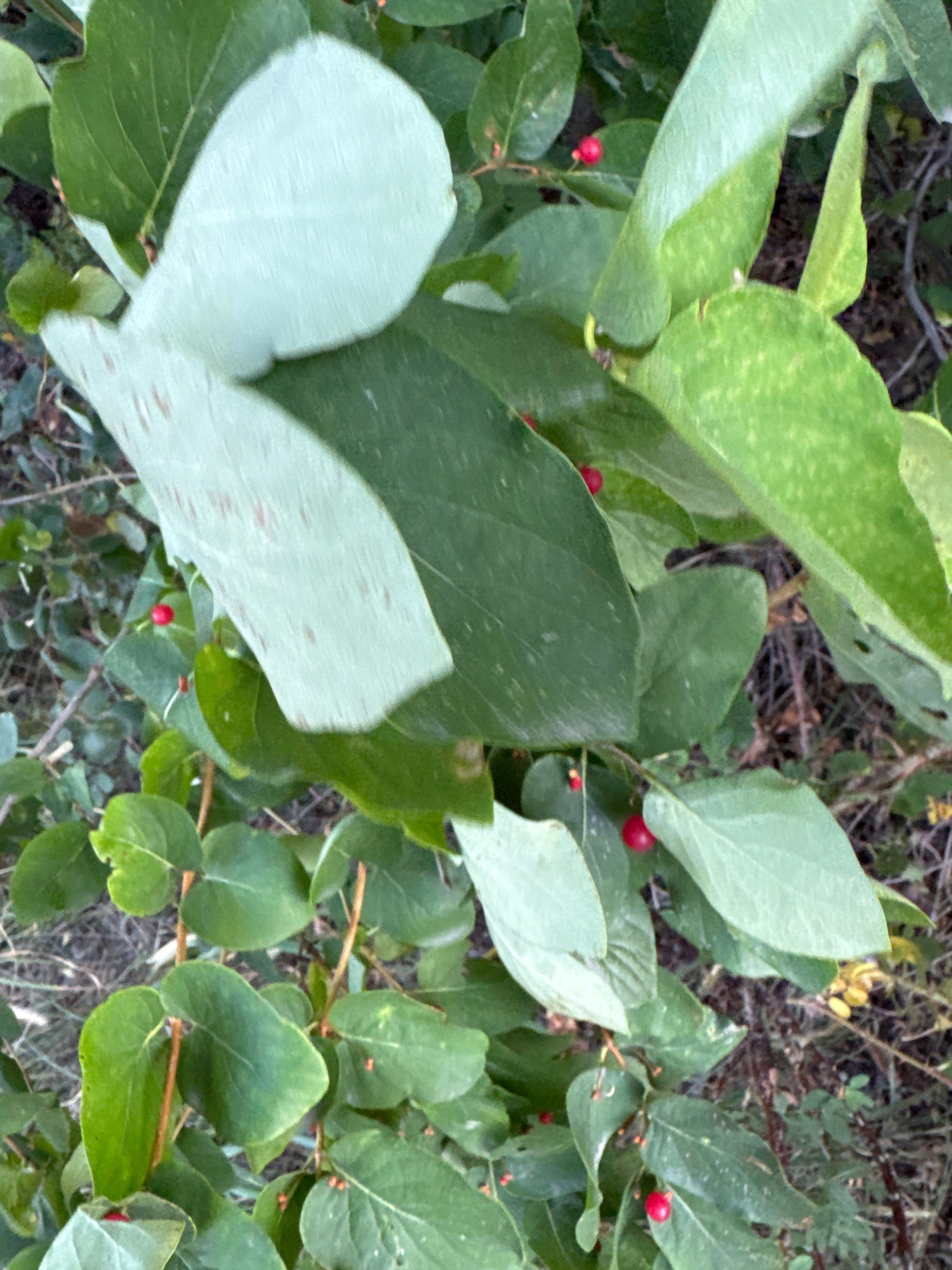
Common Snowberry
Symphoricarpos albus
Deciduous shrub with opposite, oval to elliptic leaves that are dark green above and lighter underneath, featuring small pink flowers followed by prominent rounded white or reddish fruits.
- Light
- Full sun to partial shade, approximately 4 to 6 hours of direct light daily.
- Water
- Requires regular moisture until established, after which it demonstrates good drought tolerance. Water deeply when the top few inches of soil become dry.
- Growth
- Deciduous multi-stemmed shrub with an upright, spreading growth habit, reaching mature heights of 3 to 6 feet with a comparable spread.
Care instructions
Provide full sun to partial shade with moderate, regular watering during the establishment phase. Plant in well-draining soil and prune in late winter to encourage vigorous new branch development and maintain desired shape.
Growing details
Sunlight
Full sun to partial shade, approximately 4 to 6 hours of direct light daily.
Watering
Requires regular moisture until established, after which it demonstrates good drought tolerance. Water deeply when the top few inches of soil become dry.
Soil
Adaptable to a wide range of soil types including clay, loam, and sandy soils, provided they have adequate drainage. Prefers a neutral to slightly alkaline pH.
Hardiness zone
USDA Hardiness Zones 3 through 7
Growth habit
Deciduous multi-stemmed shrub with an upright, spreading growth habit, reaching mature heights of 3 to 6 feet with a comparable spread.
Bloom season
Blooms in late spring to mid-summer with small, bell-shaped pink or white flowers, followed by persistent spherical fruits lasting into winter.
Propagation
Propagated successfully via softwood cuttings taken in summer, hardwood cuttings in winter, root division, or from seeds.
Common pests & issues
Generally resilient, though occasionally susceptible to powdery mildew, leaf spot, and minor aphid infestations, which can be managed with good air circulation and proper watering.
Similar species
Can be distinguished from other Symphoricarpos species primarily by the size, color, and persistence of its characteristic rounded fruits and the glaucous underside of its leaves.