
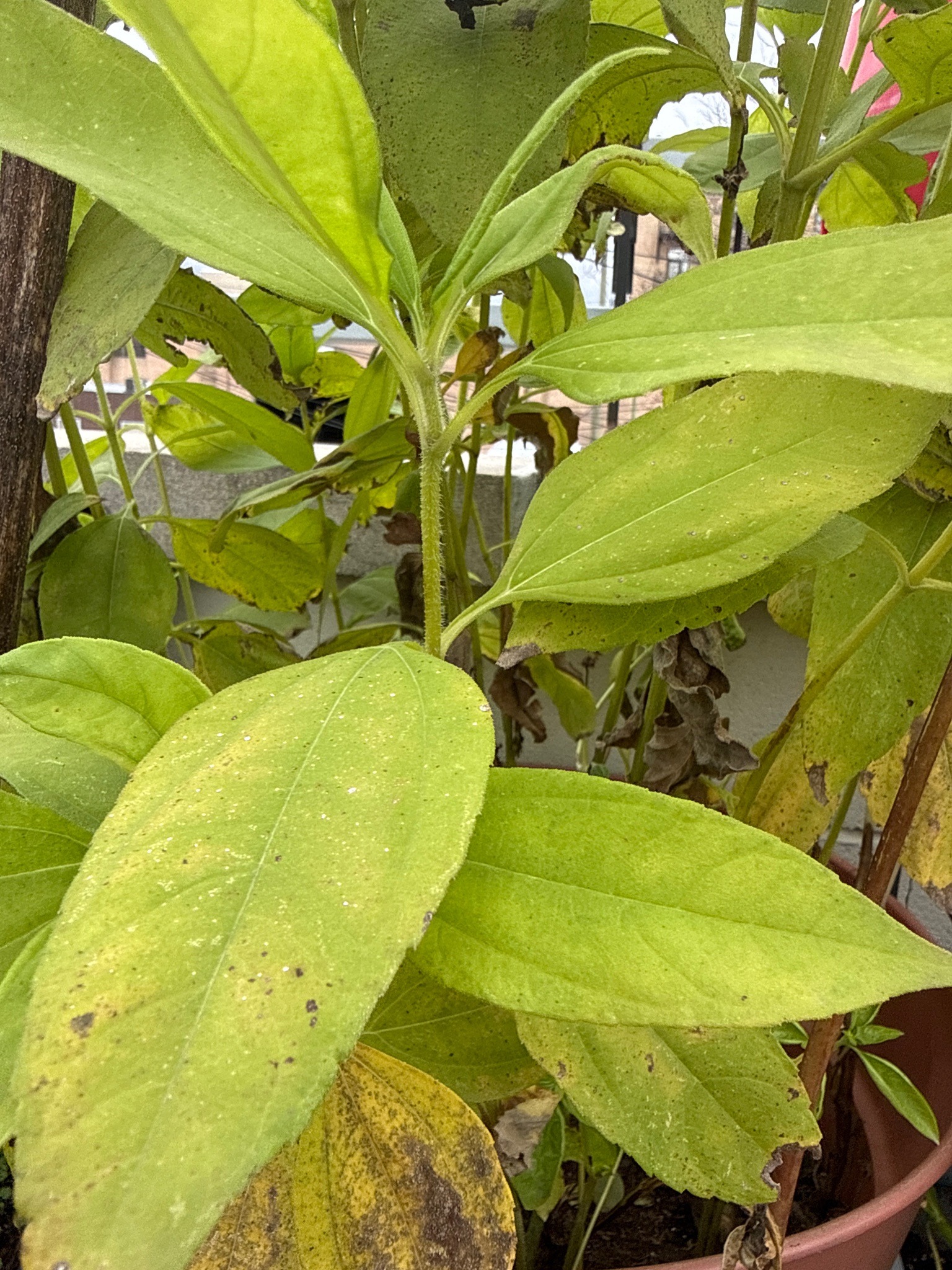
Common Sunflower
Helianthus annuus
An herbaceous annual plant characterized by thick, rough, hairy stems, broad, coarsely toothed, rough leaves arranged alternately, and prominent composite flower heads.
- Light
- Full sun, requiring 6 to 8 hours of direct sunlight per day.
- Water
- Water deeply and regularly, allowing the soil to dry slightly between waterings. Drought tolerant once established, but consistent moisture supports optimal vegetative growth and flowering.
- Growth
- Fast-growing herbaceous annual with a strong, upright central stem, reaching heights of 3 to 10 feet or more depending on the cultivar, with a spread of 1 to 3 feet.
Care instructions
Provide full sun exposure of at least six to eight hours daily. Water deeply when the top few inches of soil become dry. Grow in fertile, well-draining soil with a balanced, slow-release fertilizer applied during the early growing season.
Growing details
Sunlight
Full sun, requiring 6 to 8 hours of direct sunlight per day.
Watering
Water deeply and regularly, allowing the soil to dry slightly between waterings. Drought tolerant once established, but consistent moisture supports optimal vegetative growth and flowering.
Soil
Prefers loamy, well-draining soil with a neutral pH range of 6.0 to 7.5, though it adapts to various soil types as long as drainage is adequate.
Hardiness zone
USDA Hardiness Zones 2 through 11 as an annual cultivated worldwide.
Growth habit
Fast-growing herbaceous annual with a strong, upright central stem, reaching heights of 3 to 10 feet or more depending on the cultivar, with a spread of 1 to 3 feet.
Bloom season
Mid-summer to early autumn, producing large composite flower heads with bright yellow ray florets surrounding dark brown or yellow disc florets.
Propagation
Propagated strictly by seeds sown directly into the soil after the last spring frost, as seedlings have taproots that dislike transplantation.
Common pests & issues
Susceptible to powdery mildew, rust, and downy mildew in humid conditions, alongside pests such as aphids, caterpillars, and sunflower beetles. Prevent by ensuring good air circulation and avoiding overhead watering.
Similar species
Jerusalem Artichoke (Helianthus tuberosus), which features edible tubers and produces multiple smaller flower heads compared to the single dominant head of the common sunflower.