
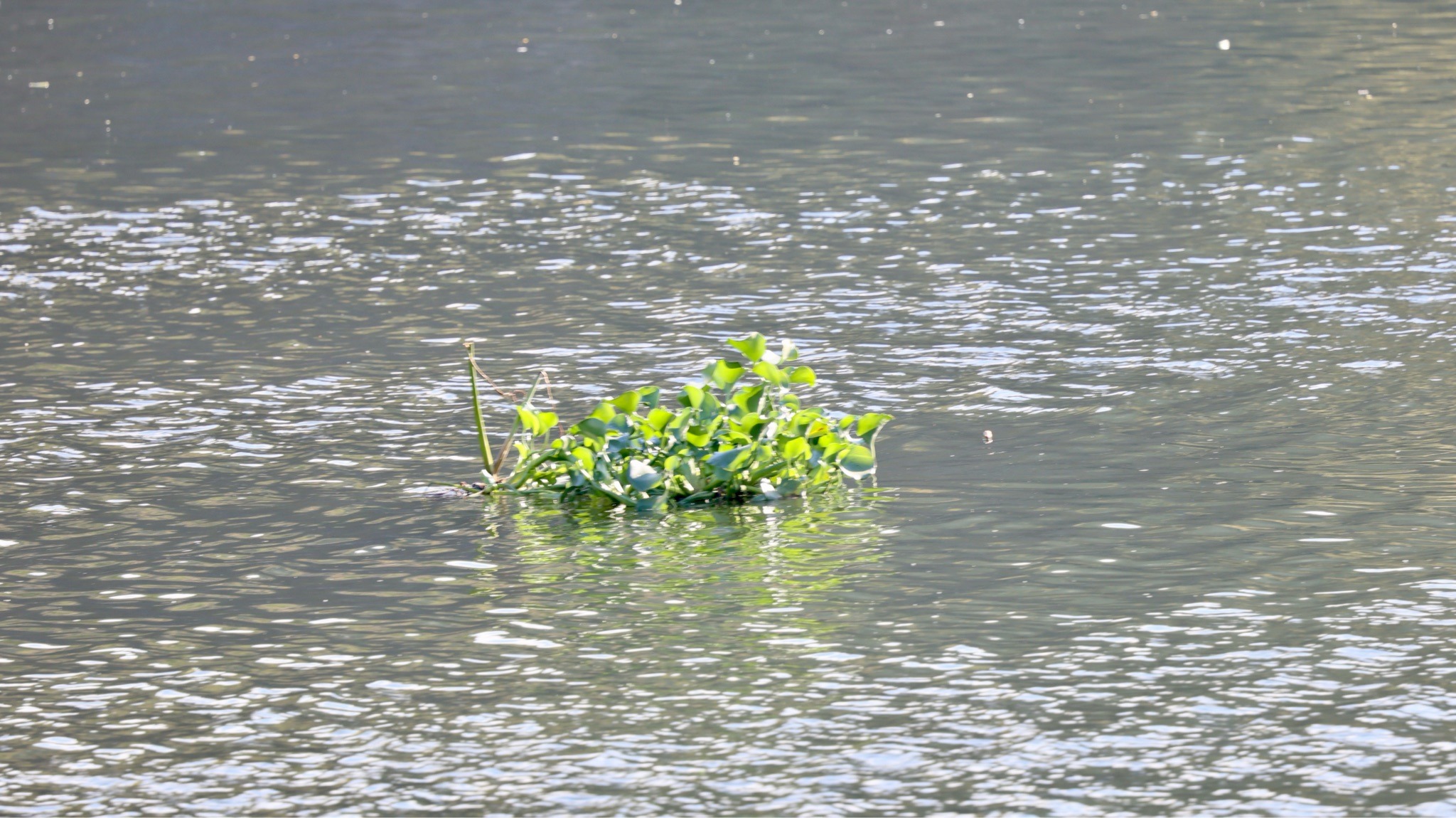
Common Water Hyacinth
Pontederia crassipes
A free-floating aquatic plant featuring glossy, rounded to kidney-shaped leaves with spongy, inflated petioles that provide buoyancy. The roots are dark purple and feathery, hanging freely in the water column.
- Light
- Full sun, requiring at least 6 hours of direct sunlight per day for optimal growth and flowering.
- Water
- Fully aquatic; must remain floating in water at all times. It has no drought tolerance and will quickly desiccate if removed from water.
- Growth
- Free-floating perennial aquatic plant that forms dense mats. Spreads rapidly through vegetative reproduction by producing stolons and can double in population in a short timeframe.
Care instructions
Cultivated in aquatic settings such as ponds or water gardens. Requires full sun exposure, high nutrient water, and protection from freezing temperatures. It is typically grown floating freely on the water surface.
Growing details
Sunlight
Full sun, requiring at least 6 hours of direct sunlight per day for optimal growth and flowering.
Watering
Fully aquatic; must remain floating in water at all times. It has no drought tolerance and will quickly desiccate if removed from water.
Soil
Grows as a free-floating plant without soil needs, absorbing nutrients directly from the water column. Tolerates a wide range of water pH levels.
Hardiness zone
USDA Hardiness Zones 9 through 11. It is sensitive to frost and acts as an annual in cooler climates.
Growth habit
Free-floating perennial aquatic plant that forms dense mats. Spreads rapidly through vegetative reproduction by producing stolons and can double in population in a short timeframe.
Bloom season
Blooms from mid-summer to autumn. Produces spikes of pale purple to light blue flowers, where the uppermost petal features a distinctive yellow spot surrounded by a blue ring.
Propagation
Propagates easily by natural division and the production of offshoots (stolons) from the main plant body, which can be separated once they develop their own leaves and roots.
Common pests & issues
Can experience chlorosis if water lacks sufficient iron or other micronutrients. Pests are rare in controlled water garden settings but may include specific aquatic insects.
Similar species
Water Lettuce (Pistia stratiotes), which features velvety, ridged, light green leaves arranged in a rosette without the bulbous, inflated leaf stalks characteristic of the water hyacinth.