
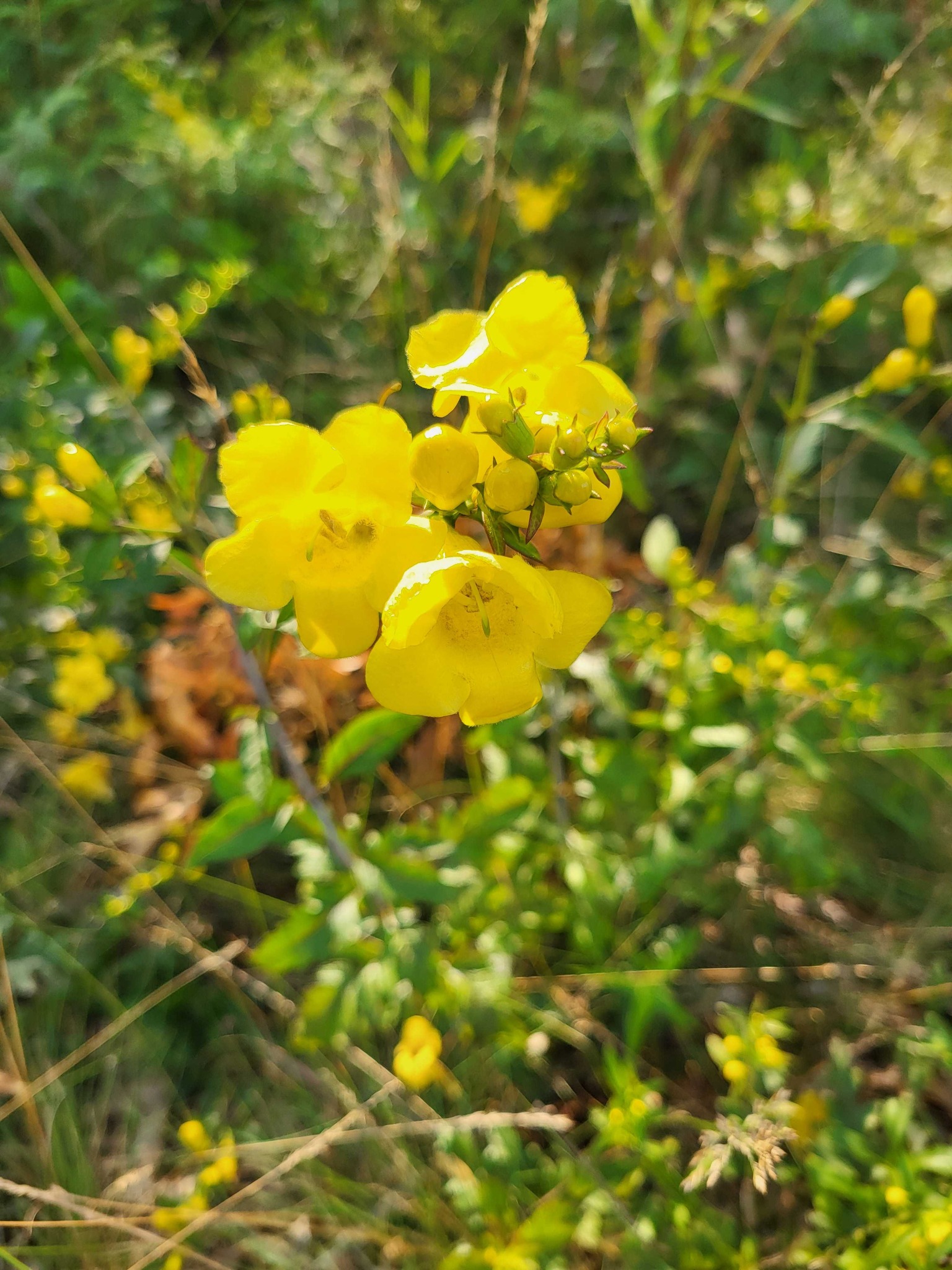
Common Yellow Monkeyflower
Erythranthe guttata
An herbaceous plant featuring bright, golden-yellow, two-lipped tubular flowers, often with brownish-red spots inside the throat, and opposite, oval toothed leaves.
- Light
- Full sun to partial shade, typically requiring 4 to 6 hours of direct sunlight daily.
- Water
- High water requirements. Prefers moist or wet soil and does not tolerate drought. Water frequently to keep the root zone damp.
- Growth
- Perennial herbaceous plant with an upright to sprawling growth habit, reaching heights of 10 to 80 centimeters with a spreading tendency.
Care instructions
Grow in full sun to partial shade with consistently moist to wet soil. Provide regular watering to mimic its natural riparian habitats, and apply a balanced, slow-release fertilizer during the active growing season.
Growing details
Sunlight
Full sun to partial shade, typically requiring 4 to 6 hours of direct sunlight daily.
Watering
High water requirements. Prefers moist or wet soil and does not tolerate drought. Water frequently to keep the root zone damp.
Soil
Rich, loamy to clay soils with high organic matter content. Prefers a neutral to slightly acidic pH range between 6.0 and 7.0.
Hardiness zone
USDA hardiness zones 5 through 9, exhibiting good cold tolerance in temperate regions.
Growth habit
Perennial herbaceous plant with an upright to sprawling growth habit, reaching heights of 10 to 80 centimeters with a spreading tendency.
Bloom season
Blooms from late spring through late summer, producing vibrant yellow zygomorphic flowers.
Propagation
Propagated easily via seeds sown on the soil surface without covering, or through stem cuttings rooted in moist sand or water during the active growing season.
Common pests & issues
Generally resilient, but susceptible to root rot if soils become stagnant or lack oxygen. Pests can occasionally include aphids and spider mites in overly dry conditions.
Similar species
Can be confused with other Erythranthe species such as Erythranthe moschata, but is distinguished by its brighter yellow coloration, larger flower size, and lack of glandular hairs with a musky scent.