
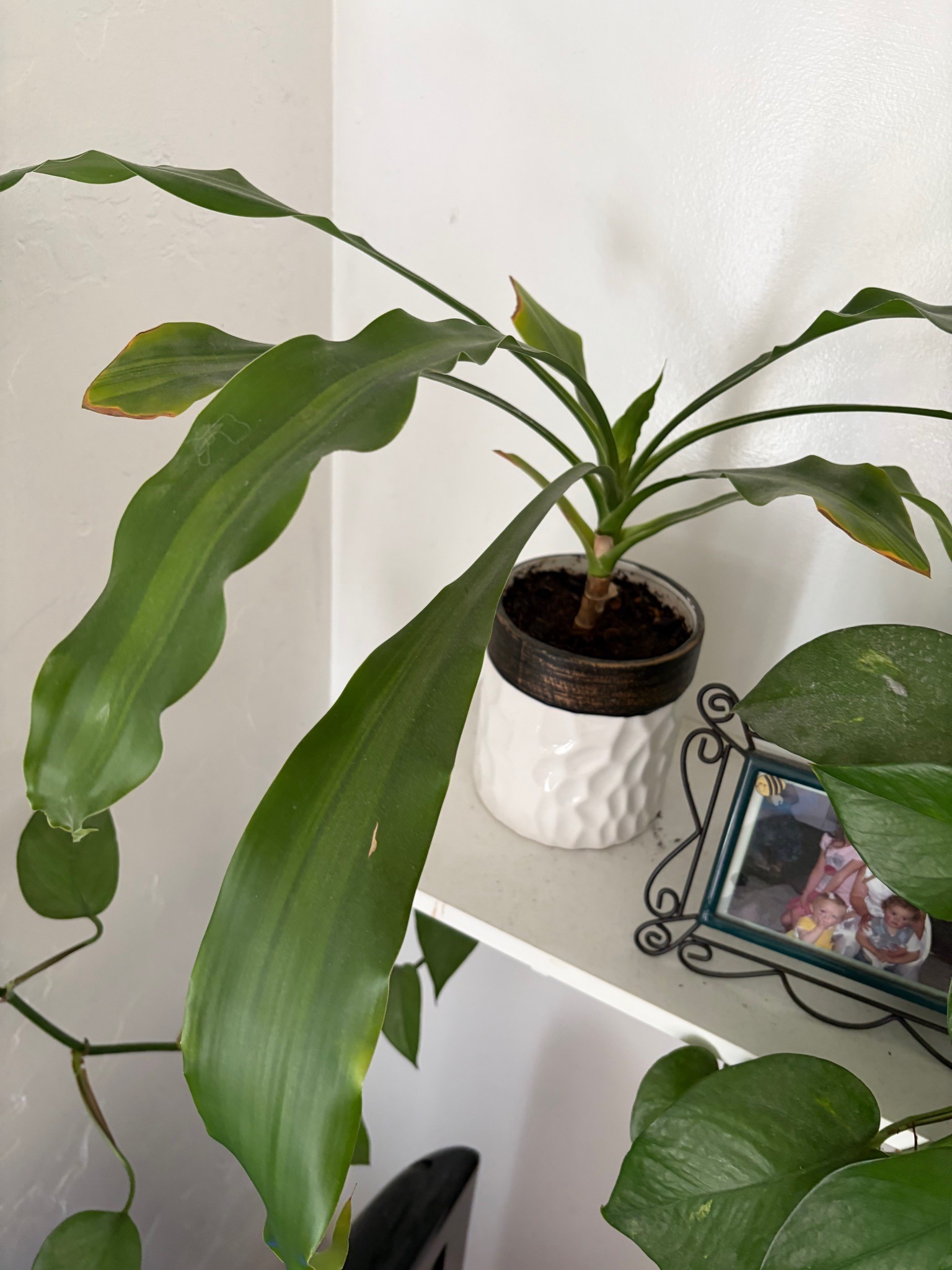
Corn Plant
Dracaena fragrans
An evergreen shrub featuring long, glossy, strap-shaped green leaves radiating from a woody single or multi-stemmed upright trunk.
- Light
- Bright, indirect light for 6 to 8 hours daily; avoid harsh direct sun which can scorch the leaves.
- Water
- Water thoroughly when the top 1 to 2 inches of soil are dry. Drought tolerant once established, but sensitive to overwatering and fluoride or chlorine in tap water.
- Growth
- Perennial upright woody shrub, reaching mature indoor heights of 4 to 6 feet with a slow to moderate growth rate.
Care instructions
Provide bright, indirect sunlight, water when the top inch of soil becomes dry, use well-draining potting mix, and feed with a balanced liquid fertilizer monthly during spring and summer.
Growing details
Sunlight
Bright, indirect light for 6 to 8 hours daily; avoid harsh direct sun which can scorch the leaves.
Watering
Water thoroughly when the top 1 to 2 inches of soil are dry. Drought tolerant once established, but sensitive to overwatering and fluoride or chlorine in tap water.
Soil
Rich, well-draining potting mix with good aeration, ideally maintaining a slightly acidic to neutral pH between 6.0 and 6.5.
Hardiness zone
USDA zones 10 to 11; grown primarily as a houseplant in cooler temperate climates.
Growth habit
Perennial upright woody shrub, reaching mature indoor heights of 4 to 6 feet with a slow to moderate growth rate.
Bloom season
Rarely blooms indoors; when grown outdoors in ideal conditions, produces clusters of fragrant, small white or yellowish flowers.
Propagation
Propagated easily through stem cuttings or cane cuttings rooted in water or moist potting mix during the spring or summer.
Common pests & issues
Susceptible to spider mites, mealybugs, and scale insects. Brown tips often result from low humidity, underwatering, or mineral buildup from tap water.
Similar species
Dracaena deremensis, which features narrower or differently striped leaves, and Dracaena marginata, which has much thinner, needle-like red-margined leaves.