
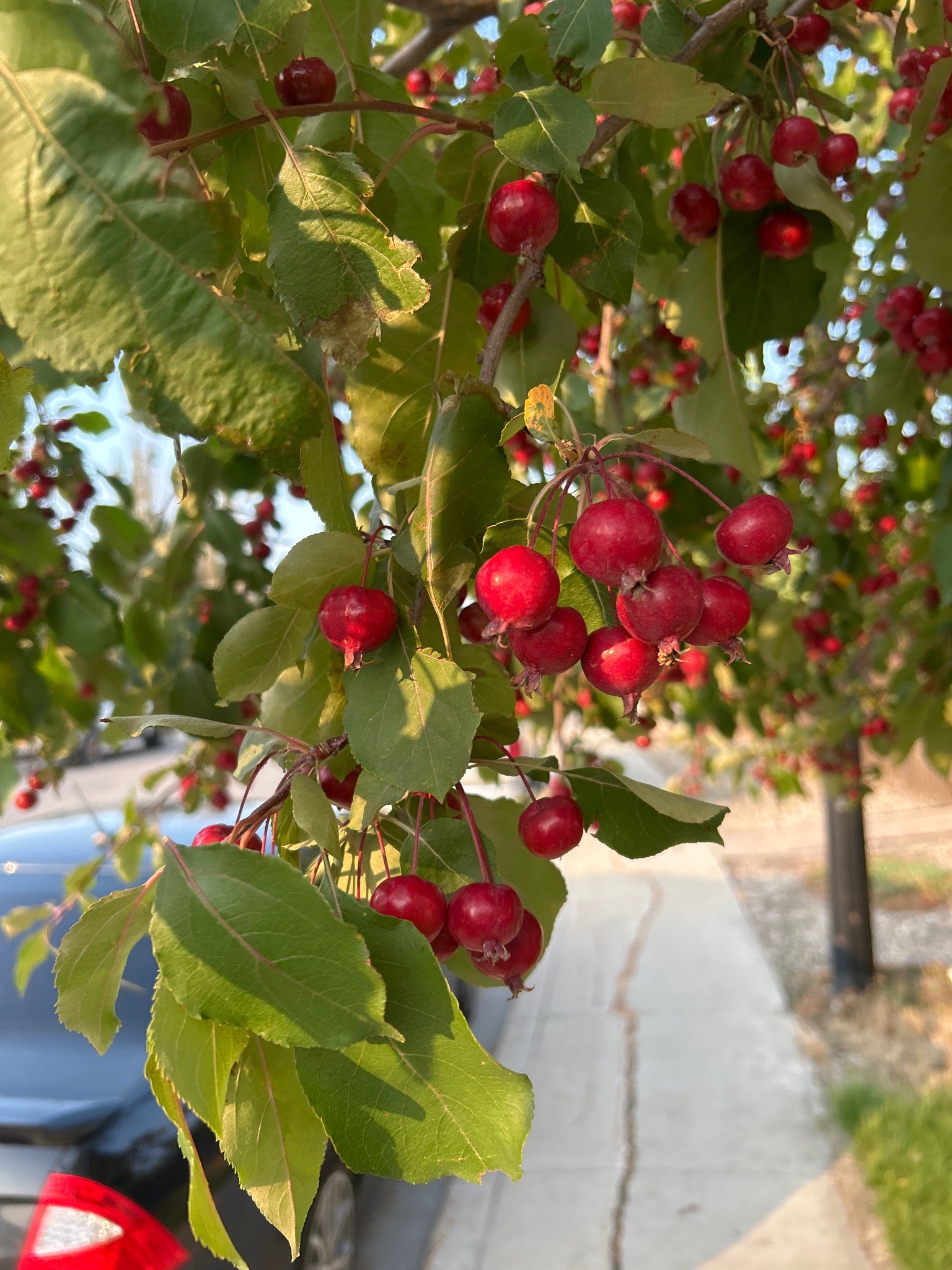
Crabapple
Malus spp.
A small to medium-sized deciduous tree featuring alternate, simple leaves, showy spring blossoms, and small, colorful pome fruits hanging in clusters.
- Light
- Full sun, requiring at least 6 hours of direct sunlight daily
- Water
- Moderate watering needs. Water deeply once a week during dry periods once established; drought tolerant once mature.
- Growth
- Deciduous perennial tree or large shrub with a rounded or spreading canopy, growing 15 to 25 feet tall and wide at a moderate rate.
Care instructions
Plant in full sun with well-draining soil. Water deeply when establishing and during dry spells. Apply a balanced slow-release fertilizer in early spring.
Growing details
Sunlight
Full sun, requiring at least 6 hours of direct sunlight daily
Watering
Moderate watering needs. Water deeply once a week during dry periods once established; drought tolerant once mature.
Soil
Prefers rich, loamy, well-draining soil with a neutral pH between 6.0 and 7.0, though adaptable to clay and sandy soils.
Hardiness zone
USDA Hardiness Zones 4 through 8
Growth habit
Deciduous perennial tree or large shrub with a rounded or spreading canopy, growing 15 to 25 feet tall and wide at a moderate rate.
Bloom season
Spring, producing abundant clusters of white, pink, or red fragrant flowers before the leaves fully emerge.
Propagation
Propagated through grafting or budding onto rootstocks for cultivated varieties, or via stratification of seeds for wild species.
Common pests & issues
Susceptible to fungal issues like apple scab, powdery mildew, and cedar-apple rust, as well as pests like aphids and borers. Ensure good air circulation and select resistant cultivars.
Similar species
Domestic apple trees (Malus domestica), which generally produce much larger fruits and have coarser growth habits, and hawthorns (Crataegus spp.), which often feature distinct thorns and different leaf lobing.