
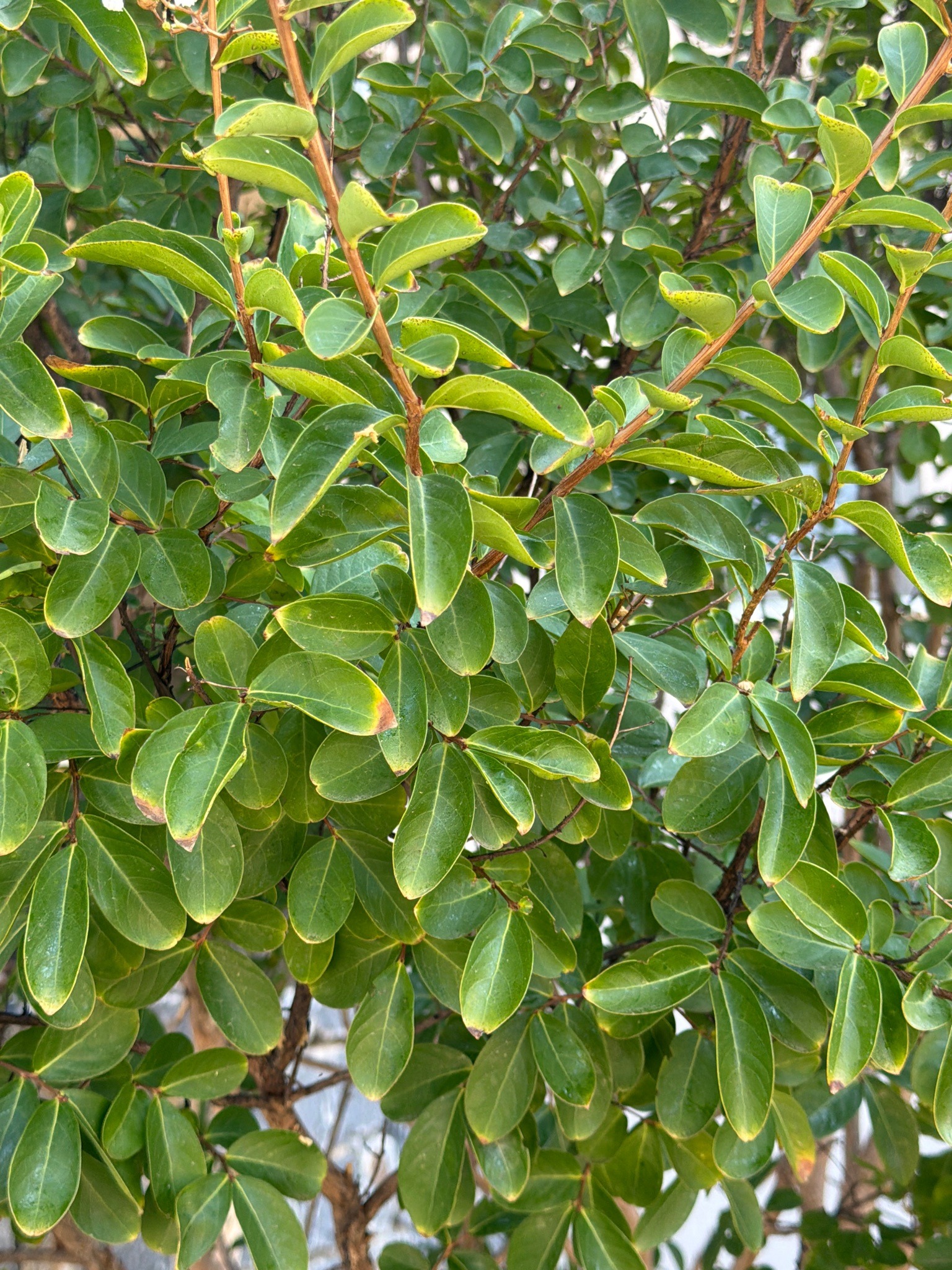
Crape Myrtle
Lagerstroemia indica
A deciduous shrub or small tree featuring smooth, exfoliating bark, dark green oval leaves that often display vibrant autumn colors, and dense panicles of crinkled flowers.
- Light
- Full sun, requiring at least 6 to 8 hours of direct sunlight daily
- Water
- Moderate water needs when establishing; highly drought-tolerant once mature. Water thoroughly when the top few inches of soil become dry.
- Growth
- Perennial woody shrub or small tree with a multi-stemmed or single-trunk form, reaching heights of 10 to 30 feet and spreads of 6 to 15 feet with a moderate growth rate.
Care instructions
Provide full sun for optimal flowering. Water deeply when newly planted, then allow the soil to dry out somewhat between waterings as established plants tolerate dry conditions well. Plant in well-draining soil and apply a balanced, slow-release fertilizer in early spring.
Growing details
Sunlight
Full sun, requiring at least 6 to 8 hours of direct sunlight daily
Watering
Moderate water needs when establishing; highly drought-tolerant once mature. Water thoroughly when the top few inches of soil become dry.
Soil
Adaptable to a wide range of well-draining soils including loam, clay, and sand, with an optimal pH range between 6.0 and 6.5.
Hardiness zone
USDA Hardiness Zones 7 through 9
Growth habit
Perennial woody shrub or small tree with a multi-stemmed or single-trunk form, reaching heights of 10 to 30 feet and spreads of 6 to 15 feet with a moderate growth rate.
Bloom season
Summer to early autumn, producing showy clusters of crinkled, crepe-paper-like flowers in shades of pink, red, purple, or white.
Propagation
Propagated primarily through semi-hardwood cuttings taken in summer or by sowing seeds in spring.
Common pests & issues
Susceptible to powdery mildew, aphids, and sooty mold, which can be managed by ensuring good air circulation, proper spacing, and applying appropriate horticultural oils or fungicides if necessary.
Similar species
Privet (Ligustrum), which can be distinguished by its opposite or alternate leaves and different flower structure, and various species of Eucalyptus, which possess distinctly aromatic foliage.