
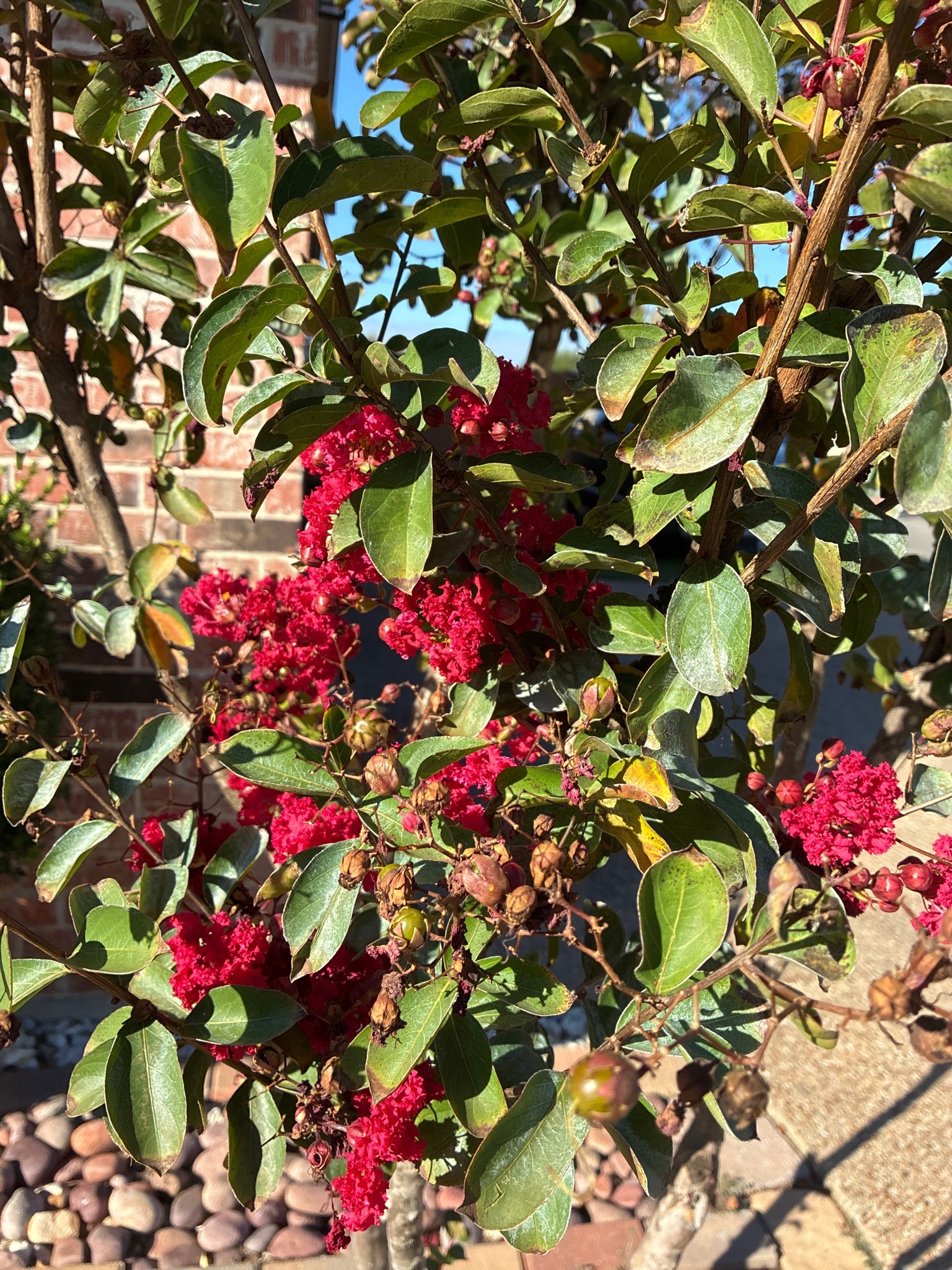
Crape Myrtle
Lagerstroemia indica
A deciduous shrub or small tree known for its smooth, peeling bark, glossy dark green leaves that often turn vibrant colors in autumn, and large clusters of crinkled, vibrant flowers.
- Light
- Full sun, requiring at least 6 to 8 hours of direct sunlight daily.
- Water
- Moderate water needs once established; highly drought-tolerant. Water deeply every 7-10 days during hot, dry periods, letting the soil dry between waterings.
- Growth
- Perennial woody shrub or small tree growing up to 15-25 feet tall with a similar spread, exhibiting a fast growth rate.
Care instructions
Plant in full sun to ensure abundant flowering and optimal health. Water deeply when newly planted and during dry spells, allowing the soil to dry out between watering sessions. Provide well-draining soil and a balanced fertilizer in early spring.
Growing details
Sunlight
Full sun, requiring at least 6 to 8 hours of direct sunlight daily.
Watering
Moderate water needs once established; highly drought-tolerant. Water deeply every 7-10 days during hot, dry periods, letting the soil dry between waterings.
Soil
Thrives in rich, loamy, well-draining soil with a pH range between 6.0 and 6.5, though it adapts well to clay and sandy soils as long as drainage is adequate.
Hardiness zone
USDA zones 7 through 9, with some cultivars rated for zone 6.
Growth habit
Perennial woody shrub or small tree growing up to 15-25 feet tall with a similar spread, exhibiting a fast growth rate.
Bloom season
Summer to early autumn, producing showy panicles of crinkled flowers in shades of red, pink, purple, or white.
Propagation
Propagated easily via semi-hardwood cuttings taken in summer or by sowing seeds in spring.
Common pests & issues
Susceptible to powdery mildew and aphids, which can be managed with proper air circulation, full sun exposure, and appropriate horticultural sprays.
Similar species
Lilac (Syringa vulgaris), distinguished by opposite leaves and distinctly different, smooth-edged flower clusters without the ruffled texture of crape myrtle petals.