
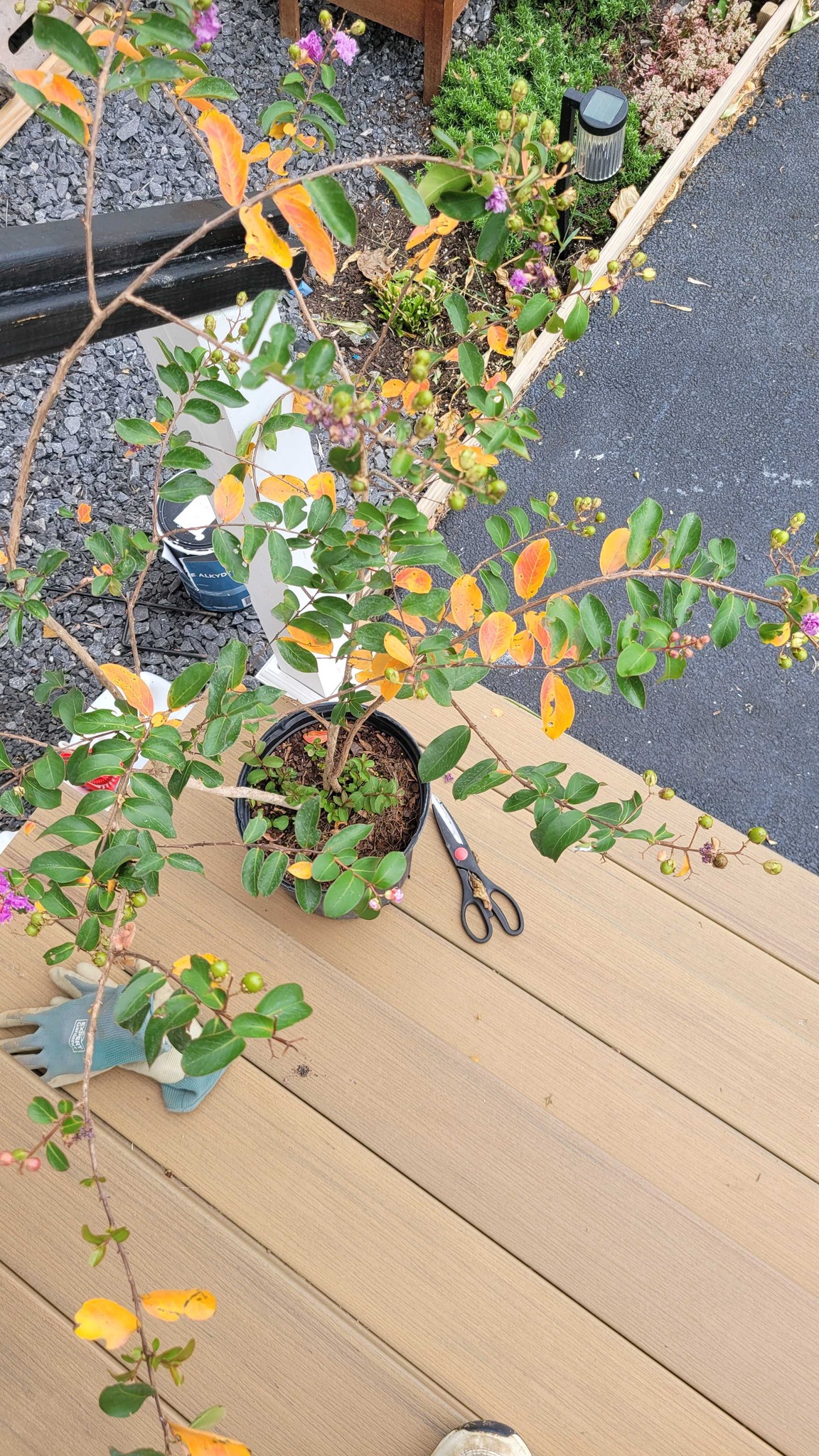
Crape Myrtle
Lagerstroemia indica
A deciduous shrub or small tree featuring smooth, exfoliating bark, glossy green leaves that transition to bright orange and yellow in autumn, and panicles of crinkled flowers.
- Light
- Full sun, requiring at least 6 to 8 hours of direct sunlight per day.
- Water
- Moderate water needs once established. Allow the soil to dry out between watering sessions. Drought tolerant once mature.
- Growth
- Perennial woody shrub or small tree with an upright, vase-shaped habit, reaching heights of 10 to 25 feet and spreads of 6 to 15 feet with a moderate to fast growth rate.
Care instructions
Provide full sun and well-draining soil. Water deeply when the top few inches of soil become dry, and apply a balanced fertilizer in spring to support robust growth and flowering.
Growing details
Sunlight
Full sun, requiring at least 6 to 8 hours of direct sunlight per day.
Watering
Moderate water needs once established. Allow the soil to dry out between watering sessions. Drought tolerant once mature.
Soil
Adaptable to a variety of soil types including clay, loam, or sandy soils, provided they are well-draining with a pH range of 5.5 to 6.5.
Hardiness zone
USDA Hardiness Zones 7 through 9
Growth habit
Perennial woody shrub or small tree with an upright, vase-shaped habit, reaching heights of 10 to 25 feet and spreads of 6 to 15 feet with a moderate to fast growth rate.
Bloom season
Summer to early autumn, featuring crinkled flowers in shades of pink, purple, red, or white arranged in large panicles.
Propagation
Propagated primarily through softwood or hardwood cuttings taken in spring or summer, or by seed.
Common pests & issues
Susceptible to powdery mildew and aphids. Prevent by ensuring good air circulation around the canopy and maintaining optimal watering practices.
Similar species
Lagerstroemia fauriei (Japanese crape myrtle), distinguished by its distinct cinnamon-colored peeling bark and greater resistance to powdery mildew.