
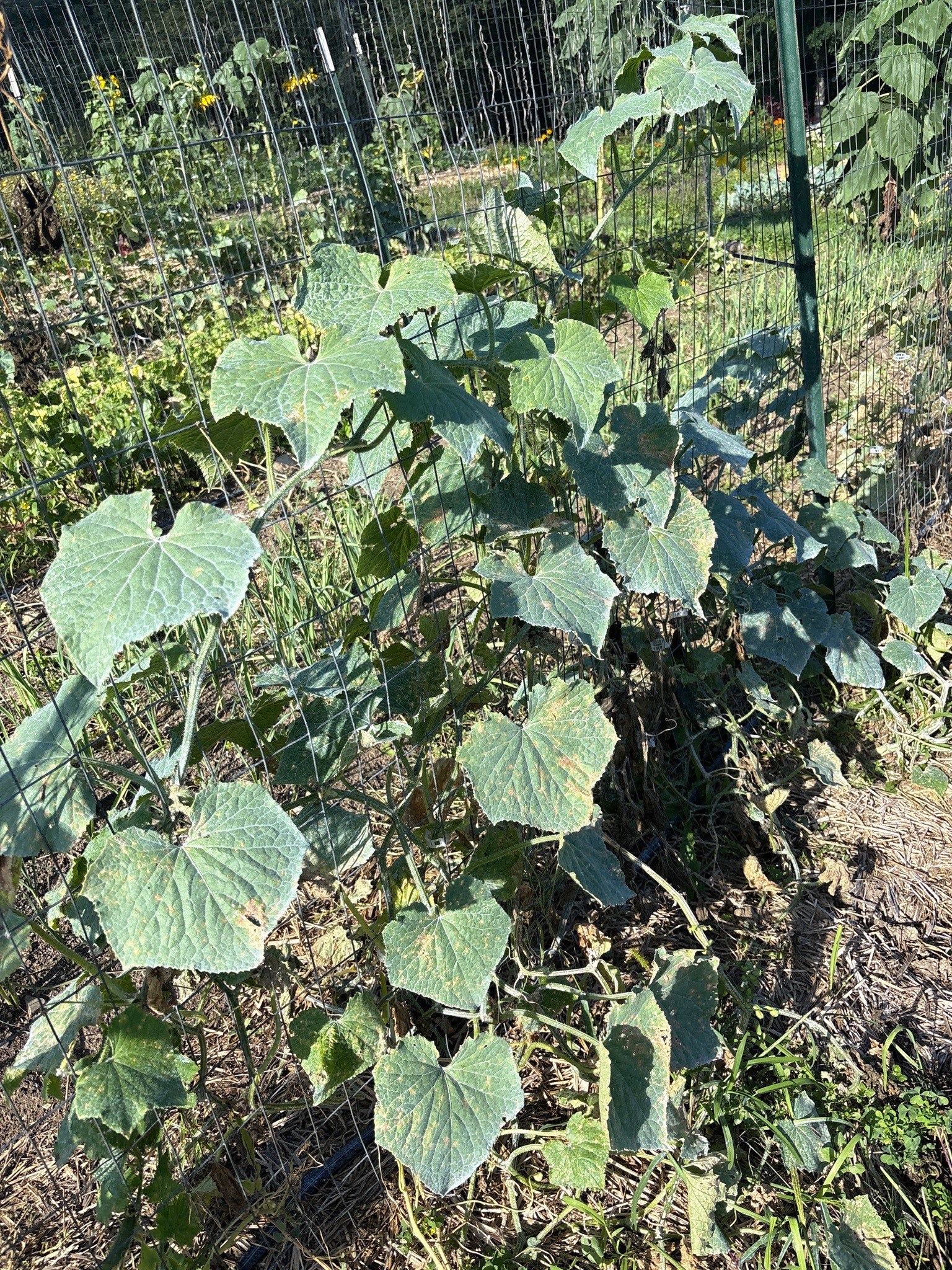
Cucumber
Cucumis sativus
A trailing or climbing vine characterized by large, rough-textured, heart-shaped or lobed leaves, hairy stems, and specialized tendrils used for clinging to supports.
- Light
- Full sun, requiring at least 6 to 8 hours of direct sunlight per day.
- Water
- Requires consistently moist soil, about 1 inch of water per week through rain or irrigation. Avoid letting the soil dry out completely, and water at the base to keep foliage dry.
- Growth
- Herbaceous annual vine growing rapidly up to 3 to 6 feet or more in height when provided with a trellis or vertical support structure.
Care instructions
Provide full sun exposure, rich and well-draining soil, regular moisture through consistent watering, and balanced fertilization during the growing season to maintain vigorous vine growth.
Growing details
Sunlight
Full sun, requiring at least 6 to 8 hours of direct sunlight per day.
Watering
Requires consistently moist soil, about 1 inch of water per week through rain or irrigation. Avoid letting the soil dry out completely, and water at the base to keep foliage dry.
Soil
Rich, loamy soil with excellent drainage and a neutral pH range between 6.0 and 6.8.
Hardiness zone
Typically grown as an annual in USDA zones 2 through 11, lacking frost tolerance.
Growth habit
Herbaceous annual vine growing rapidly up to 3 to 6 feet or more in height when provided with a trellis or vertical support structure.
Bloom season
Flowers appear in mid-summer, featuring small, bright yellow, funnel-shaped blossoms.
Propagation
Propagated easily from seeds sown directly into warm soil after all danger of frost has passed.
Common pests & issues
Prone to fungal diseases such as powdery mildew and downy mildew, as well as pests like aphids and cucumber beetles. Prevent by ensuring good air circulation and using row covers.
Similar species
Similar to other Cucurbitaceae members like squash and melons, but distinguished by its smaller, rougher leaves, slender hairy vines, and specific tendril structure.