
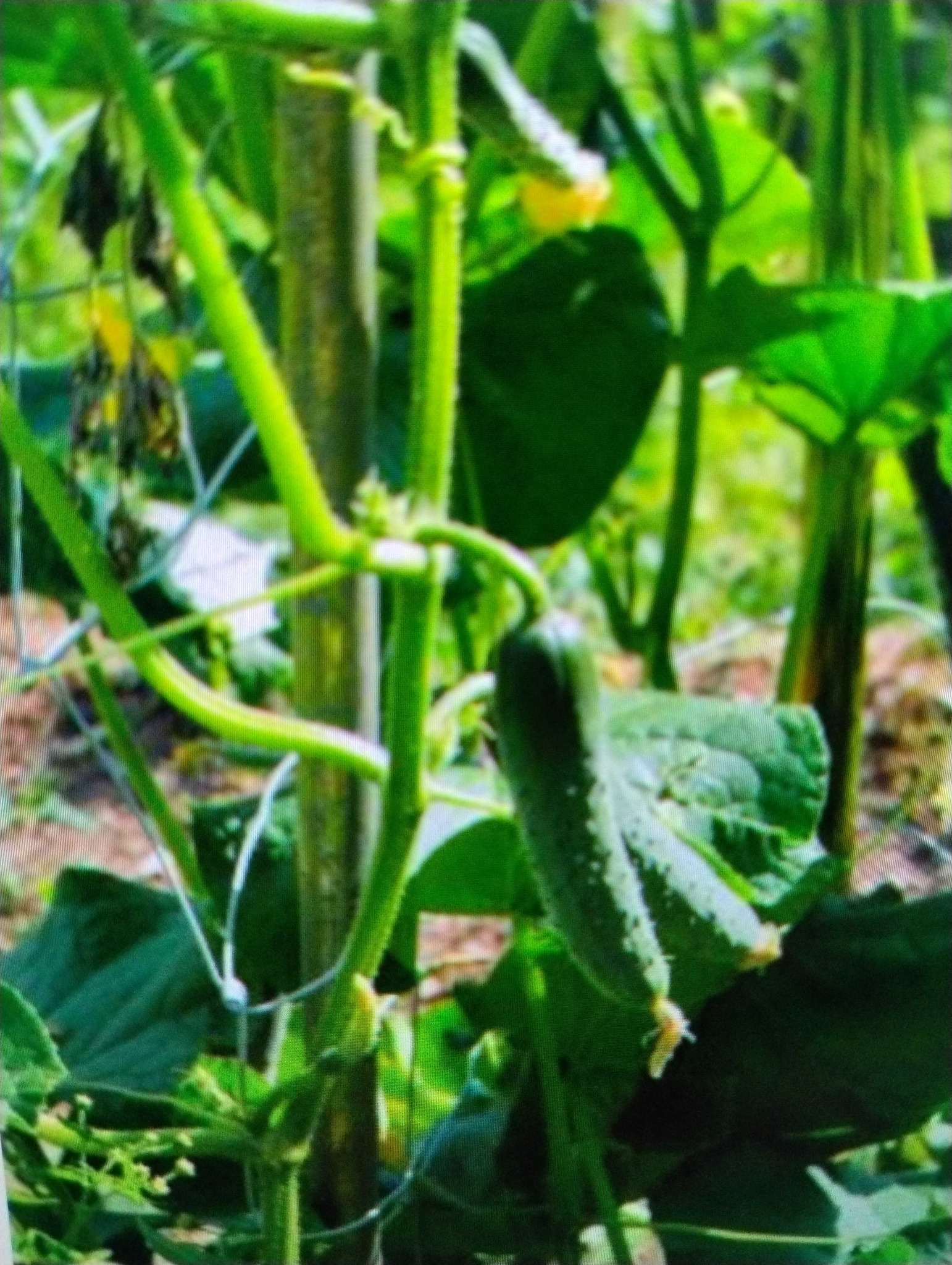
Cucumber
Cucumis sativus
A trailing or climbing vine with rough, hairy stems, large alternate leaves with three to five lobes, tendrils used for gripping supports, and elongated cylindrical structures hanging from the stems.
- Light
- Full sun, requiring 6 to 8 hours of direct sunlight daily
- Water
- Requires regular and consistent watering, approximately 1 inch of water per week, increasing during hot and dry periods. Keep the soil evenly moist to prevent wilting and poor development.
- Growth
- Fast-growing tender herbaceous annual vine that can sprawl along the ground up to 6 feet or climb upwards using tendrils when provided with vertical support structures
Care instructions
Provide full sun with at least six to eight hours of direct light daily. Maintain consistently moist soil through regular watering, ensuring the root zone stays damp but not waterlogged. Apply a balanced organic fertilizer every few weeks during the active growing season to support continuous vine production.
Growing details
Sunlight
Full sun, requiring 6 to 8 hours of direct sunlight daily
Watering
Requires regular and consistent watering, approximately 1 inch of water per week, increasing during hot and dry periods. Keep the soil evenly moist to prevent wilting and poor development.
Soil
Rich, well-draining loamy soil with a neutral pH ranging from 6.0 to 6.8
Hardiness zone
Generally grown as an annual in USDA hardiness zones 4 through 11, sensitive to frost and cold temperatures
Growth habit
Fast-growing tender herbaceous annual vine that can sprawl along the ground up to 6 feet or climb upwards using tendrils when provided with vertical support structures
Bloom season
Summer, producing bright yellow, funnel-shaped unisexual flowers that rely on insect pollinators for fertilization
Propagation
Propagated easily from seeds sown directly into warm soil after the last spring frost, or started indoors in biodegradable pots 3 to 4 weeks prior to transplanting
Common pests & issues
Susceptible to fungal diseases such as powdery mildew and downy mildew, as well as pests like aphids and cucumber beetles. Prevent issues by ensuring adequate air circulation, using row covers initially, and avoiding overhead watering.
Similar species
Muskmelon (Cucumis melo) and squash (Cucurbita species), which can be distinguished by differences in foliage shape, flower morphology, and the surface texture of the developing fruits