
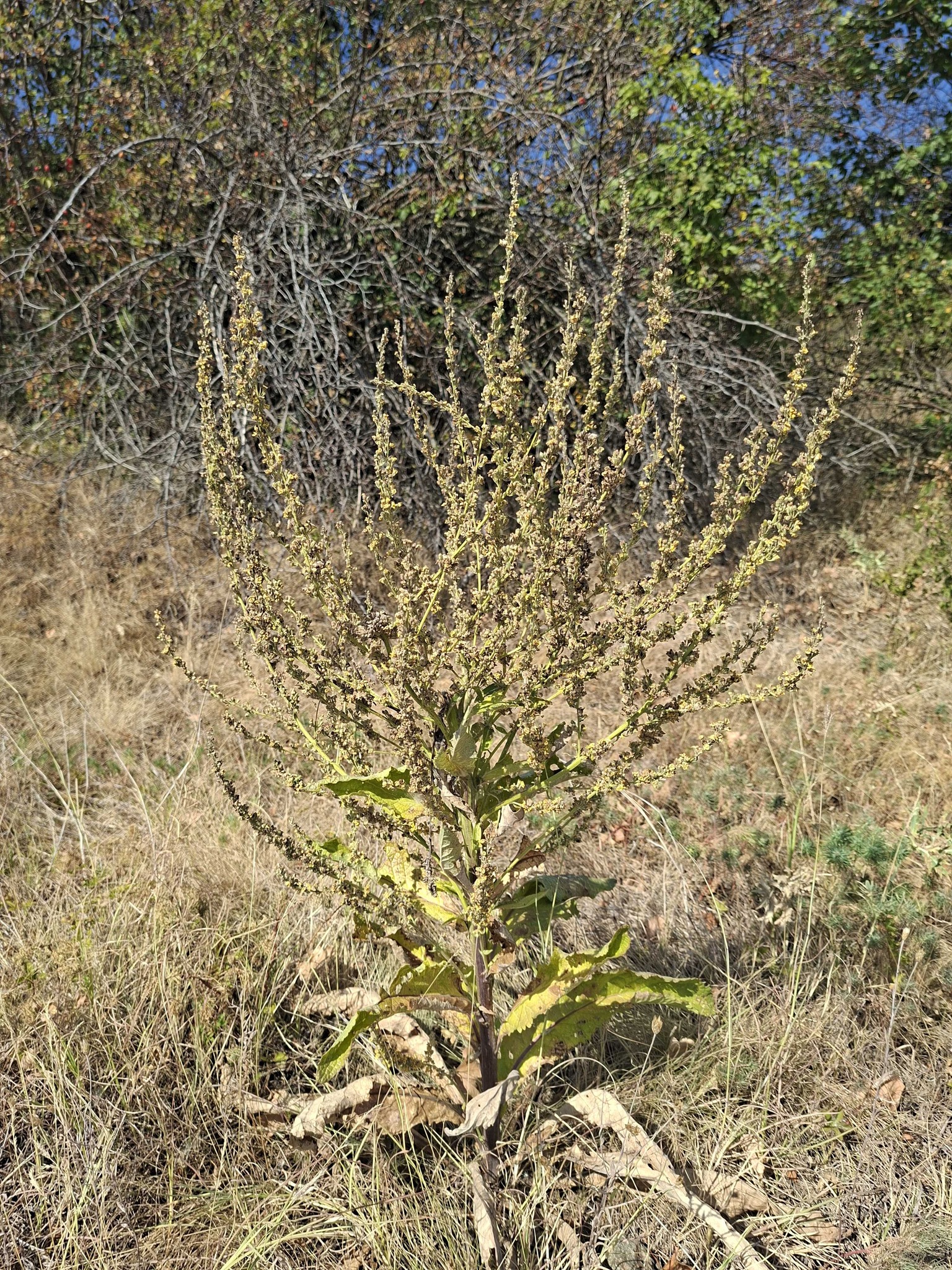
Curled dock
Rumex crispus
An upright herbaceous perennial featuring a deep taproot, basal rosette of lance-shaped leaves with distinctively wavy or curled margins, and tall branching flowering and fruiting stems carrying dense clusters of small greenish-brown structures.
- Light
- Full sun, requiring at least six hours of direct sunlight daily
- Water
- Prefers moderate moisture and tolerates damp soils well, though established plants exhibit strong drought tolerance due to their deep taproot
- Growth
- Perennial growing up to 1 meter tall with an upright, branching habit and a deep taproot
Care instructions
Generally managed as a wild weed rather than cultivated, but thrives in open, disturbed soils with full sun and adequate moisture.
Growing details
Sunlight
Full sun, requiring at least six hours of direct sunlight daily
Watering
Prefers moderate moisture and tolerates damp soils well, though established plants exhibit strong drought tolerance due to their deep taproot
Soil
Adaptable to a wide range of soil types including clay and loam, but prefers rich, moist soils with a neutral to slightly acidic pH
Hardiness zone
USDA zones 3 through 9
Growth habit
Perennial growing up to 1 meter tall with an upright, branching habit and a deep taproot
Bloom season
Flowers from late spring through summer, producing inconspicuous greenish flowers that develop into reddish-brown triangular valves surrounding the seeds
Propagation
Propagates primarily by abundant seed production and can also regenerate from fragments of the deep taproot if left in the soil
Common pests & issues
Resistant to many common pests, though occasionally affected by rust fungi and various leaf-chewing insects
Similar species
Broadleaf dock (Rumex obtusifolius), which can be distinguished by its broader, heart-shaped leaf bases rather than the distinctively wavy, narrow leaves of Rumex crispus