
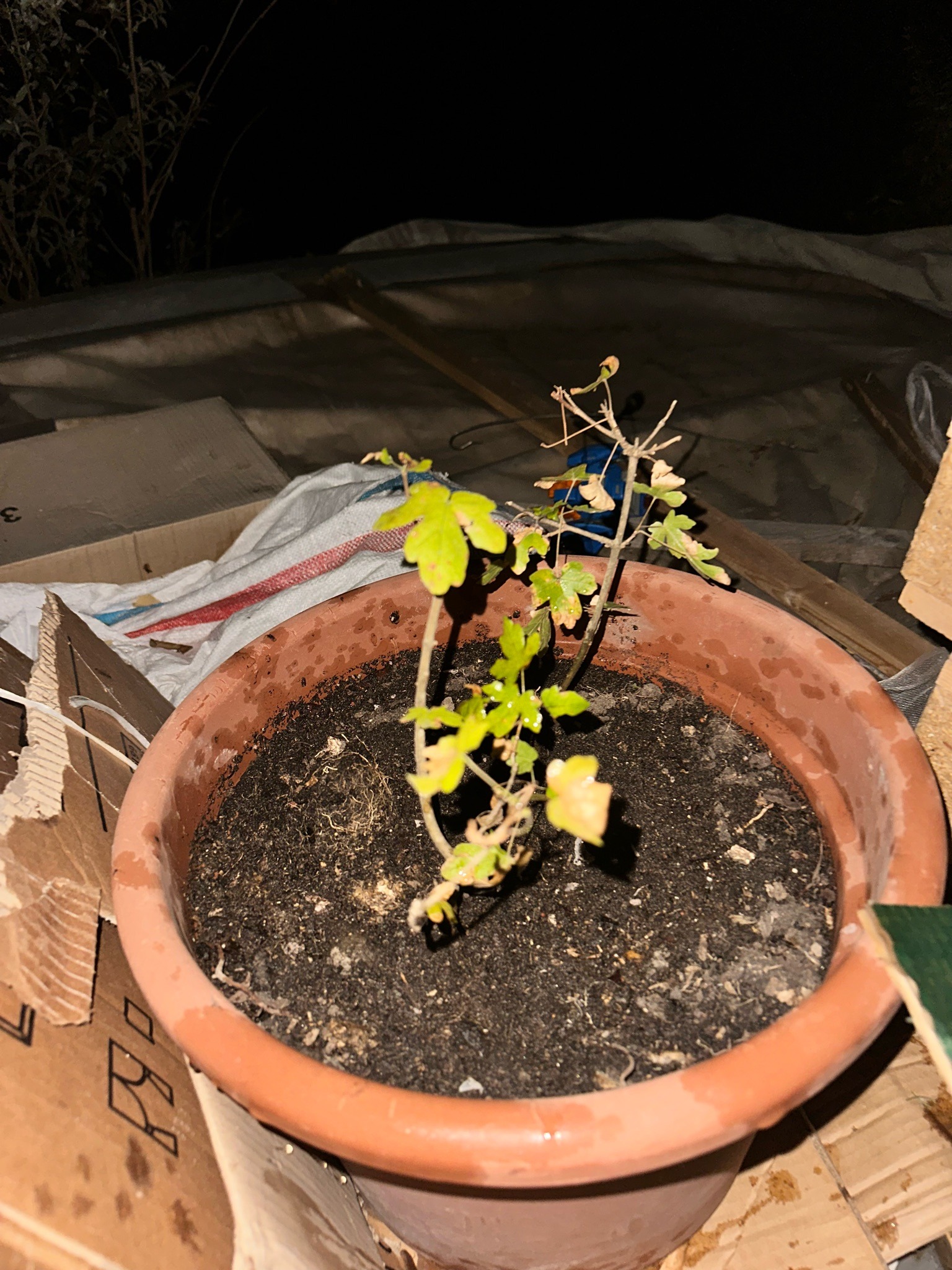
Currant
Ribes rubrum
A small deciduous woody shrub planted in a terracotta container, featuring lobed, palmately veined green leaves and slender, branching stems showing some signs of stress or dry tips.
- Light
- Full sun to partial shade, ideally requiring 6 hours of direct sunlight daily.
- Water
- Moderate and regular watering. Keep the soil evenly moist but avoid waterlogging. Drought tolerance is low once established in pots.
- Growth
- Deciduous multi-stemmed shrub growing up to 3 to 5 feet in height and spread when mature, with a moderate growth rate.
Care instructions
Provide full sun to partial shade with consistently moist, well-draining soil. Water regularly when the top inch of soil becomes dry, and feed with a balanced, slow-release fertilizer during the active growing season in spring.
Growing details
Sunlight
Full sun to partial shade, ideally requiring 6 hours of direct sunlight daily.
Watering
Moderate and regular watering. Keep the soil evenly moist but avoid waterlogging. Drought tolerance is low once established in pots.
Soil
Rich, loamy, well-draining soil with a slightly acidic to neutral pH range of 6.0 to 7.0.
Hardiness zone
USDA zones 3 to 8, displaying strong cold tolerance.
Growth habit
Deciduous multi-stemmed shrub growing up to 3 to 5 feet in height and spread when mature, with a moderate growth rate.
Bloom season
Spring, featuring small, inconspicuous greenish-yellow bell-shaped flowers arranged in racemes.
Propagation
Propagated easily through hardwood cuttings taken in late winter or softwood cuttings in early summer.
Common pests & issues
Susceptible to aphids, leaf spot, and powdery mildew. Prevent by ensuring good air circulation around the plant and avoiding overhead watering.
Similar species
Gooseberry (Ribes uva-crispa), which can be distinguished by the presence of sharp spines along the stems, whereas currants are generally smooth-stemmed.