
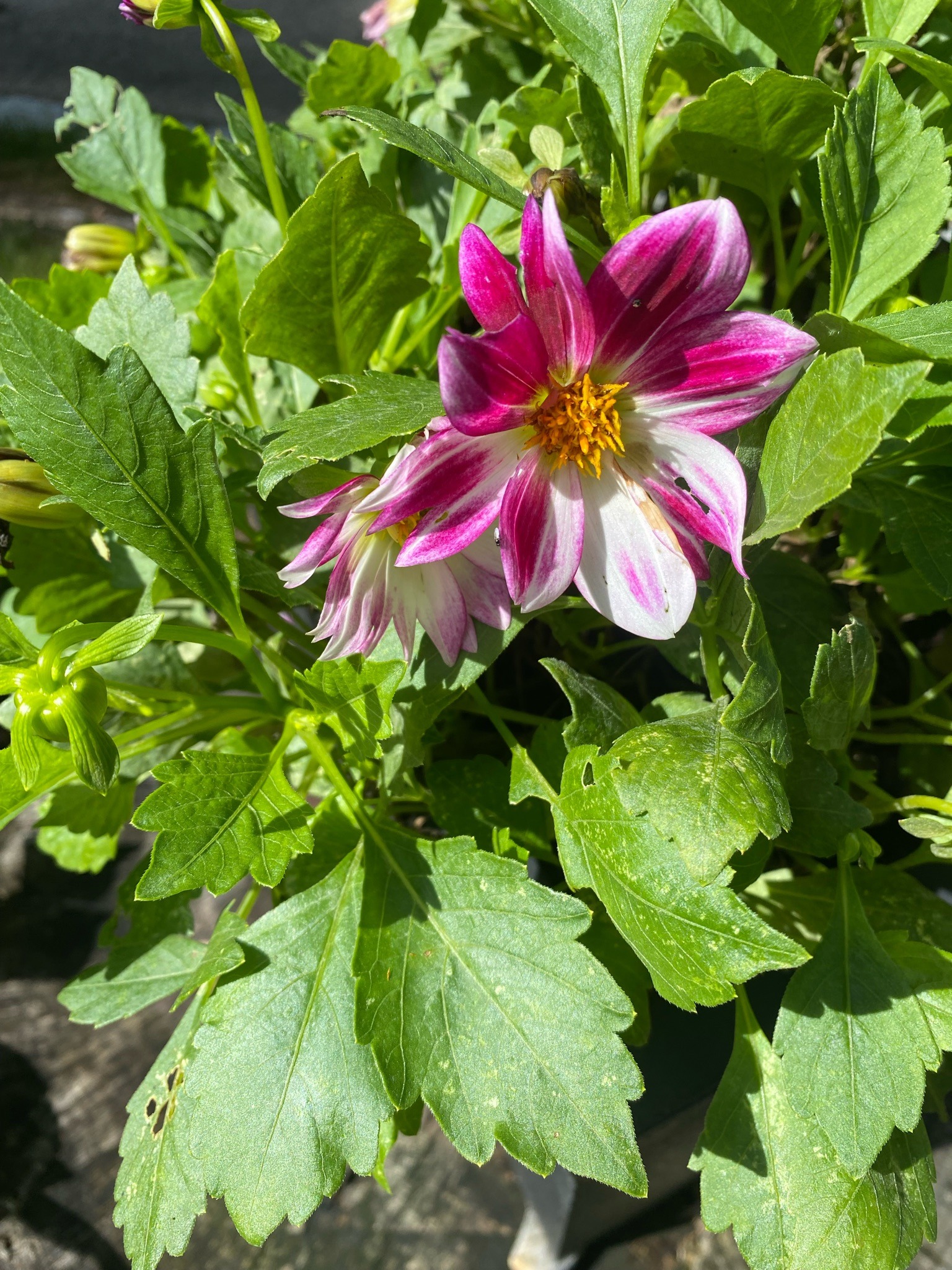
Dahlia
Dahlia pinnata
A bushy, tuberous perennial with deeply lobed, dark green leaves and showy multi-colored flowers featuring striking magenta and white striped petals surrounding a bright yellow center.
- Light
- Full sun, requiring at least 6 to 8 hours of direct sunlight daily.
- Water
- Water consistently, about once a week or more often during hot, dry spells, ensuring the soil remains moist but never waterlogged.
- Growth
- Tuberous, upright perennial with a branching form, growing between 1 to 5 feet tall and 1 to 3 feet wide depending on the cultivar, with a moderate growth rate.
Care instructions
Provide full sun and well-draining soil rich in organic matter. Water deeply when the top inch of soil becomes dry, and feed with a low-nitrogen, high-phosphorus fertilizer during the growing season to encourage robust flowering.
Growing details
Sunlight
Full sun, requiring at least 6 to 8 hours of direct sunlight daily.
Watering
Water consistently, about once a week or more often during hot, dry spells, ensuring the soil remains moist but never waterlogged.
Soil
Prefers rich, loamy, well-draining soil with a neutral pH range between 6.0 and 7.0.
Hardiness zone
USDA hardiness zones 8 through 11, treated as an annual or lifted for winter storage in colder regions.
Growth habit
Tuberous, upright perennial with a branching form, growing between 1 to 5 feet tall and 1 to 3 feet wide depending on the cultivar, with a moderate growth rate.
Bloom season
Blooms from mid-summer through the first autumn frost, producing complex composite flower heads with vibrant coloration.
Propagation
Propagated primarily through the division of overwintered tubers in spring, ensuring each section has at least one visible eye, or via stem cuttings taken in spring.
Common pests & issues
Susceptible to powdery mildew, slugs, snails, and spider mites. Prevent issues by ensuring good air circulation, avoiding overhead watering, and applying appropriate horticultural treatments if pests appear.
Similar species
Can be confused with other members of the Asteraceae family such as zinnias or chrysanthemums, but dahlias are distinguished by their distinct pinnate foliage and fleshy tuberous root systems.