
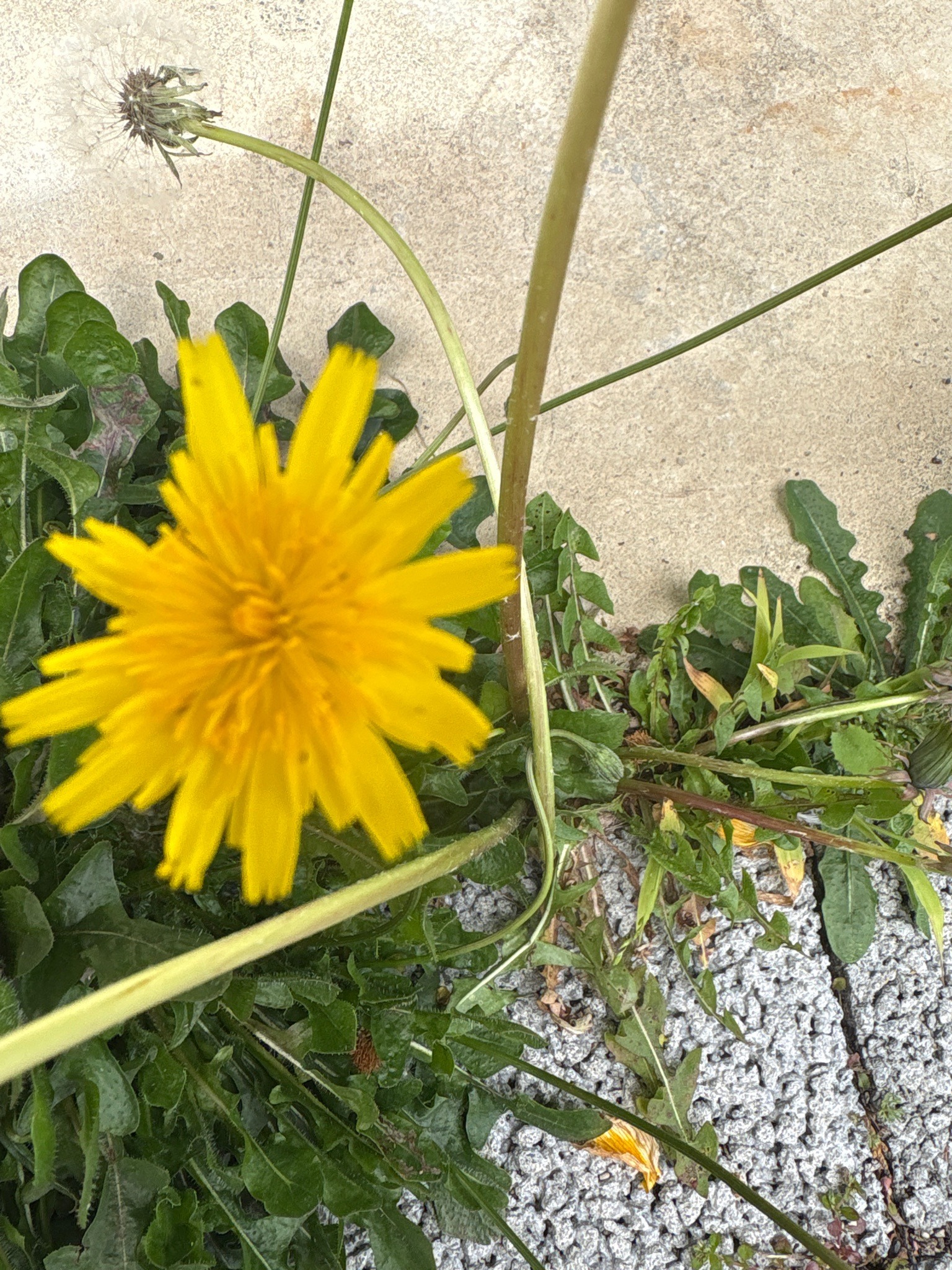
Dandelion
Taraxacum officinale
Features a basal rosette of deeply lobed, lance-shaped leaves, hollow leafless stems, and bright yellow composite flower heads that mature into spherical seed heads with pappus parachutes.
- Light
- Full sun, requiring 6 or more hours of direct sunlight per day
- Water
- Low to moderate watering needs; allow soil to dry out between waterings. Highly drought-tolerant.
- Growth
- Perennial plant forming a low-growing basal rosette with a deep taproot, reaching heights of 2 to 18 inches and spreading up to 12 inches.
Care instructions
Requires minimal maintenance. Thrives in full sun with average to poor well-draining soils. Water occasionally during establishment, highly resilient to drought once mature.
Growing details
Sunlight
Full sun, requiring 6 or more hours of direct sunlight per day
Watering
Low to moderate watering needs; allow soil to dry out between waterings. Highly drought-tolerant.
Soil
Adaptable to most soil types, including clay, loam, and sandy soils, with a preferred pH range between 5.5 and 7.0.
Hardiness zone
USDA Hardiness Zones 3 through 9
Growth habit
Perennial plant forming a low-growing basal rosette with a deep taproot, reaching heights of 2 to 18 inches and spreading up to 12 inches.
Bloom season
Blooms primarily in early spring through autumn, producing bright yellow composite flower heads composed entirely of ray florets.
Propagation
Propagates easily by seeds dispersed via wind and through root fragments left in the soil.
Common pests & issues
Generally resistant to pests and diseases, though can occasionally be affected by powdery mildew or rust in overly humid conditions.
Similar species
Cat's ear (Hypochaeris radicata) and sow thistle (Sonchus oleraceus); distinguished by the dandelion's completely smooth, hollow flower stems and single flower head per stem.