
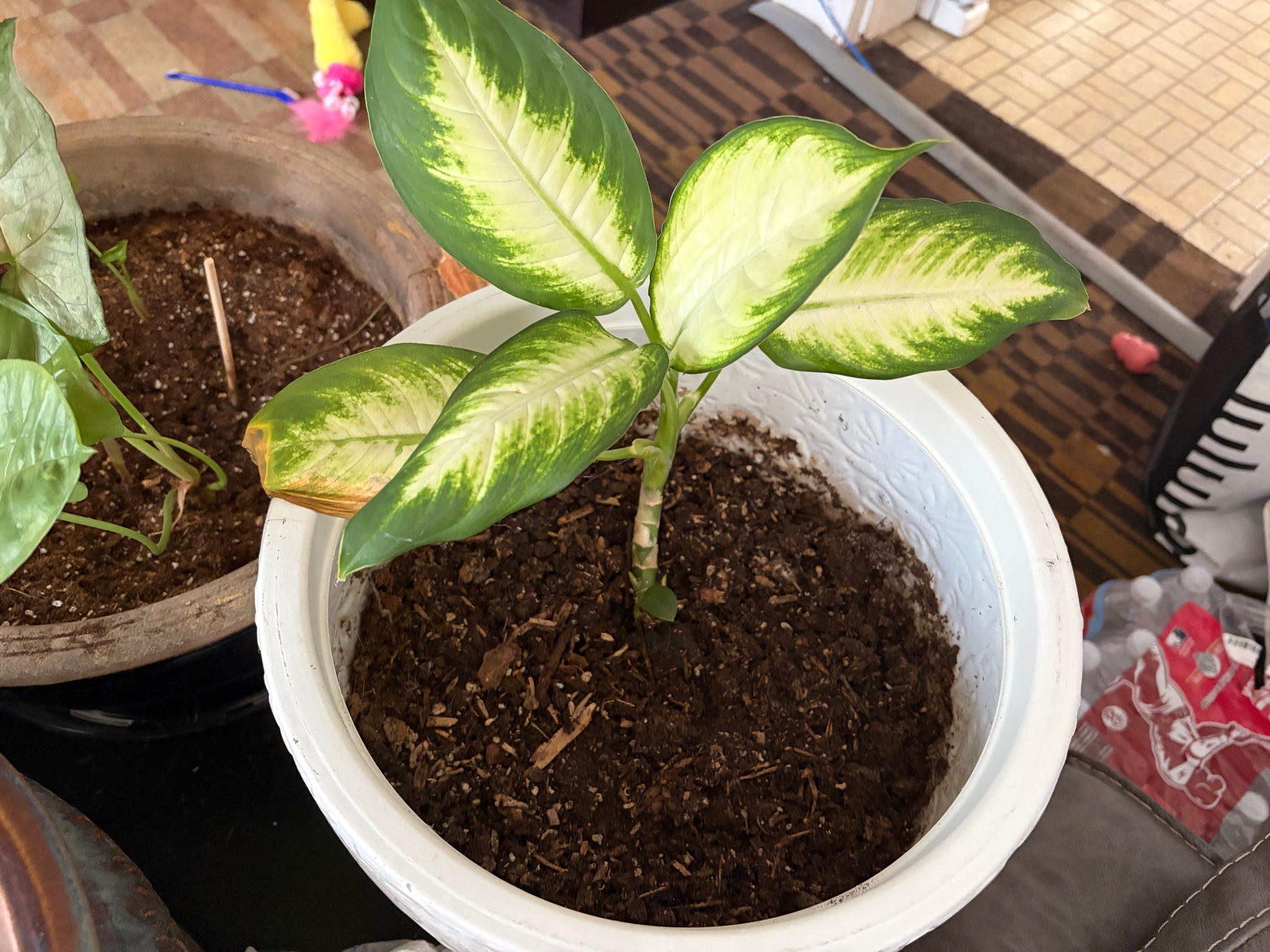
Dieffenbachia
Dieffenbachia seguine
A popular tropical houseplant featuring large, oblong, variegated leaves with prominent creamy-white centers and deep green margins, supported by a thick, succulent-like stem.
- Light
- Bright, indirect light for 6 to 8 hours per day; protect from direct harsh sunlight which can scorch the leaves.
- Water
- Water thoroughly when the top 1 to 2 inches of soil become dry. Reduce watering frequency slightly during the winter months.
- Growth
- Evergreen perennial shrub with an upright, cane-like growth habit, reaching a mature height of 3 to 6 feet indoors with a spread of 2 to 3 feet.
Care instructions
Provide bright, indirect sunlight and maintain consistently moist but well-draining soil. Water when the top inch of soil feels dry to the touch, and fertilize lightly during the active growing season with a balanced liquid fertilizer.
Growing details
Sunlight
Bright, indirect light for 6 to 8 hours per day; protect from direct harsh sunlight which can scorch the leaves.
Watering
Water thoroughly when the top 1 to 2 inches of soil become dry. Reduce watering frequency slightly during the winter months.
Soil
Rich, loose, well-draining potting mix with an ideal pH range between 6.1 and 6.5.
Hardiness zone
USDA Hardiness Zones 10 through 12, typically grown indoors in cooler climates.
Growth habit
Evergreen perennial shrub with an upright, cane-like growth habit, reaching a mature height of 3 to 6 feet indoors with a spread of 2 to 3 feet.
Bloom season
Rarely blooms when grown indoors; produces an infrequent inflorescence consisting of a spadix and spathe typical of the arum family.
Propagation
Easily propagated through stem cuttings or division of mature clumps during the spring or summer growing season.
Common pests & issues
Prone to spider mites, mealybugs, and scale insects. Overwatering can lead to root rot and yellowing lower leaves.
Similar species
Aglaonema (Chinese Evergreen), which can be distinguished by bushier growth habits, narrower leaves, and different variegation patterns.