
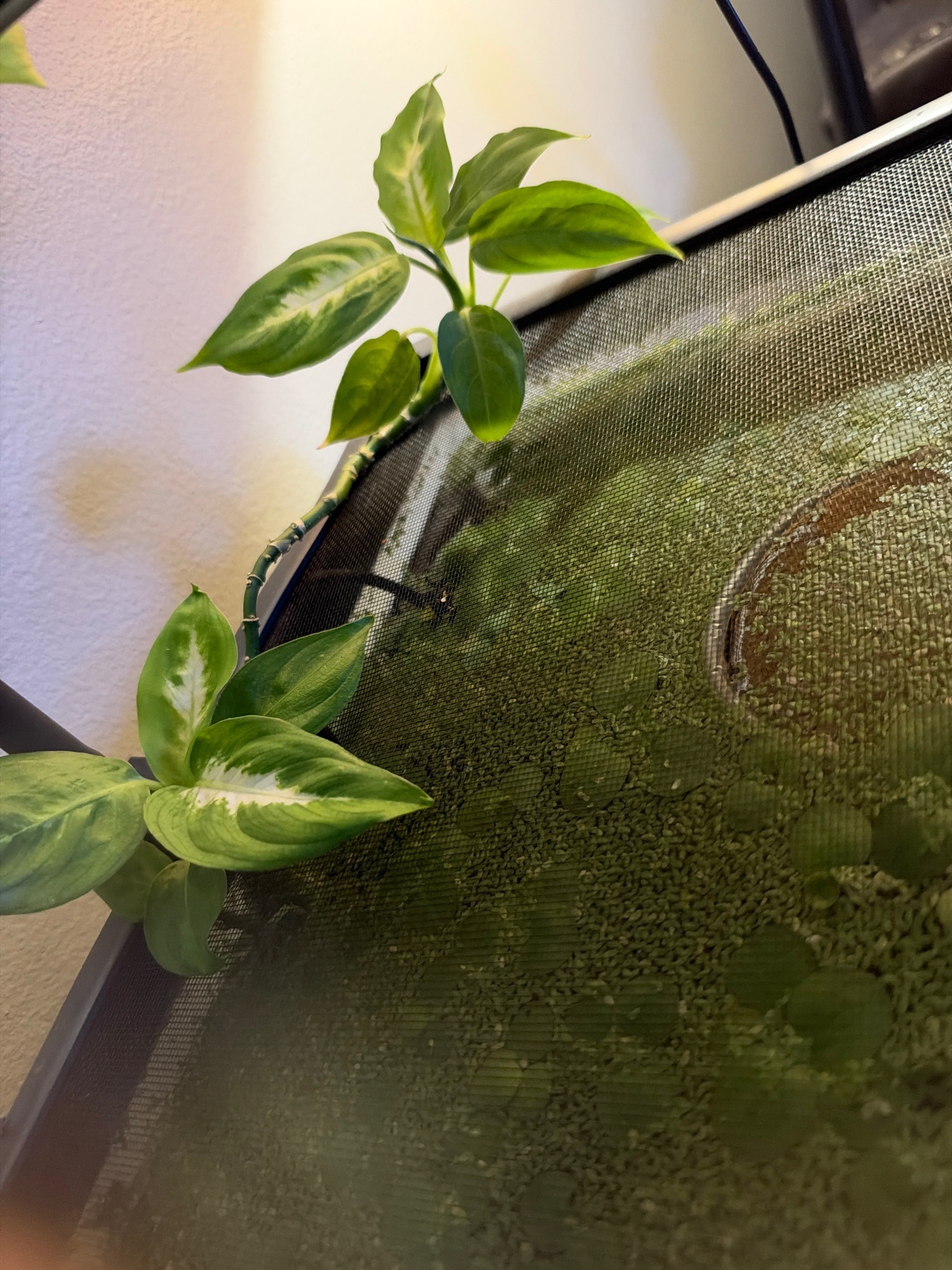
Dieffenbachia
Dieffenbachia seguine
An evergreen tropical perennial featuring lush, large, oblong leaves with striking white or cream variegation along the midribs and lateral veins.
- Light
- Bright, indirect light for 6 to 8 hours daily; avoid direct sun to prevent leaf scorch.
- Water
- Water thoroughly when the top inch of soil feels dry. Reduce watering frequency slightly during winter months.
- Growth
- Upright evergreen perennial growing to heights of 3 to 10 feet indoors with a moderate growth rate.
Care instructions
Provide bright, indirect sunlight, keep the soil evenly moist but never waterlogged, and maintain high humidity with temperatures between 65 and 80 degrees Fahrenheit. Feed with a balanced liquid fertilizer diluted to half strength monthly during the spring and summer growing season.
Growing details
Sunlight
Bright, indirect light for 6 to 8 hours daily; avoid direct sun to prevent leaf scorch.
Watering
Water thoroughly when the top inch of soil feels dry. Reduce watering frequency slightly during winter months.
Soil
Well-draining, rich potting mix high in organic matter with a slightly acidic to neutral pH range of 6.1 to 6.5.
Hardiness zone
USDA zones 10 through 12; grown indoors elsewhere.
Growth habit
Upright evergreen perennial growing to heights of 3 to 10 feet indoors with a moderate growth rate.
Bloom season
Rarely blooms indoors; produces a greenish-white spathe and spadix inflorescence when mature outdoors.
Propagation
Propagated via stem cuttings or air layering during the spring and summer months.
Common pests & issues
Susceptible to mealybugs, spider mites, and scale insects. Root rot can occur if soil remains excessively wet and lacks proper drainage.
Similar species
Aglaonema species, which can be distinguished by their typically bushier growth habit and different leaf patterns, and Philodendron species, which usually feature climbing vines or distinct leaf lobes.