
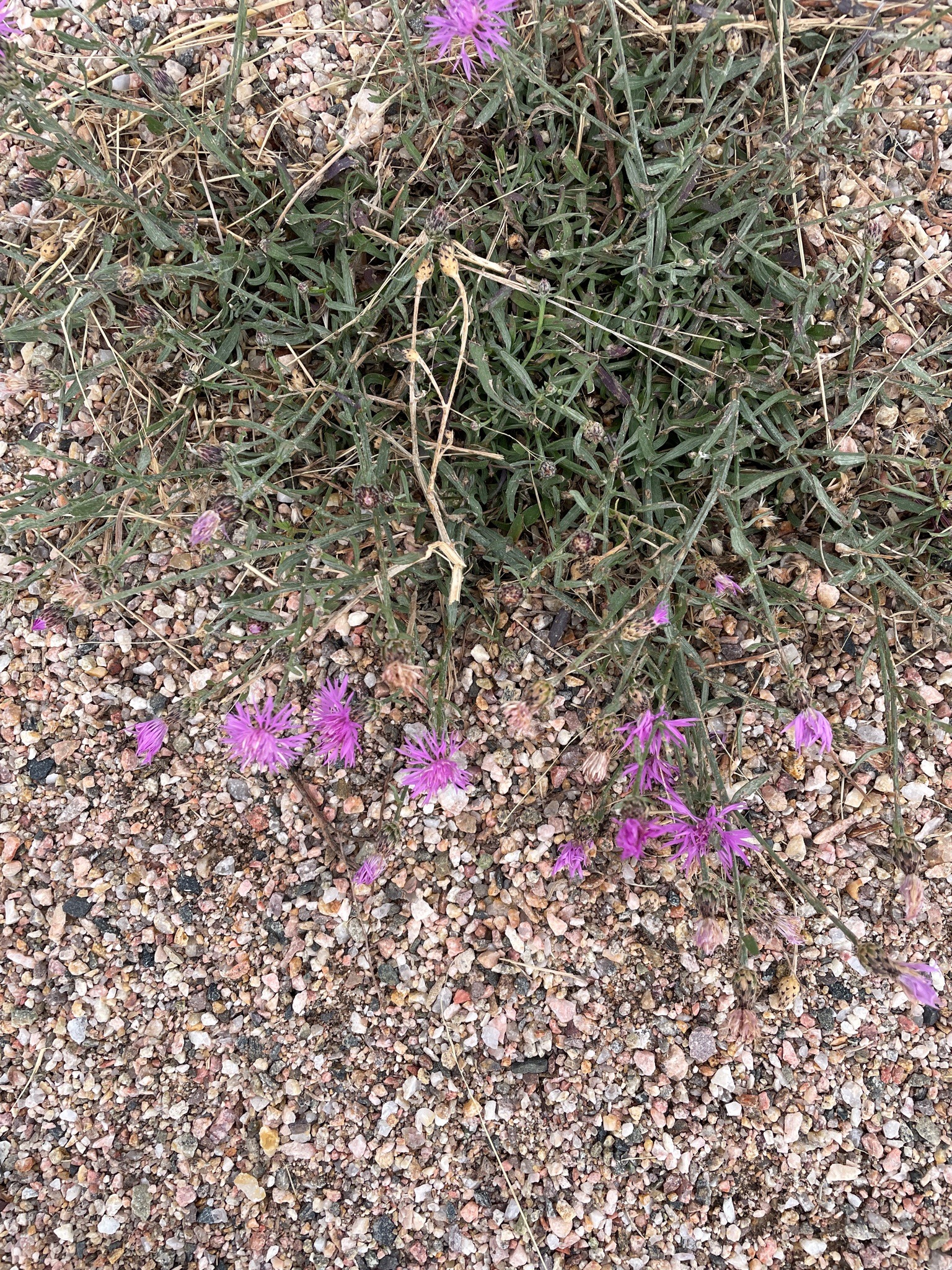
Diffuse Knapweed
Centaurea diffusa
Diffuse Knapweed is a biennial or short-lived perennial herb characterized by a rigid, branching stem, grayish-green deeply divided leaves, and small flower heads that feature white to pinkish-purple florets surrounded by bracts tipped with slender spines.
- Light
- Full sun, requiring at least 6 hours of direct sunlight daily
- Water
- Low watering needs; highly drought tolerant. Water deeply but infrequently, allowing the soil to dry out completely between watering sessions.
- Growth
- Herbaceous biennial or short-lived perennial forming a low rosette in the first year and a branching flowering stem reaching 1 to 3 feet in height during the second year.
Care instructions
This species thrives in dry, open habitats with minimal intervention. It prefers full sun and well-draining soil, requiring infrequent watering only during extended dry spells to prevent root rot.
Growing details
Sunlight
Full sun, requiring at least 6 hours of direct sunlight daily
Watering
Low watering needs; highly drought tolerant. Water deeply but infrequently, allowing the soil to dry out completely between watering sessions.
Soil
Adaptable to poor, dry, gravelly, or sandy soils with excellent drainage and a neutral to slightly alkaline pH range.
Hardiness zone
USDA zones 3 to 9
Growth habit
Herbaceous biennial or short-lived perennial forming a low rosette in the first year and a branching flowering stem reaching 1 to 3 feet in height during the second year.
Bloom season
Blooms from mid-summer through autumn, producing small, solitary or clustered pinkish-purple to white flower heads.
Propagation
Propagates readily through seed production, dispersing efficiently via wind and attachment to passing objects.
Common pests & issues
Generally resistant to most pests and diseases, though occasionally susceptible to root-boring insects or rust fungi in overly wet conditions.
Similar species
Spotted Knapweed (Centaurea stoebe), which can be distinguished by darker purple flowers and black-tipped bracts on the flower heads.