
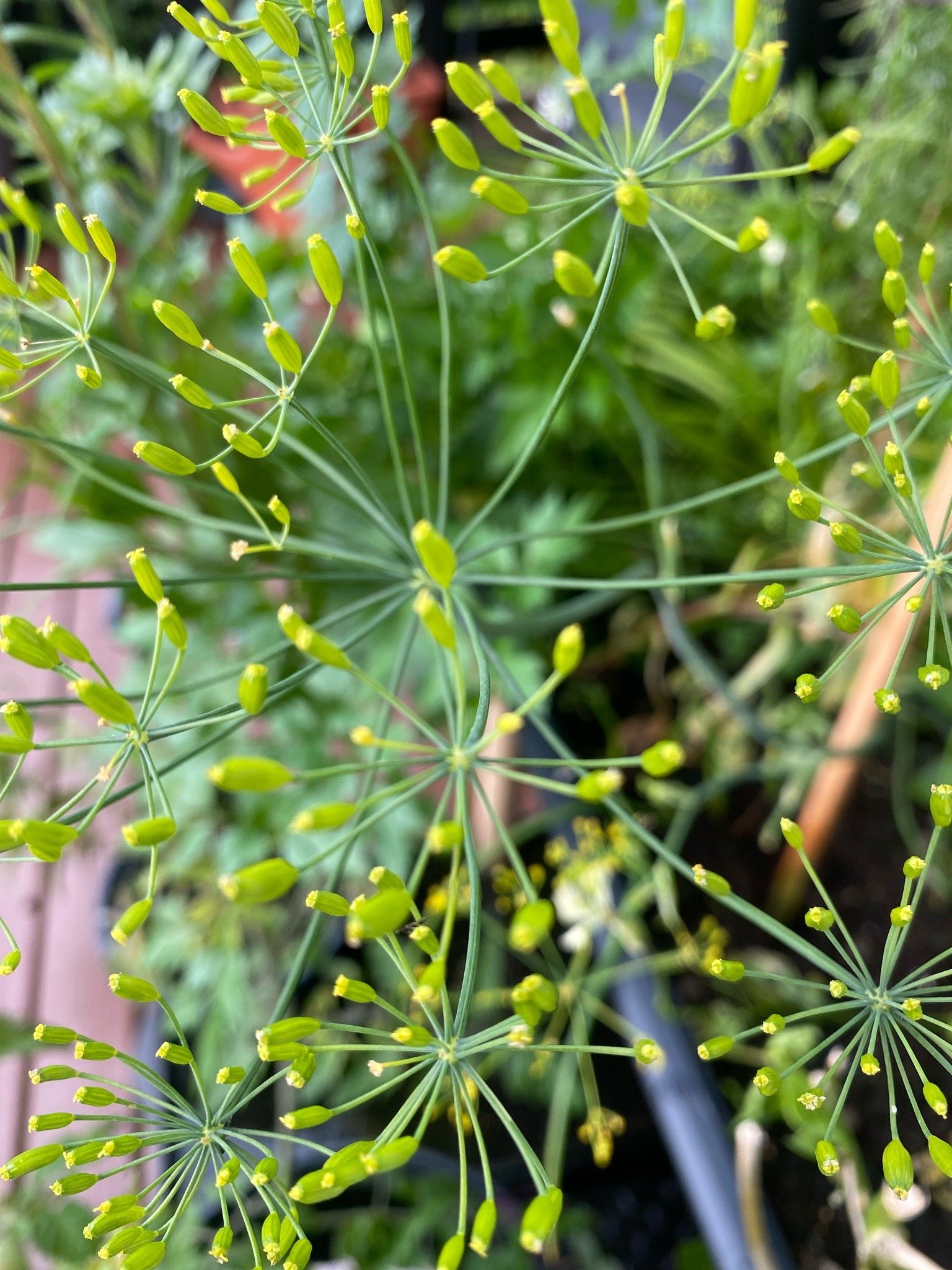
Dill
Anethum graveolens
An annual herbaceous plant featuring slender, hollow stems, delicate feathery leaves divided into fine needle-like segments, and compound umbels of small yellow flowers.
- Light
- Full sun, requiring at least 6 to 8 hours of direct sunlight daily.
- Water
- Requires moderate and consistent moisture. Water deeply when the top inch of soil feels dry. Drought tolerance is low, and plants easily wilt or bolt prematurely if allowed to dry out completely.
- Growth
- An erect annual plant with a taproot system, growing to a mature height of 2 to 4 feet and a spread of about 1 to 2 feet with a moderate to fast growth rate.
Care instructions
Provide full sun and consistently moist, well-draining soil. Water regularly while plants are young, reducing frequency slightly once established. Avoid heavy fertilization as it promotes excessive foliage at the expense of flower development.
Growing details
Sunlight
Full sun, requiring at least 6 to 8 hours of direct sunlight daily.
Watering
Requires moderate and consistent moisture. Water deeply when the top inch of soil feels dry. Drought tolerance is low, and plants easily wilt or bolt prematurely if allowed to dry out completely.
Soil
Prefers loose, fertile, sandy or loamy soils with excellent drainage. Optimal soil pH ranges from 5.5 to 6.8.
Hardiness zone
Usually grown as an annual across USDA zones 2 through 11, completing its lifecycle within a single growing season.
Growth habit
An erect annual plant with a taproot system, growing to a mature height of 2 to 4 feet and a spread of about 1 to 2 feet with a moderate to fast growth rate.
Bloom season
Blooms from early summer to mid-summer, producing large, flat-topped compound umbels composed of numerous tiny, bright yellow flowers.
Propagation
Propagated strictly by seeds sown directly into the garden soil in early spring after the last frost, as the long taproot does not transplant well.
Common pests & issues
Susceptible to aphids, spider mites, and caterpillar pests. Fungal issues such as root rot can occur in poorly draining, waterlogged soils. Prevent by ensuring adequate air circulation and proper spacing.
Similar species
Fennel (Foeniculum vulgare) and Caraway (Carum carvi) share similar feathery foliage and umbel flower structures, but fennel has a more anise-like scent and thicker, sturdier stems, while caraway leaves are somewhat coarser and less finely divided.