
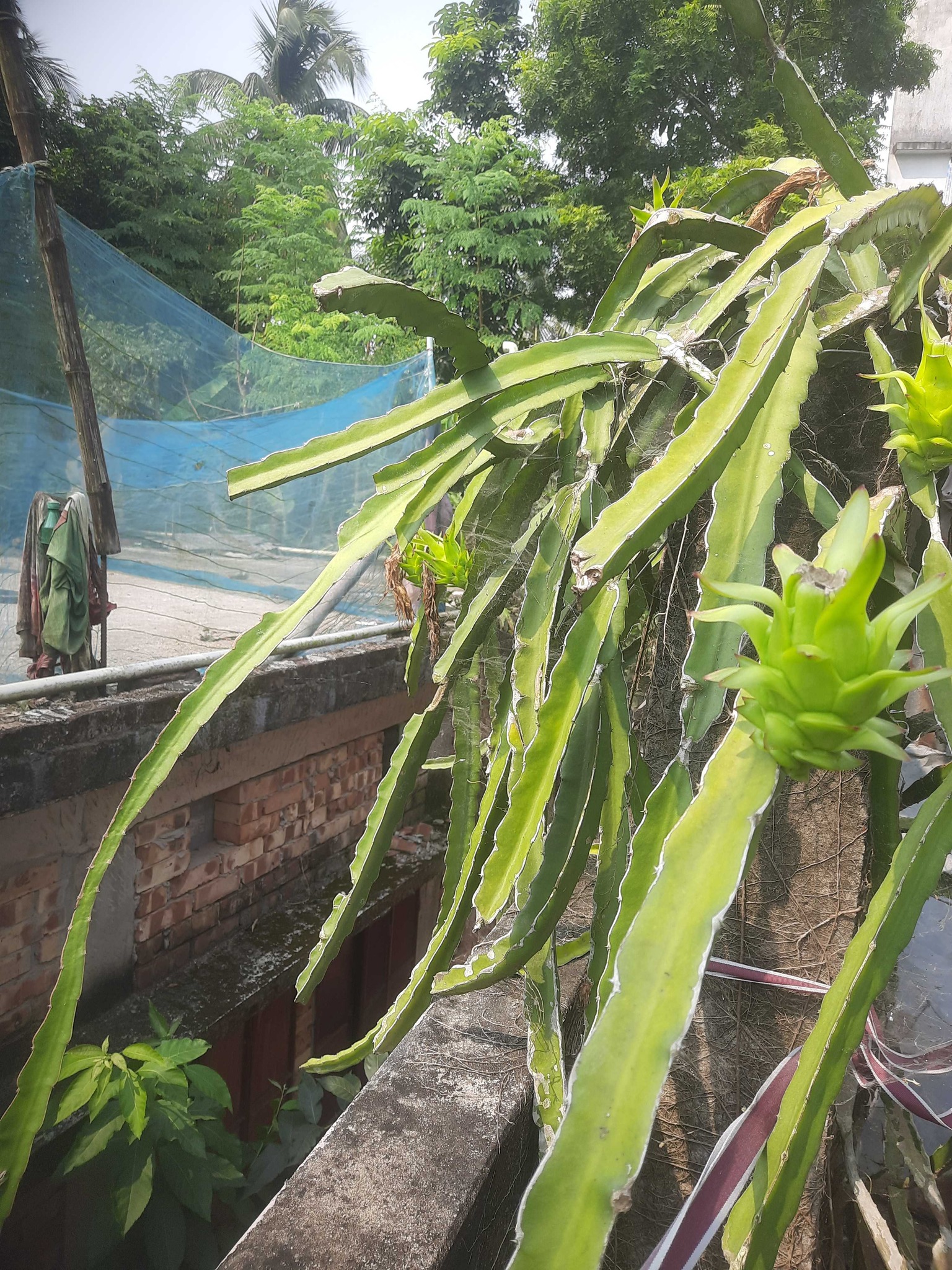
Dragon fruit cactus
Selenicereus undatus
A sprawling, vine-like epiphytic cactus featuring segmented, three-ribbed green stems with undulating margins and aerial roots, along with developing green floral buds that have scale-like bracts.
- Light
- Full sun to partial shade, requiring at least six to eight hours of bright sunlight daily.
- Water
- Water thoroughly when the soil is dry to the touch, reducing frequency during cooler months. Drought tolerant once established, highly susceptible to root rot if overwatered.
- Growth
- Perennial climbing cactus with a cascading or vining growth form, reaching mature lengths of 15 to 20 feet or more, with a fast growth rate when supported.
Care instructions
Provide bright, direct sunlight, well-draining sandy or loamy soil, and water deeply only after the soil has completely dried out. Apply a balanced succulent fertilizer during the active growing season.
Growing details
Sunlight
Full sun to partial shade, requiring at least six to eight hours of bright sunlight daily.
Watering
Water thoroughly when the soil is dry to the touch, reducing frequency during cooler months. Drought tolerant once established, highly susceptible to root rot if overwatered.
Soil
Well-draining, nutrient-rich soil with organic matter, preferring a slightly acidic to neutral pH range of 6.0 to 7.0.
Hardiness zone
USDA zones 10 through 11, sensitive to frost and freezing temperatures.
Growth habit
Perennial climbing cactus with a cascading or vining growth form, reaching mature lengths of 15 to 20 feet or more, with a fast growth rate when supported.
Bloom season
Late spring through autumn, producing large, nocturnal, fragrant white flowers followed by distinctive green-to-pink scaled buds.
Propagation
Propagated easily from stem cuttings taken during the warm growing season, allowing the cut end to callus before planting in well-draining substrate.
Common pests & issues
Susceptible to root rot, fungal stem spots, and scale insects, preventable by maintaining proper drainage and avoiding excess humidity.
Similar species
Selenicereus megalanthus and Selenicereus costaricensis, distinguished by differences in stem ribbing, spine counts, and outer bud coloration.